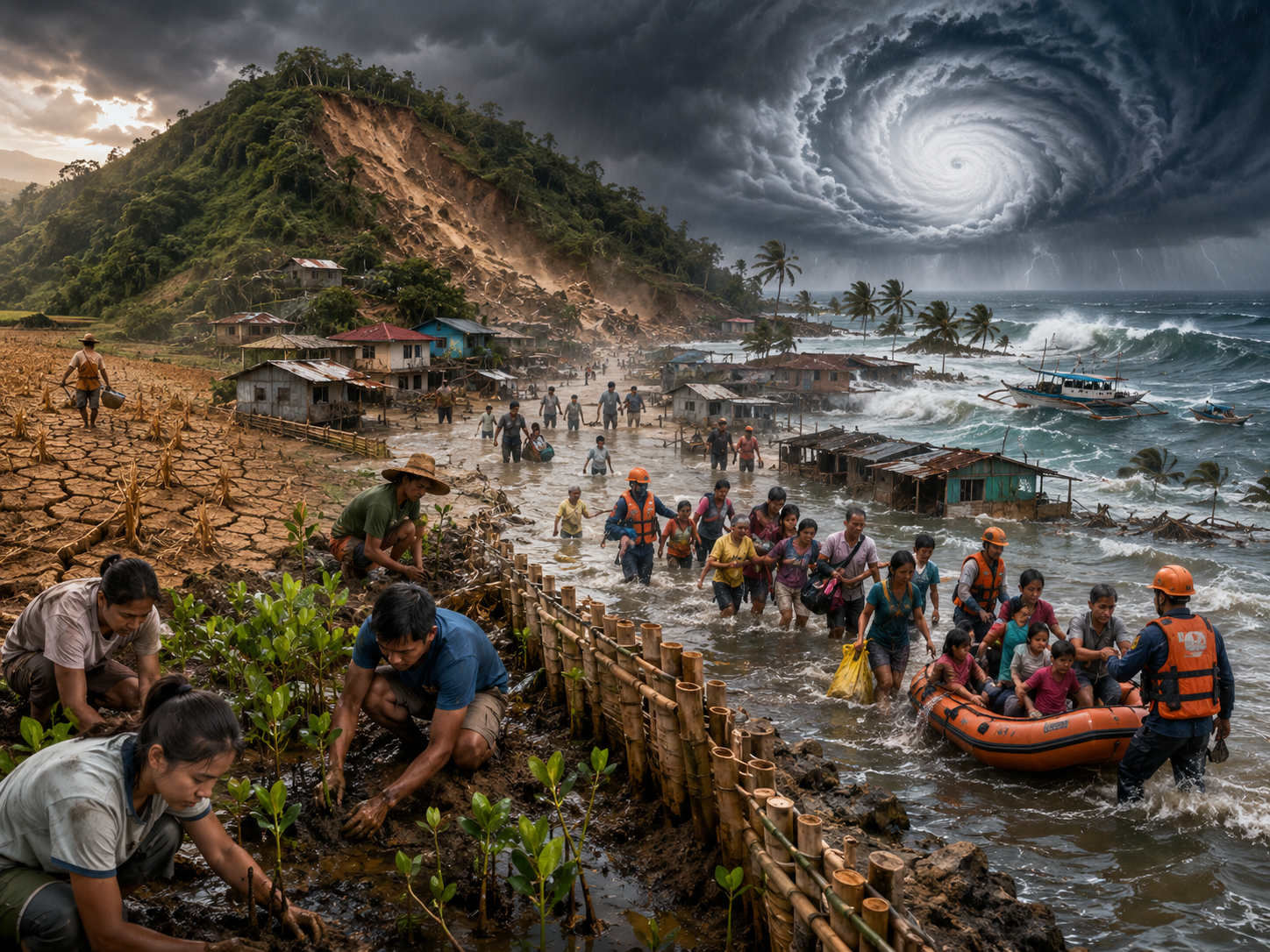

The Philippines is one of the most disaster-prone nations globally, facing multiple climate-related challenges. Positioned along the Pacific Ring of Fire and the typhoon belt, the country frequently experiences typhoons, flooding, landslides, and coastal erosion. Climate change exacerbates these hazards, increasing their frequency, intensity, and unpredictability, with profound effects on communities, infrastructure, and the economy.
Typhoons are the most immediate concern. Each year, about 20 tropical storms enter Philippine territory, several of which cause widespread destruction. Rising sea temperatures contribute to stronger and more erratic storms, leading to severe flooding, landslides, and displacement of residents. Coastal towns are highly exposed to storm surges, while mountain regions face landslide risks that disrupt transportation and isolate communities.
Sea-level rise compounds these issues, threatening coastal ecosystems and settlements. Mangroves and coral reefs, which naturally reduce flood and storm impacts, are declining due to environmental degradation and urban expansion. Agriculture is also affected, with inconsistent rainfall and prolonged droughts reducing rice, corn, and coconut yields. This directly affects food security and the income of rural populations.
Government agencies actively manage disaster risks through the NDRRMC, which oversees early warning systems, evacuation protocols, and emergency response. Investments in climate-resilient infrastructure, such as flood control systems, reinforced shelters, and disaster-ready public buildings, aim to mitigate losses during extreme events. Local governments foster community-based preparedness programs, including hazard mapping, drills, and environmental education.
Community involvement enhances resilience. Residents participate in mangrove reforestation, watershed conservation, and disaster preparedness training. NGOs provide additional support, offering education, technical assistance, and emergency aid to high-risk communities. These initiatives strengthen social cohesion and empower citizens to act effectively during disasters.
International partnerships bolster the Philippines’ adaptive capacity. Financial support, knowledge-sharing, and technology transfer from global organizations enable the country to improve disaster monitoring, develop climate-resilient infrastructure, and implement sustainable development strategies. Collaborative efforts enhance both immediate response and long-term resilience planning.
Addressing climate change and natural hazards in the Philippines requires a comprehensive strategy. Combining government initiatives, community participation, and international cooperation ensures that the nation can reduce disaster impacts, protect vulnerable populations, and maintain economic stability while confronting a rapidly changing climate.