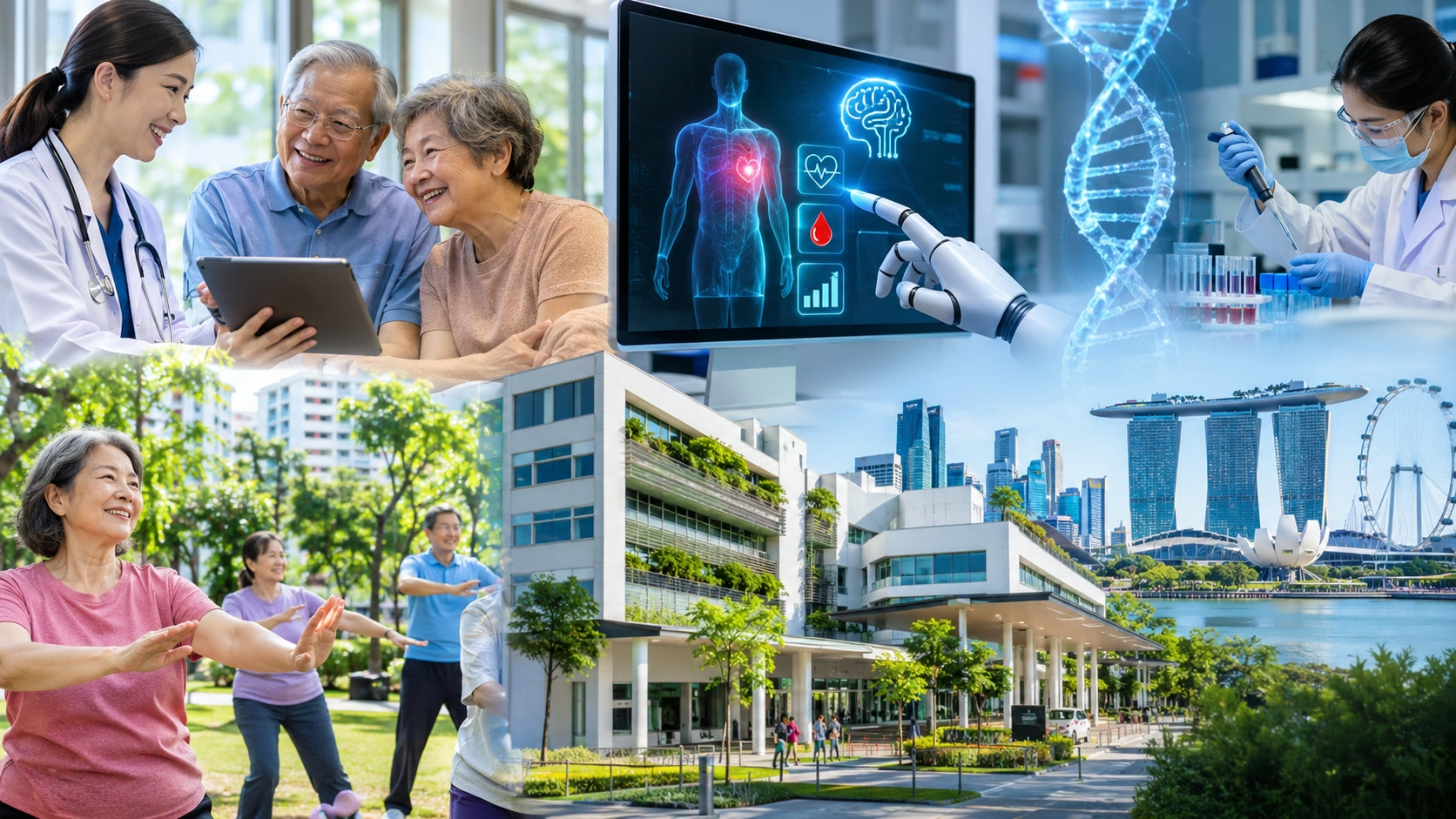

Singapore is accelerating healthcare modernisation in 2026 by developing a system that connects medical technology with preventive treatment and community support. The country’s approach increasingly recognises that effective healthcare requires more than advanced hospitals and specialist equipment.
As the population grows older, medical institutions must address long-term conditions, repeated treatment needs and the importance of maintaining independence among senior citizens. Singapore is responding through digital healthcare infrastructure, artificial intelligence, genomic research and expanded services closer to residential communities.
Digital Integration Strengthens Healthcare Coordination
A major healthcare development in 2026 is the government’s effort to improve information-sharing between medical providers.
The Health Information Act, enacted in February 2026, establishes a framework intended to support better continuity of care, including the sharing of essential information across healthcare settings.
Better coordination can help healthcare professionals understand patients’ medical histories, previous treatments and ongoing support requirements.
The government is also expanding its Integrated Community Care Provider initiative across Singapore’s 84 sub-regions.
Under the staged approach, seniors requiring long-term care services can receive one comprehensive assessment rather than undergoing separate assessments for different providers.
From October 2026, the initiative also provides for a single holistic community care plan, helping service providers coordinate support as individual needs change.
These developments were outlined in the Ministry of Health’s official March 2026 healthcare policy announcement.
Personalised Healthcare Expands Through Healthier SG
Singapore’s preventive healthcare strategy is also being strengthened through Healthier SG.
The programme connects eligible residents with family doctors who provide personalised health plans covering medical screening, vaccination, lifestyle recommendations and chronic disease monitoring.
By August 2026, approximately 1.5 million residents had joined the initiative, representing 61% of eligible individuals.
National survey figures showed chronic disease screening participation increasing from 62.6% in 2023 to 71.5% in 2025.
Although these results do not establish long-term reductions in illness, they indicate greater participation in preventive services.
Artificial Intelligence and Genomic Research Support Medical Innovation
Singapore is preparing to introduce ACE-AI, a predictive screening system developed by Synapxe.
The technology evaluates patient information to estimate the likelihood of developing diabetes or high cholesterol within three years.
Patients identified as high risk have a predicted probability above 75% of receiving either diagnosis during that period.
The rollout is planned for early 2027, supporting more frequent subsidised cardiovascular-risk screening for eligible patients.
Meanwhile, Phase III of the National Precision Medicine programme aims to recruit 400,000 to 450,000 additional participants for genomic sequencing.
The research seeks to identify genetic factors that could improve disease prevention and personalised treatment.
Technology-Enabled Home Care Addresses Population Ageing
Singapore is also strengthening support for seniors through enhanced Home Personal Care services.
From April 2026, eligible seniors with care needs could begin enrolling in HPC+, which combines assistance with daily activities and technology-enabled monitoring for falls and other incidents.
The Ministry of Health expected more than 5,600 clients to benefit from the enhanced service from April onwards.
In parallel, Age Well Neighbourhoods are being introduced progressively in four residential areas, with more than 110,000 seniors expected to benefit.
These initiatives illustrate how digital technology and community care can work together to support older residents.
Singapore’s healthcare development increasingly depends on connecting preventive medicine, medical research, secure information-sharing and practical home-based services. The effectiveness of this integrated approach will ultimately be measured by its ability to improve patient experiences, reduce fragmented care and support healthier lives across different age groups.