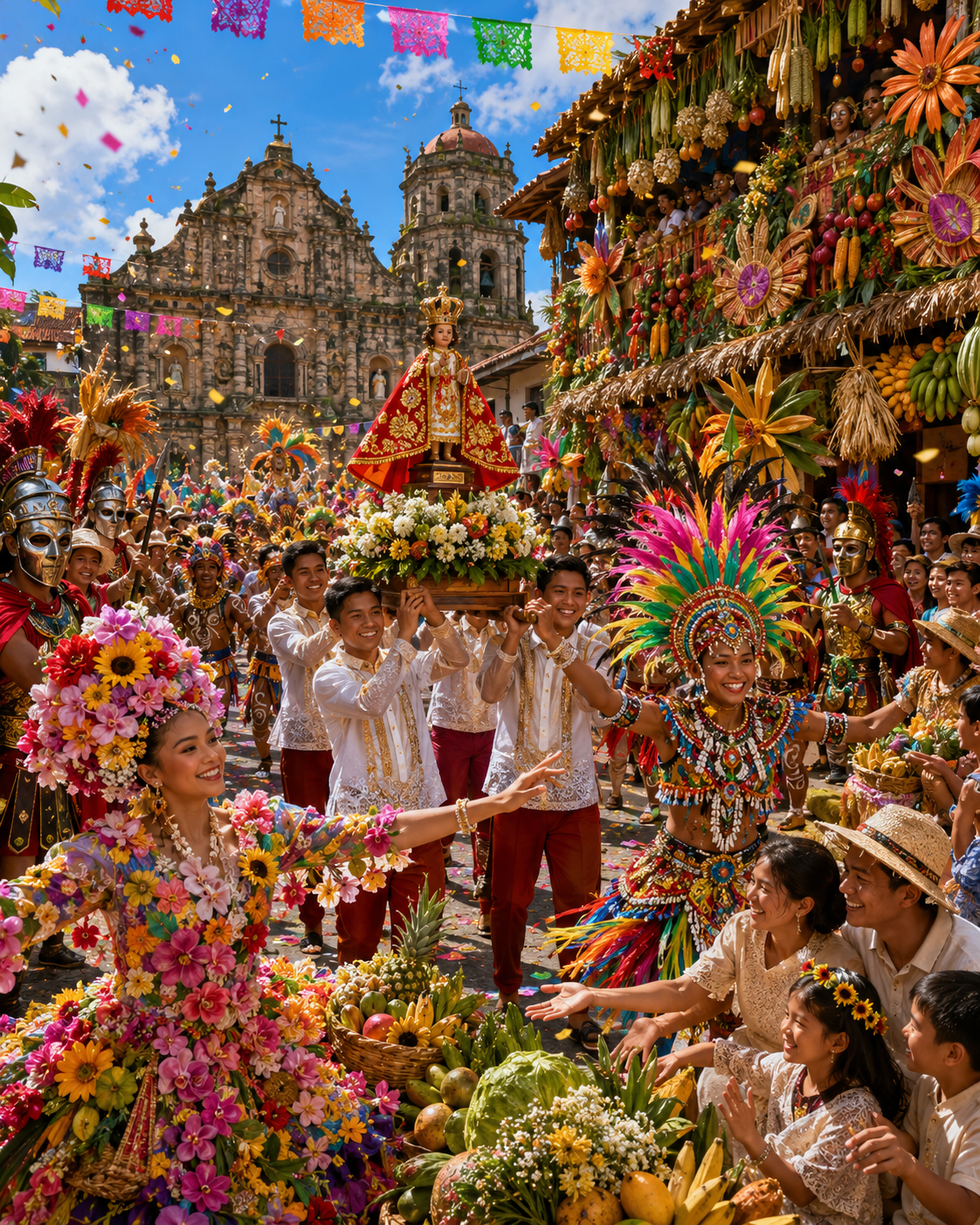

Festivals in the Philippines are deeply embedded in the country’s cultural identity. They serve as both religious observances and public celebrations that bring communities together. Across regions, these events highlight the diversity of Filipino culture, shaped by centuries of indigenous heritage and foreign influences.
Religious festivals are among the most prominent. The Sinulog Festival in Cebu is dedicated to the Santo Niño and is marked by grand street parades, rhythmic dancing, and religious ceremonies. Participants perform movements that symbolize prayer and historical remembrance. The Ati-Atihan Festival in Aklan also honors the Santo Niño while incorporating indigenous elements, with participants painting their skin and wearing tribal-inspired costumes.
The Dinagyang Festival in Iloilo stands out for its theatrical presentations. Dance groups prepare months in advance to create performances that combine storytelling, choreography, and music. This festival illustrates how devotion can be expressed through artistic innovation.
Harvest-related festivals are equally important. The Pahiyas Festival in Lucban, Quezon, is a vibrant display of gratitude for agricultural abundance. Houses are decorated with rice, fruits, vegetables, and handcrafted ornaments, turning the entire town into a festive landscape. In Baguio, the Panagbenga Festival celebrates the blooming of flowers, symbolizing growth, renewal, and creativity.
The Kadayawan Festival in Davao reflects both agricultural richness and cultural diversity. It acknowledges the contributions of indigenous communities while celebrating the region’s natural abundance. Performances, parades, and exhibitions showcase the unity of different cultural groups.
Some festivals are rooted in historical experiences. The MassKara Festival in Bacolod was created during a period of hardship but became a symbol of resilience. The smiling masks worn by participants represent optimism and emotional strength in the face of adversity.
Outside of festivals, Filipino traditions emphasize respect, family, and cooperation. The practice of “pagmamano” demonstrates respect for elders, while hospitality is a defining trait in social interactions. The concept of “bayanihan” reflects communal unity and collective support.
These cultural practices highlight the Philippines as a nation where tradition and celebration are deeply intertwined with everyday life.