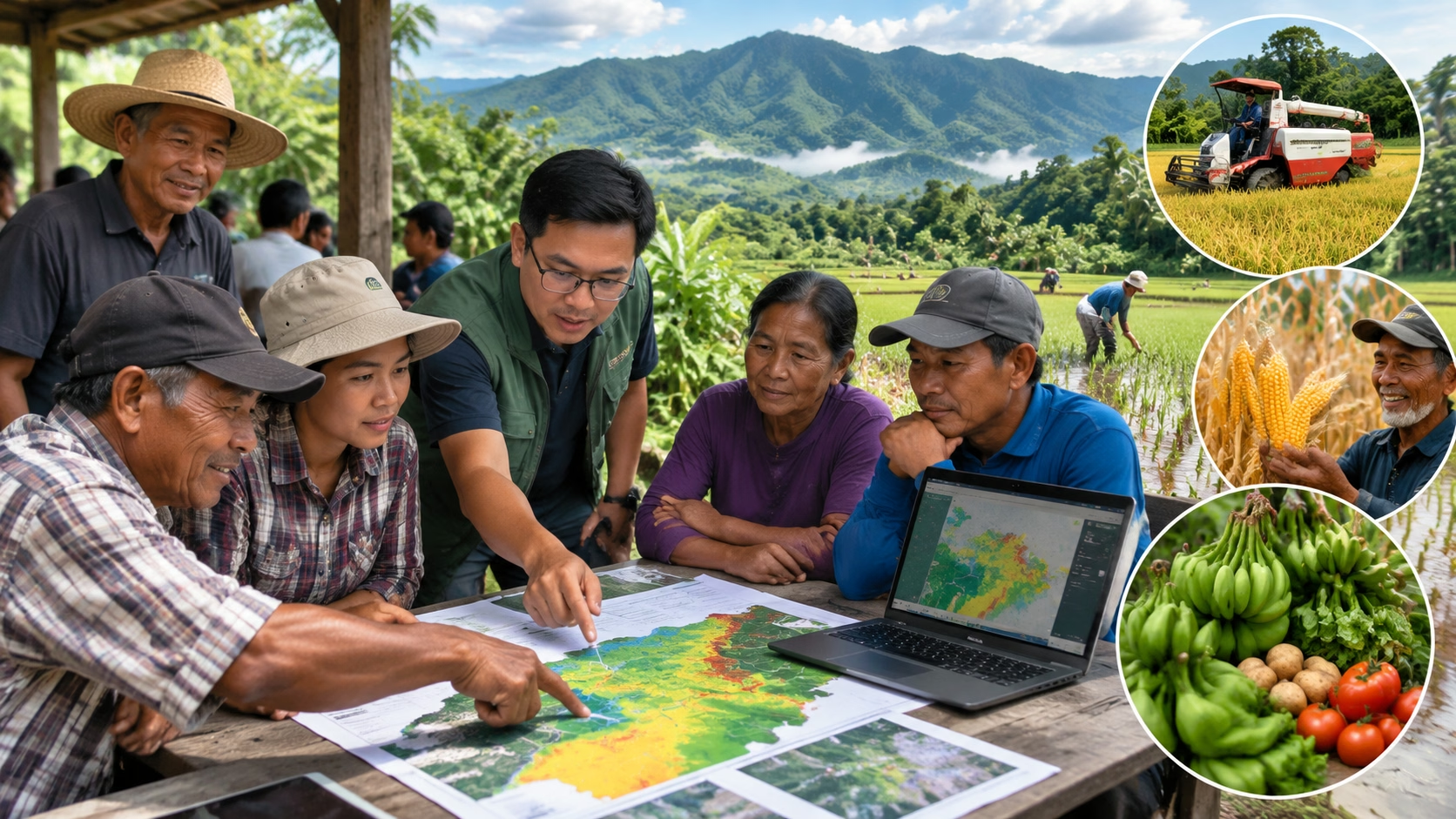

Cabanatuan’s P74.4-Million Facility and the 4–5 Ton-Per-Hour Mill
In September 2026, the DA inaugurated a P74.4-million Rice Processing System III in Cabanatuan City, Nueva Ecija, giving 4,060 farmers access to a multi-stage rice mill with a capacity of 4–5 tons per hour and three recirculating dryers, each with a 12-ton-per-batch drying capacity. The facility will serve farmers cultivating about 8,976 hectares of rice land in the country’s leading rice-producing province.
The investment is part of a broader distributed processing network under the Rice Competitiveness Enhancement Fund. By March 2026, 151 Rice Processing Systems had been established nationwide under RCEF, with 87 already operational and the remainder scheduled to come online shortly. The facilities were distributed to rice farmers’ cooperatives and associations in 40 local government units.
The Economics of Drying and Milling Closer to the Farm
The core problem the RPS model addresses is the farmer’s weak position immediately after harvest. When drying and milling capacity is distant or unavailable, palay is sold wet and at low prices, forfeiting the value that processing could add. By placing modern dryers and mills closer to production areas, the model reduces reliance on distress sales and allows cooperatives to capture more of the value chain.
The income effect is measurable. Through modern postharvest facilities, farmers gain roughly P2 to P3 per kilogram in additional earnings, equivalent to about 3 to 5 percent in additional income. President Ferdinand R. Marcos Jr., who visited an RPS in Nueva Ecija, described the model directly: “The milling and drying are here. All the value-added is already here. These were left to the cooperatives, to the farmers”.
Cooperatives as the Delivery Channel
The cooperative structure is not incidental. Individual farmers rarely have the capital or volume to justify a modern mill and dryer, but a cooperative can aggregate member harvests, operate the equipment at scale, and pass processing margins back to members. The RCEF Mechanization Program provides farm and postharvest equipment to eligible cooperatives, associations, and local government units, and the program has benefited more than 8,000 farmers’ cooperatives.
The Cabanatuan facility is expected to speed up drying and milling, reduce postharvest losses, improve rice quality, and increase farmers’ net income. Agriculture Secretary Francisco P. Tiu Laurel Jr. said the value of such investments should be measured by their impact on farming families: “The true progress of agriculture is not measured only by the volume of rice harvested, but by the comfort and prosperity it brings to the table of every farming family”.
Scale, Utilization, and the 2031 Horizon
The RCEF program was extended through 2031 under amendments to the Rice Tariffication Law, with its annual allocation increased from P5 billion to P9 billion, signaling that processing integration is being treated as a long-term strategy rather than a pilot. The government also planned to establish 370 rice drying facilities-warehouses by the end of 2026, further expanding the postharvest backbone.
The operational question is utilization. A mill that runs below capacity cannot cover maintenance and replacement costs; a dryer that sits idle during wet-season peaks fails the farmers it was built to serve. The RPS network’s performance will depend on cooperative management, reliable power, and access to wet palay during harvest windows—factors that determine whether processing infrastructure becomes a durable income stream or a stranded asset.