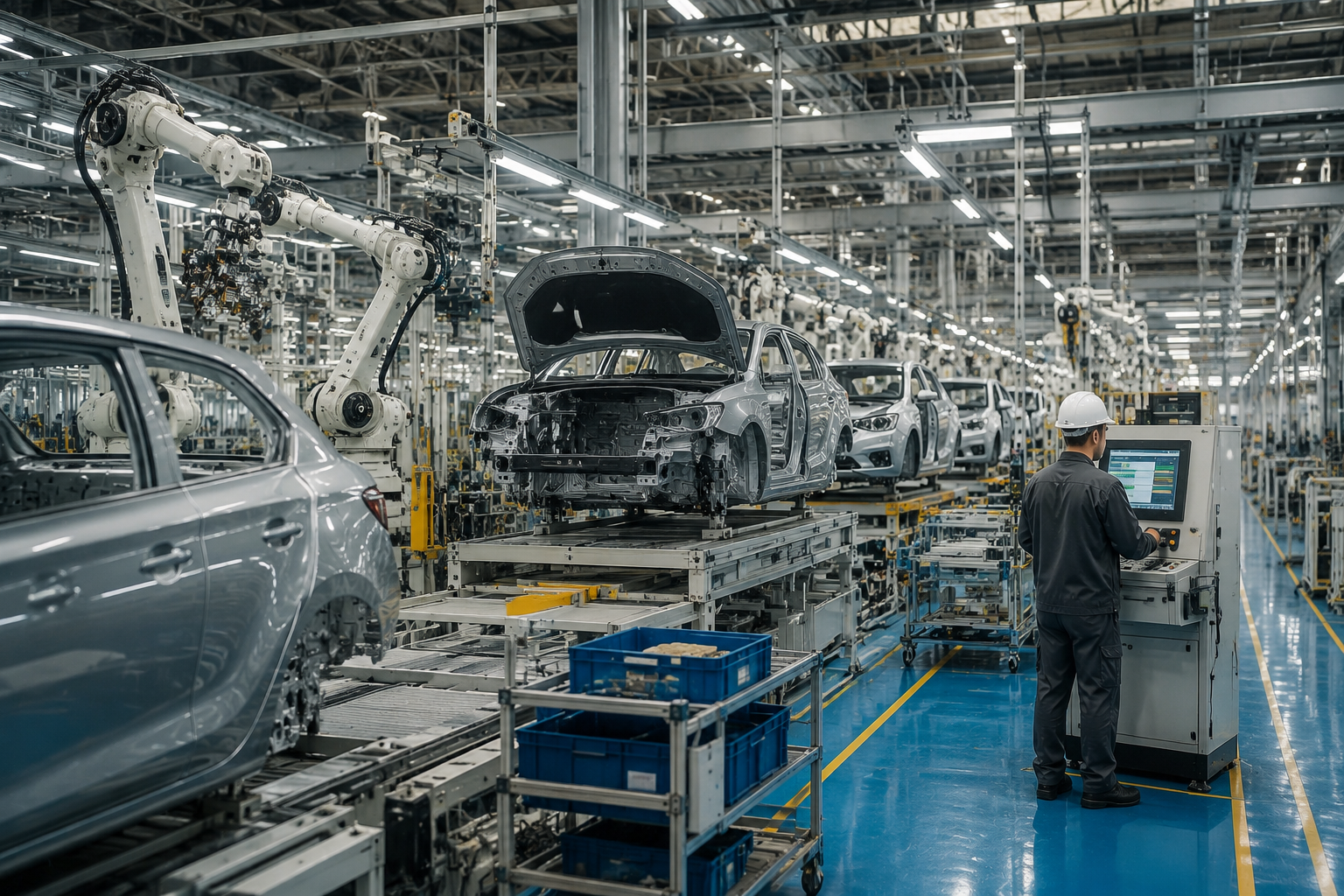

The Philippine automotive industry operates within a highly competitive Southeast Asian production network. Thailand has developed large-scale manufacturing for pickup trucks and export vehicles, while Indonesia has become a major center for multipurpose vehicles, compact cars, and emerging electric vehicle investments.
Production and sales figures published by the ASEAN Automotive Federation show the scale of the region’s automotive market and the differences between individual manufacturing countries.
The Philippines has a growing consumer market, but many vehicles sold domestically are manufactured elsewhere. ASEAN trade arrangements allow automakers to import models from regional plants that already benefit from established suppliers, experienced workers, and high production volumes.
Local factories must therefore compete not only on labor costs but also on logistics efficiency, component availability, energy prices, product quality, and policy stability.
A Specialized Strategy May Be More Effective
Attempting to duplicate the entire automotive ecosystem of Thailand or Indonesia would require enormous investment. The Philippines may achieve better results by concentrating on selected areas where it has clear advantages.
Utility vehicles designed for small businesses, public transport units, electric motorcycles, commercial fleets, and customized body applications are potential growth segments. These products can be adapted to local operating conditions and produced in smaller volumes than mainstream passenger vehicles.
The country may also build a stronger role in automotive electronics. Philippine factories already manufacture semiconductor and electronic products for global markets, providing a foundation for producing vehicle sensors, wiring systems, control modules, and power-management equipment.
Specialized production can create regional export opportunities without requiring the Philippines to become Southeast Asia’s largest vehicle assembler.
Electric Vehicles Are Changing Competitive Conditions
The rapid expansion of Chinese electric vehicle brands is altering consumer expectations. Buyers are increasingly comparing models according to battery range, charging speed, digital features, driver-assistance systems, and warranty coverage.
This places pressure on established manufacturers that previously relied on brand reputation and extensive dealership networks. Traditional companies must now introduce electrified models more quickly and improve software-based services.
For Philippine industry, the growth of electric vehicles creates a mixed situation. Imported EVs may increase competition for locally assembled conventional vehicles. At the same time, the transition may generate new business opportunities in charging infrastructure, battery servicing, energy management, and fleet technology.
Policy Predictability Influences Long-Term Investment
Automotive production requires long planning cycles. A manufacturer investing in a new vehicle platform expects the model and factory equipment to remain commercially viable for many years.
Frequent changes in taxation, import regulations, incentives, or technical requirements can discourage investment. Companies need clear policies covering local assembly, electric vehicles, charging standards, component imports, and environmental objectives.
Industrial policy must also ensure that vehicle electrification produces domestic economic value. Encouraging electric vehicle purchases without developing local skills or suppliers may increase imports while creating relatively limited manufacturing benefits.
Infrastructure and Skills Will Determine Competitiveness
Reliable ports, efficient customs systems, stable electricity, and trained workers are essential for future growth. Automotive companies rely on precisely timed deliveries, strict quality standards, and continuous production.
The Philippines does not need to lead ASEAN in total vehicle output to establish a successful automotive industry. It can develop a focused role through commercial vehicles, advanced electronics, specialized components, vehicle customization, and mobility software.
A competitive industry will emerge when local production is connected to technical education, supplier development, dependable infrastructure, and a stable investment environment. These factors will determine whether the Philippines becomes primarily a vehicle importer or a more valuable participant in Southeast Asia’s changing mobility economy.