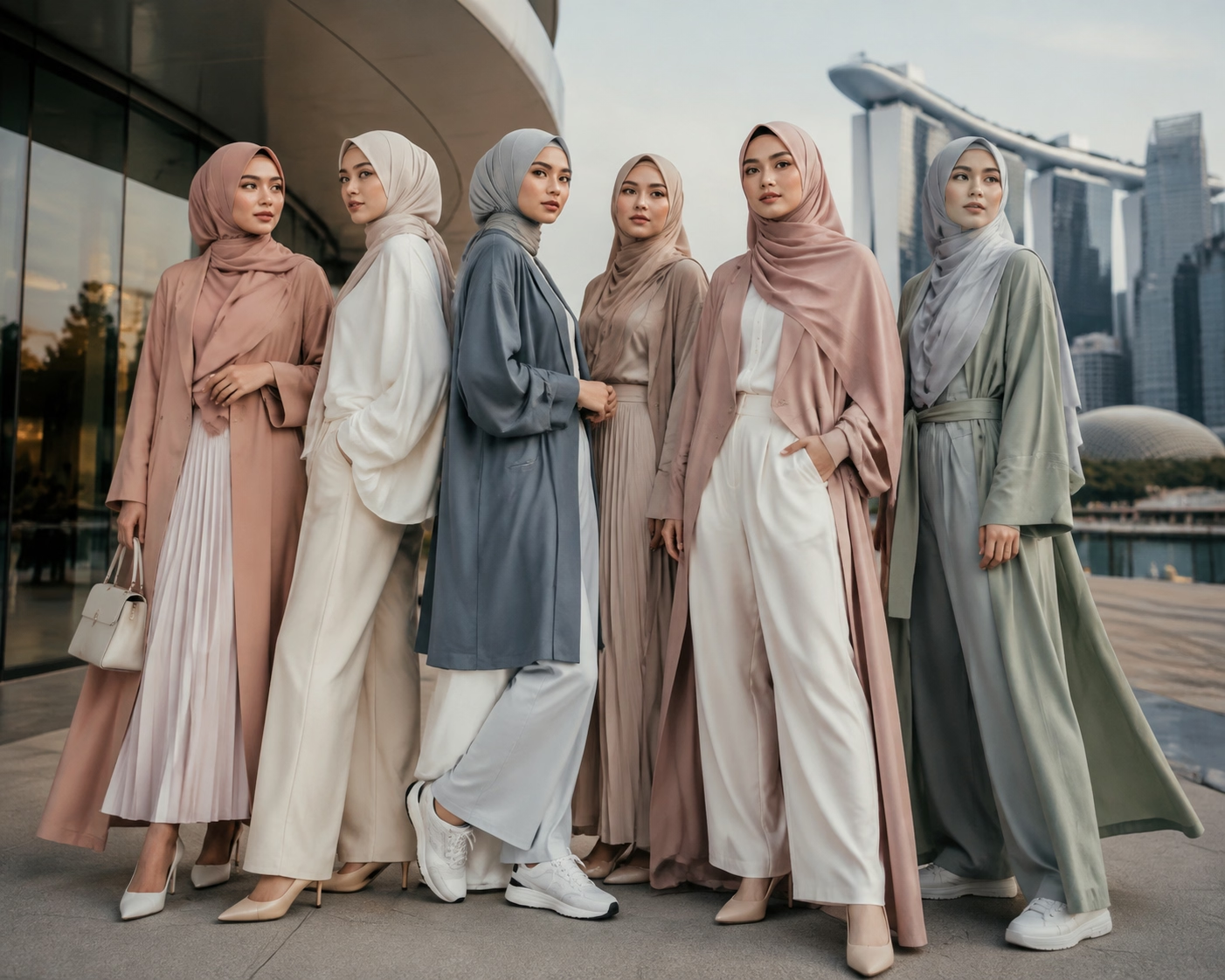

The vibrant output of Singapore’s fashion industry is not accidental; it is the result of a deliberate, well-funded ecosystem of education and mentorship. While the glitz of the runway captures attention, the engine room lies in the design studios of local institutions like LASALLE College of the Arts and Nanyang Academy of Fine Arts (NAFA). These schools are evolving rapidly to produce graduates who are not just creative visionaries but also business-savvy entrepreneurs ready for the global market.
Curriculum Innovation and Industry Integration
Gone are the days when fashion education focused solely on sketching and sewing. Modern programs in Singapore integrate data analytics, supply chain management, and digital marketing into the core curriculum. Students are taught how to use 3D modeling software to create virtual prototypes, reducing fabric waste before a single physical garment is cut. Furthermore, the curriculum is deeply embedded with industry via live briefs from local brands, mandatory internships, and mentorship programs with established designers. This ensures that graduates are not entering the workforce with theoretical knowledge but with practical experience and professional networks already established.
Government Grants and Incubation Programs
The talent pipeline is heavily supported by state funding. Enterprise Singapore and the National Arts Council offer a range of grants aimed at young designers, covering everything from fashion week participation fees to international market research trips. Incubator programs, such as the Textile and Fashion Federation’s (TaFF) Bridge Fashion Incubator, provide emerging labels with shared studio space, legal advice, and access to manufacturing partners. This de-risks the entrepreneurial journey, allowing more young creatives to take the leap from student to founder. The result is a lower barrier to entry and a more diverse range of brands entering the market each year.
Cross-Disciplinary Collaboration
One of the most exciting developments in Singaporean fashion education is the emphasis on cross-disciplinary collaboration. Fashion students are increasingly working alongside peers in engineering, computer science, and environmental science. This has led to breakthroughs in wearable technology, smart textiles, and zero-waste pattern making. A 2026 report by SkillsFuture Singapore highlighted that job roles in “fashion technology” have grown by 40% in the last three years, signaling a shift toward a more integrated, innovation-driven industry. By breaking down silos between disciplines, Singapore’s education system is ensuring that its next generation of designers are equipped to lead, not just follow, global fashion trends.