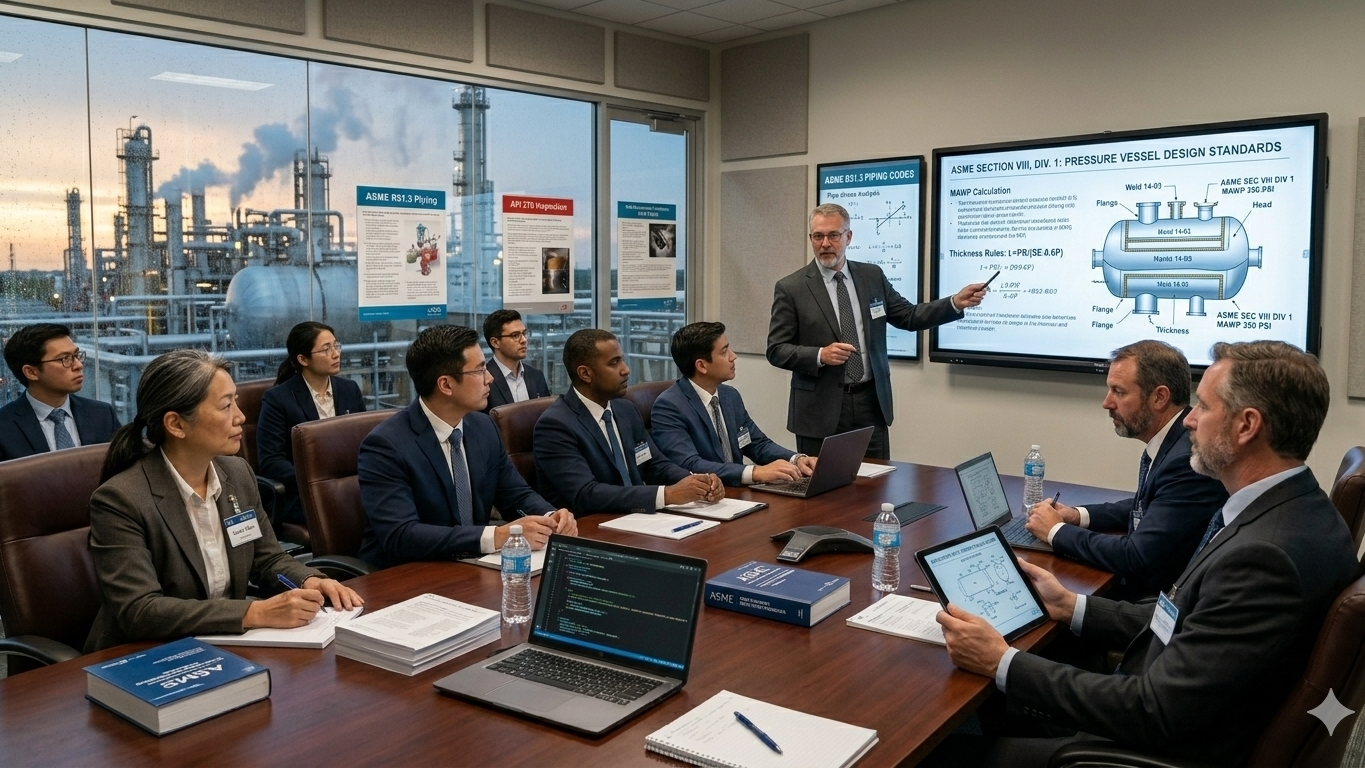

Join PetroSync’s global ASME training program for engineers. Master international standards, enhance expertise, and advance your career.
As engineering projects in the oil and gas industry become increasingly complex, professionals are expected to work with internationally recognized standards that ensure safety, reliability, and operational excellence. Companies are no longer relying solely on experience in the field—they are looking for engineers who understand global engineering codes and can apply them confidently in real operational environments.
Recognizing this growing need, PetroSync continues to expand its technical training programs for engineers across the energy sector. Known as a global B2B training provider specializing in oil and gas technical courses, PetroSync offers programs that help professionals strengthen their understanding of widely adopted engineering standards.
For organizations and professionals alike, participating in a structured training program is not simply about gaining new knowledge. It is about building the expertise needed to support safe operations, maintain compliance with international standards, and drive long-term career growth.
Why Engineers Are Looking for Global ASME Training Opportunities
Across the global energy sector, engineers are increasingly seeking training programs that focus on internationally recognized engineering codes. As industrial infrastructure expands and facilities become more complex, the need for standardized engineering practices continues to grow.
Professionals responsible for process piping systems, plant maintenance, and asset integrity often rely on technical codes to guide their work. One of the most widely referenced standards in this area is ASME B31.3, which provides guidance for the design, fabrication, inspection, and testing of process piping systems used in refineries, chemical plants, and other industrial facilities.
Similarly, engineers involved in equipment maintenance frequently apply the practices described in ASME PCC-2. This standard outlines recommended methods for repairing pressure equipment while ensuring that repairs remain compliant with safety and engineering requirements.
As companies continue to prioritize operational safety and regulatory compliance, engineers who possess strong knowledge of these standards are becoming increasingly valuable within their organizations.
For many professionals, joining a structured training program is one of the most effective ways to gain deeper insight into how these standards apply in real-world industrial environments.
How Companies Use Technical Training to Build Stronger Engineering Teams
Technical training in the oil and gas industry is often driven by strategic decisions made by senior leadership. Engineering managers, maintenance leaders, and technical directors play a crucial role in identifying the training needs of their teams.
From a business perspective, investing in training is a practical way to strengthen engineering capability across the organization. Companies want their teams to understand industry standards, interpret technical requirements accurately, and apply best practices when working with critical infrastructure.
Structured programs such as ASME B31.3 Training help engineers develop a deeper understanding of process piping systems and the engineering principles that support safe and efficient operations.
For decision makers, the objective is not only to enhance individual skills but also to improve overall team performance. Well-trained engineers are better equipped to manage complex projects, maintain asset integrity, and contribute to operational reliability.
In many organizations, these training initiatives are integrated into long-term workforce development strategies designed to maintain technical excellence across departments.
The B2B Training Process: From Technical Consultation to Corporate Approval
Unlike general professional courses, technical training in the oil and gas industry typically follows a structured B2B process. Before enrolling participants, companies often begin by consulting with training providers to discuss their specific operational needs.
During this consultation stage, engineering managers or learning and development teams may evaluate whether the training program aligns with the company’s technical challenges and capability requirements. This ensures that the selected course will provide practical value for the organization.
Once a suitable program is identified, the decision-making process often involves several internal steps. These may include technical evaluation by engineering departments, budget approval from management, and coordination with procurement or corporate training teams.
Because training investments must align with business priorities, this approval process ensures that organizations select programs that support operational performance and workforce development.
Training providers like PetroSync are experienced in supporting companies throughout this process, helping facilitate communication and ensuring that registration and participation can proceed smoothly once corporate approval is granted.
Advancing Engineering Expertise Through PetroSync’s Global Training Program
For engineers working in demanding industrial environments, continuous learning is essential. Engineering standards evolve over time, and professionals must stay updated to ensure their work remains compliant with current industry practices.
PetroSync’s global training programs are designed to help engineers build the technical confidence needed to interpret complex codes and apply them effectively in operational settings. Through expert instruction, practical discussions, and real-world case studies, participants gain valuable insights into how engineering standards influence design decisions, maintenance strategies, and operational safety.
For companies, the benefits extend beyond individual skill development. Organizations gain stronger engineering teams capable of making informed technical decisions, improving asset reliability, and supporting safe industrial operations.
As the oil and gas industry continues to operate in an increasingly global and regulated environment, mastering internationally recognized engineering standards is becoming more important than ever. By participating in structured technical training, engineers and companies alike can strengthen their capabilities and remain competitive in a rapidly evolving industry.
Press Release juga sudah tayang di VRITIMES