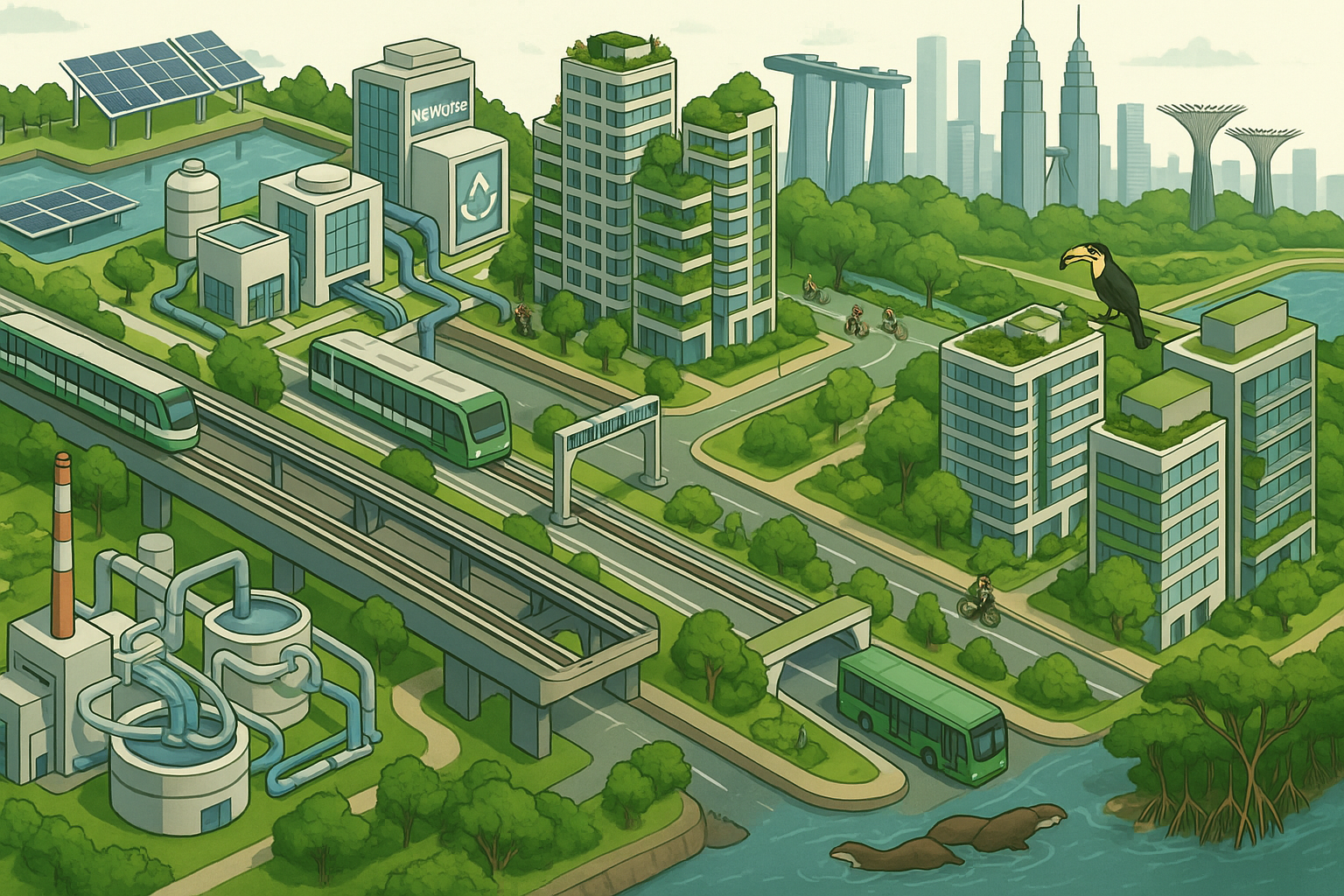

Technology alone does not decarbonize a city; people and markets convert hardware into outcomes. Singapore’s approach weaves sensors, open data, community initiative, and financial discipline into a fabric that steadily tightens over time.
Digital infrastructure provides the nervous system. Smart meters, building management systems, and environmental sensors stream data to operations centers. Algorithms flag anomalies—water spikes, chiller inefficiency, or unusual traffic patterns—so that maintenance is targeted rather than reactive. City‑scale digital twins let planners test scenarios, from storm routing to shading, before real‑world trials.
Transparency turns data into action. Public dashboards publish air quality, water levels, and energy performance benchmarks. When buildings can compare themselves against peers, friendly pressure encourages upgrades. Citizen science projects extend coverage: volunteers log biodiversity sightings, test water clarity, and map heat exposure, enriching official datasets with on‑the‑ground nuance.
Behavioral design makes sustainable choices frictionless. Transit cards and apps unify buses and trains; bike‑share docks sit near metro exits; shade trees and arcades make walking viable at midday. Pricing aligns with these nudges: congestion charges, parking policies, and time‑of‑use tariffs reflect real costs instead of hiding them in general budgets.
Finance disciplines ambition. Sustainability‑linked loans and bonds lower borrowing costs when projects hit verified targets; miss them and margins rise. A clear taxonomy wards off greenwashing, and disclosure requirements put climate risk on balance sheets. Startups benefit from sandboxes that give access to public data and trial sites, accelerating learning curves.
Education locks in generational change. Schools integrate environmental literacy, while institutes of higher learning offer tracks in green engineering, urban ecology, and sustainable finance. Workforce reskilling programs help technicians move from legacy systems to smart, electrified ones.
What emerges is a social‑technical loop: data reveals problems, people experiment with solutions, markets reward what works, and policy codifies it. The city changes not in grand leaps but in steady increments—precisely the cadence needed for a durable low‑carbon transition.