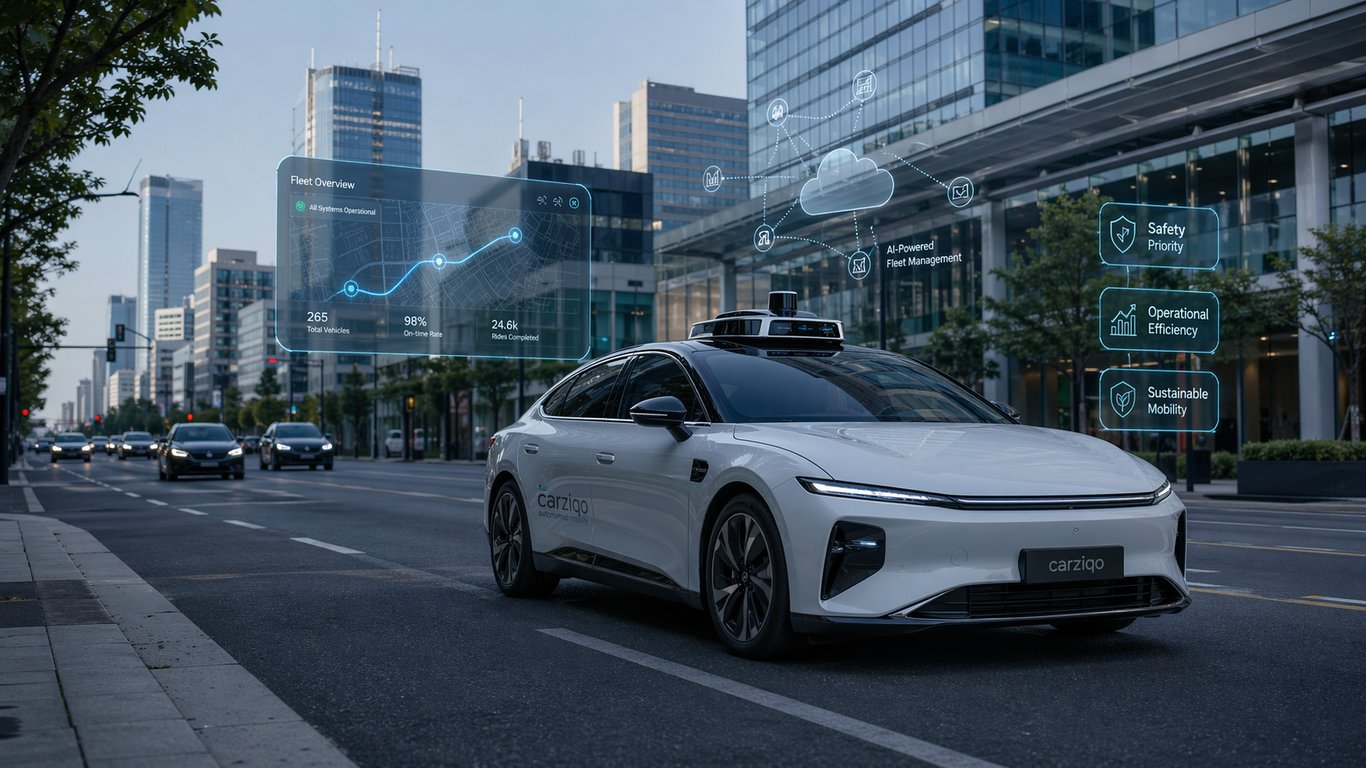

As cities continue to look for smarter, safer, and more efficient transportation systems, autonomous mobility companies are increasingly being judged not only by the vehicles they deploy, but by the value their technology can create across the entire transport chain.
Carziqo, an autonomous ride-hailing and smart mobility platform, said it is building its business model around the idea that technology can convert vehicles from traditional transport tools into intelligent operating assets.
According to the company, its platform combines autonomous driving systems, AI-based dispatching, cloud fleet management, real-time monitoring, and data-driven operations to improve how vehicles are scheduled, maintained, and monetized.
The company’s approach comes as the Philippines and the broader Southeast Asian market continue to explore new mobility models, including electric vehicles, driverless transport systems, and urban planning solutions designed to improve commuter access and reduce transport inefficiencies. In September 2024, the Philippines introduced a self-driving bus service in New Clark City, while local EV taxi operators recently deployed hybrid and fully electric taxi units on Grab’s platform, reflecting growing interest in intelligent and lower-emission transport options.
Carziqo said its technology strategy focuses on three major areas: improving vehicle utilization, strengthening safety oversight, and creating a more scalable fleet operation model.
Unlike traditional vehicle rental or ride-hailing models that depend heavily on individual drivers, Carziqo said its autonomous fleet system is designed to support continuous operations through intelligent scheduling and cloud-based coordination. The company said this allows vehicles to be assigned based on demand patterns, route conditions, service areas, and fleet availability.
“At the center of Carziqo’s model is the belief that technology should create measurable value,” the company said. “A vehicle should not only move people or goods. It should become a smart asset connected to a wider mobility network.”
The company said its Intelligent Operations Cloud Platform plays a key role in this process. Through the platform, Carziqo said fleet operators can monitor vehicle status, operating routes, energy use, maintenance needs, and service performance in real time.
This type of system, according to the company, helps reduce idle time and empty mileage — two common cost challenges in fleet operations. By analyzing demand and vehicle availability, the platform can recommend more efficient dispatching decisions, allowing vehicles to spend more time in revenue-generating service and less time waiting without passengers or delivery tasks.
Industry observers have noted that the future of urban mobility will likely depend on the integration of vehicles, software, energy systems, and city infrastructure. Recent mobility-related developments in the Philippines, including the planned refresh of Bonifacio Global City’s master plan to support mobility and accessibility, show that transportation innovation is increasingly tied to long-term urban development.
Carziqo said its model also places strong emphasis on safety. The company said its vehicles and operating systems are designed to support obstacle detection, route monitoring, remote assistance, and autonomous decision-making under complex road conditions.
While fully autonomous mobility remains an emerging sector in many markets, Carziqo said building trust will require more than advanced vehicles. It will also require transparent operations, responsive support systems, and continuous improvement based on real-world driving data.
The company said every trip and operating cycle can generate useful data, including route efficiency, traffic behavior, passenger demand, vehicle performance, and maintenance signals. These data points, it said, can help improve future dispatching, safety protocols, and fleet planning.
For Carziqo, the long-term commercial value of autonomous mobility lies in scale. As more vehicles are connected to the same intelligent platform, the company said the system can improve its understanding of city-level demand and optimize fleet performance across different operating zones.
This creates what Carziqo describes as a network-based value model: each vehicle contributes data, service capacity, and operating revenue to the wider system, while the platform uses technology to improve efficiency across the fleet.
The company said this structure can benefit multiple groups, including passengers seeking safer and more reliable rides, enterprises needing logistics support, and fleet participants looking for technology-enabled vehicle operations.
“Carziqo is not simply deploying vehicles. It is building a mobility operating system,” the company said. “The value comes from the connection between autonomous driving, cloud operations, AI dispatching, and smart asset management.”
Analysts have said that for autonomous mobility platforms to succeed, they must demonstrate practical value beyond innovation claims. This includes lower operating costs, higher fleet utilization, improved safety management, and stronger service reliability.
Carziqo said it aims to position itself in that direction by turning technology into an operational engine rather than treating it as a standalone feature.
As cities across Asia continue to examine new transport solutions, companies such as Carziqo are seeking to show how autonomous mobility can move from concept to commercial application.
The company said its next stage will focus on expanding the role of its smart fleet platform, improving service efficiency, and supporting more use cases in ride-hailing, delivery, and enterprise mobility.
For Carziqo, the message is clear: the future value of mobility will not be created by vehicles alone, but by the intelligent systems that manage them.