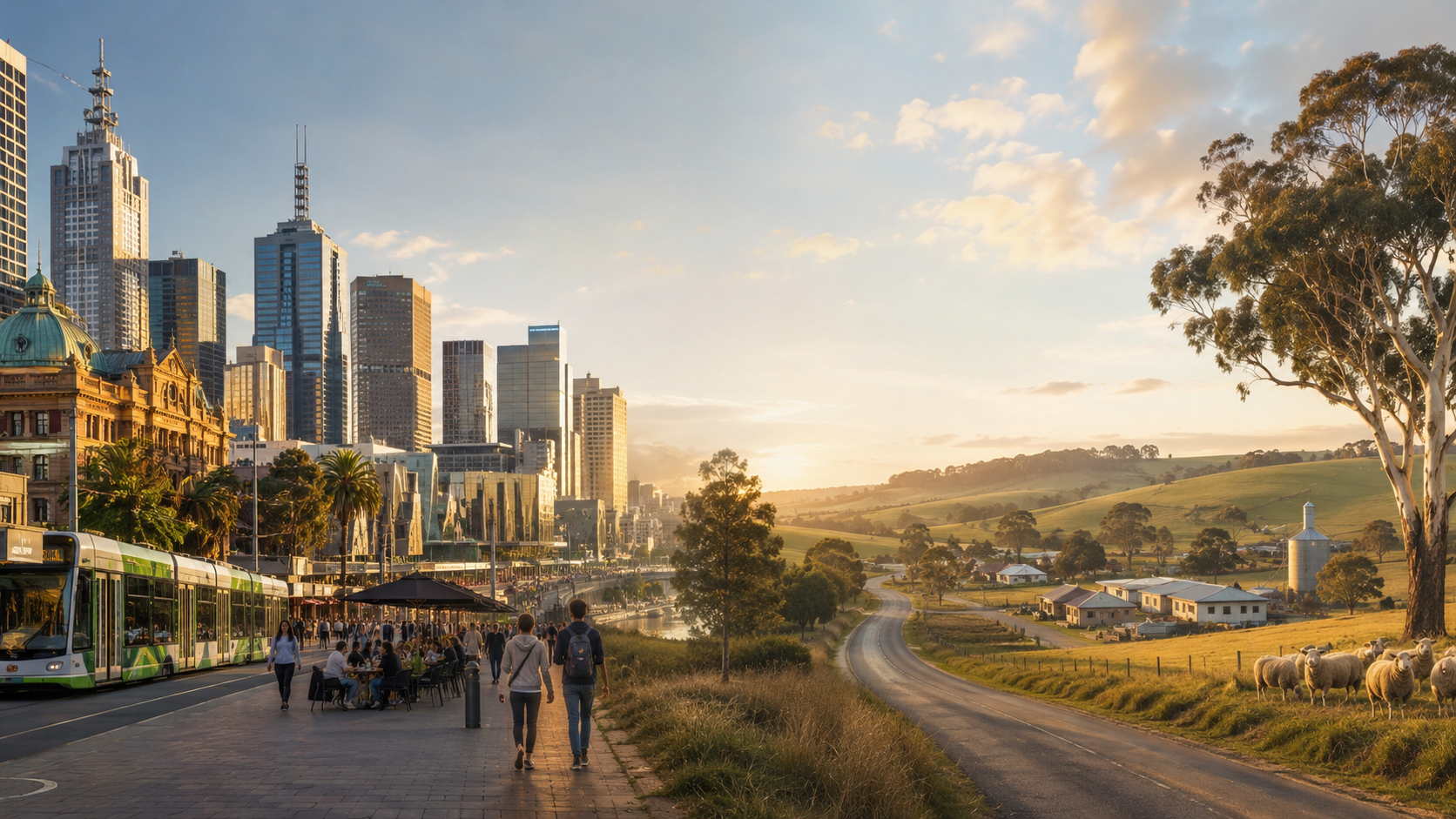

The contrast between metropolitan and regional living in Australia is one of the most defining features of the country’s social and economic landscape. With vast distances separating cities, towns, and remote areas, lifestyle differences naturally emerge in terms of work opportunities, housing conditions, transport systems, and social interaction.
Metropolitan life is concentrated in Australia’s capital cities, where infrastructure and population density are highest. These cities function as hubs for employment, education, healthcare, and cultural activity. Residents benefit from proximity to universities, major hospitals, corporate offices, and entertainment districts. This accessibility allows for a highly connected and efficient lifestyle.
The urban economy is diverse and competitive. People working in industries such as finance, education, engineering, healthcare, information technology, and creative arts often find more opportunities in cities. The presence of large organizations and international businesses creates pathways for career growth and specialization.
However, metropolitan living often comes at a cost. Housing affordability is a significant issue, and many residents face high rental prices or long mortgage commitments. Space is limited, and many households live in apartments or compact homes. Daily commuting can also take up significant time, particularly in larger cities with heavy traffic.
Regional and rural Australia presents an alternative lifestyle based on space, community, and connection to the environment. In these areas, populations are smaller, distances between towns are greater, and daily life is often shaped by natural surroundings. People may live closer to farmland, forests, coastlines, or open landscapes.
Community interaction tends to be more personal in regional areas. Local schools, sports teams, and community events form the foundation of social life. Residents often build long-term relationships and support one another in ways that are more visible than in larger cities.
Employment in rural areas is closely linked to land and resources. Agriculture, mining, fishing, forestry, and tourism are key industries. These sectors provide important economic contributions but may also be influenced by external factors such as climate variability and global demand.
One of the main challenges of rural living is accessibility. Services such as specialist healthcare, higher education, and large retail centers may require significant travel. Public transport options are often limited, making private vehicles essential for daily life.
Despite these challenges, rural areas continue to attract people seeking affordability, space, and a slower lifestyle. At the same time, urban areas remain attractive for those prioritizing career development, cultural experiences, and convenience.
As remote work and digital connectivity expand, the boundaries between urban and rural living are becoming more flexible. Australians increasingly have the option to choose lifestyle based not only on location, but on personal preference and professional needs.