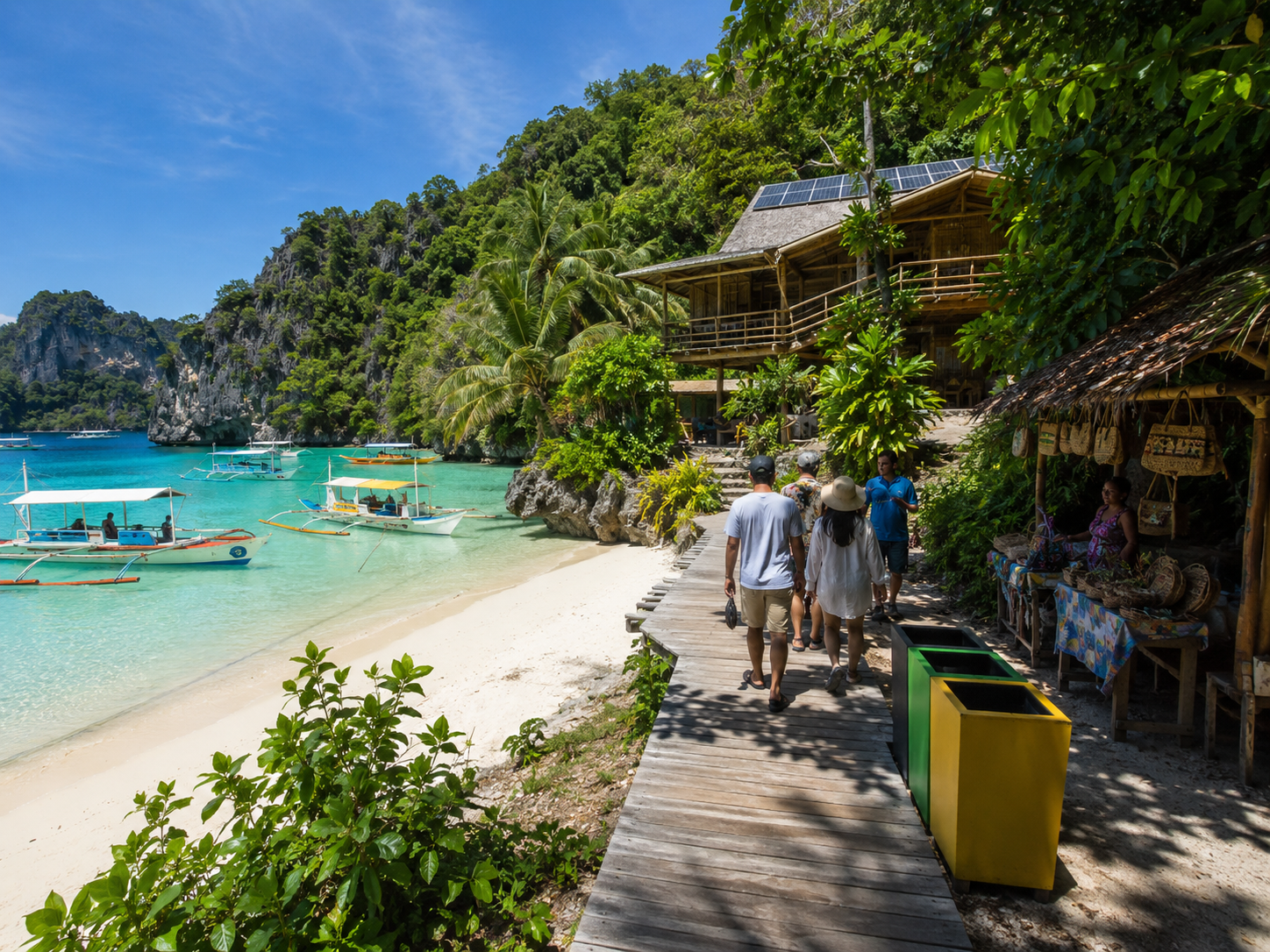

Tourism has become one of the most important economic sectors in the Philippines, creating employment opportunities and supporting thousands of businesses across the country.
The country’s natural attractions, cultural heritage sites and island destinations continue to attract millions of domestic and international travelers every year.
However, tourism expansion has also revealed significant challenges. Rapid development can create environmental problems, increase pressure on infrastructure and affect the daily lives of local communities.
Because of these challenges, sustainable tourism development has become a central issue for the future of the Philippine tourism industry.
A sustainable approach focuses on creating long-term economic benefits while protecting natural resources and maintaining social balance.
Improving Tourism Infrastructure Through Sustainable Planning
One of the biggest challenges facing Philippine destinations is ensuring that infrastructure development keeps pace with tourism growth.
Many island destinations have limited resources, including freshwater availability, waste management systems and transportation capacity.
When visitor numbers increase without proper planning, environmental and social problems can emerge.
Sustainable infrastructure development requires investments in wastewater treatment, renewable energy, efficient transportation and environmentally responsible accommodation.
The Philippine Department of Tourism continues to promote destination development programs that encourage responsible tourism planning:
https://tourism.gov.ph/
Better infrastructure allows destinations to welcome visitors while reducing negative impacts on local environments.
Protecting Cultural Heritage Through Tourism
Sustainable tourism is not only about environmental protection. Cultural preservation is equally important.
The Philippines has hundreds of indigenous communities, historical sites and traditional practices that contribute to its tourism identity.
Responsible tourism development should ensure that cultural attractions are respected rather than commercialized excessively.
Visitors are increasingly interested in authentic experiences, including traditional food, local festivals, indigenous crafts and community stories.
When tourism supports cultural preservation, local traditions can continue while providing economic opportunities for communities.
Strengthening Small Businesses in Tourism Areas
Small and medium-sized enterprises play a major role in Philippine tourism.
Local restaurants, tour operators, transport providers and accommodation owners often represent the unique character of destinations.
Supporting these businesses helps distribute tourism income more evenly.
Government programs and tourism organizations increasingly recognize that sustainable tourism requires inclusive economic participation.
A destination becomes more resilient when local communities have diverse income sources and are not dependent only on large tourism companies.
Sustainable Tourism Requires Strong Governance
Effective sustainability depends on clear regulations and consistent enforcement.
Environmental standards, construction controls and visitor management systems are necessary to prevent long-term damage.
The experience of Boracay showed that environmental policies must be implemented before problems become severe.
Strong governance also requires cooperation between national agencies, local governments, businesses and communities.
No single organization can manage tourism sustainability alone.
Building the Future of Philippine Tourism
The Philippines has the potential to become one of Asia’s leading examples of sustainable tourism development.
The country’s greatest tourism advantages are its natural beauty, cultural diversity and welcoming communities.
Protecting these strengths requires a balanced approach that considers economic growth, environmental responsibility and social benefits.
The future success of Philippine tourism will depend not only on attracting more travelers but also on ensuring destinations remain healthy, authentic and valuable.
Sustainable tourism represents a long-term investment in the country’s economy, environment and communities.
By adopting responsible development strategies, the Philippines can create a tourism industry that continues to generate opportunities while preserving the resources that make the country unique.