
Kudat’s 70 MW Wind Project and Sabah’s Diversification Strategy
In January 2026, Sabah launched a 70 MW onshore wind project in Kudat—the country’s first utility-scale wind farm. The project is designed for local wind speeds of 5–6 metres per second, with an expected annual utilisation of 2,800 hours and grid connection targeted for 2028, at which point it is expected to supply 15 per cent of Sabah’s clean electricity.
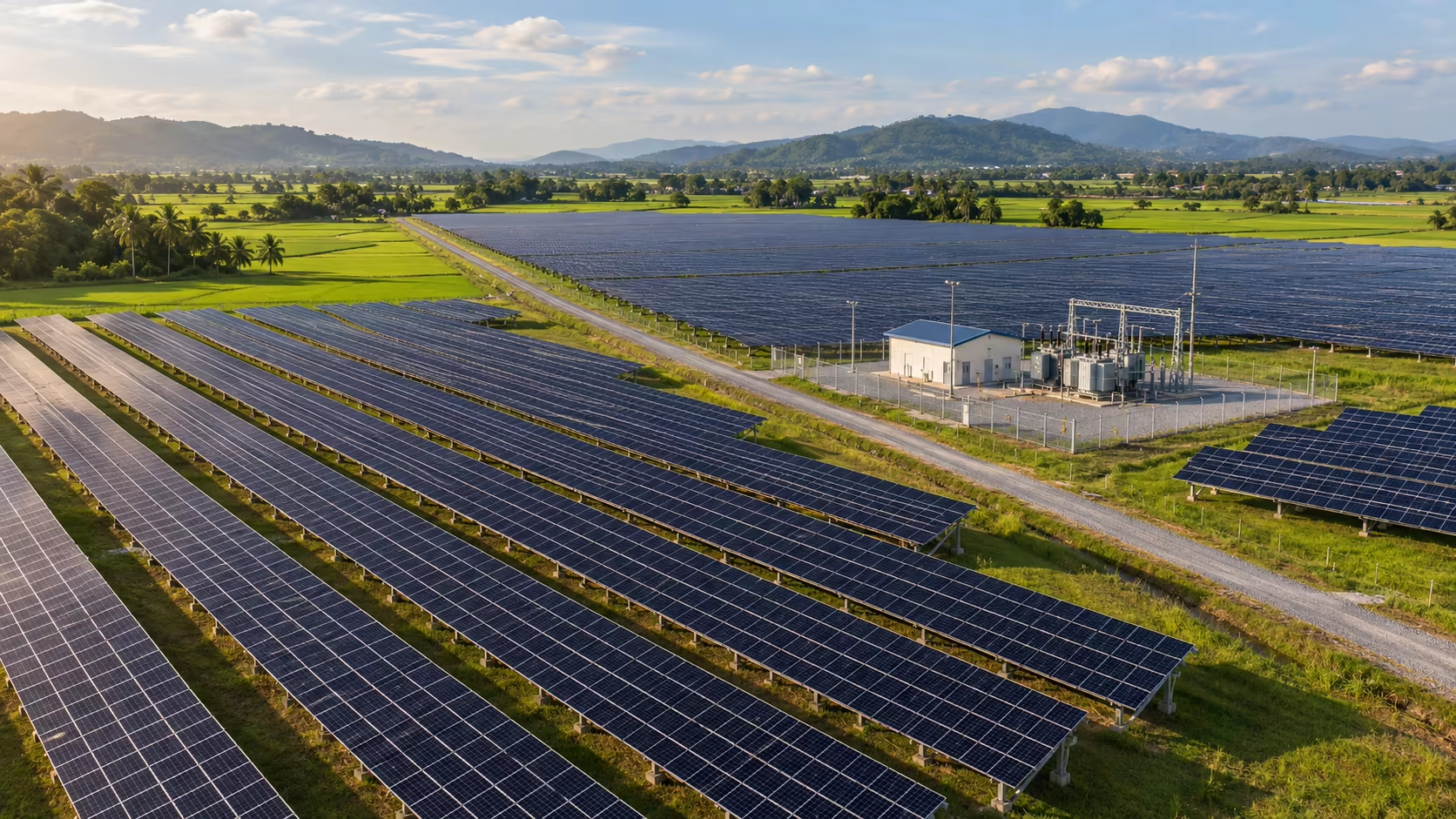
The Kudat project is significant because it breaks Malaysia’s renewable energy narrative away from a solar-and-hydro binary. Sabah’s generation mix is being diversified across solar, hydropower, biomass, geothermal, wind, and frontier technologies including Ocean Thermal Energy Conversion and Small Modular Reactors. The state is targeting 826 MW of solar by 2030 and has identified over 1,500 MW of hydropower potential.
Sarawak’s 10 GW Ambition and the 60 Per Cent Renewable Floor
Sarawak’s plan is larger in scale. The state aims to reach 10 GW of total power capacity by 2030, comprising hydropower, bioenergy, solar, and gas, while maintaining a minimum 60 per cent renewable energy capacity—equivalent to roughly 6 GW. Sarawak already hosts the 2,520 MW Bakun Dam, the country’s largest hydropower station, which generates about 42 per cent of Malaysia’s total hydropower output.
The next phase involves expanding the Baram River hydropower complex by 1.2 GW, with grid connection targeted for 2030, and developing pumped-storage facilities in Peninsular Malaysia to balance large-scale solar. Sarawak’s hydro base gives it something Peninsular Malaysia lacks: firm, dispatchable renewable capacity that can support data centres, industrial loads, and potentially cross-border exports.
The Resource Asymmetry Between East and West Malaysia
The numbers reveal a striking asymmetry. Ground-mounted solar potential is estimated at 94.9 GW for Peninsular Malaysia, 18.2 GW for Sarawak, and 97.2 GW for Sabah. Rooftop solar potential is 37.4 GW in Peninsular Malaysia, 2.6 GW in Sarawak, and 2.18 GW in Sabah. Sabah has the best solar resource in the country, with annual radiation exceeding 1,800 kWh per square metre in some areas.
Sarawak’s advantage is hydro, not solar. Its river systems and elevation drops make it the country’s hydropower heartland, with 74 per cent of Malaysia’s large hydro resources concentrated in the state. That resource base is being positioned as the backbone of Sarawak’s industrial policy, including hydrogen production and energy-intensive manufacturing.
What East Malaysia’s Build-Out Means for Investors
For investors, East Malaysia offers a different risk-return profile from Peninsular Malaysia. Projects are smaller, grids are less interconnected, and logistics costs are higher. But land is more available, resource quality is strong in specific locations, and state governments are actively courting investment.
The harder question is grid readiness. Sabah’s grid is separate from Peninsular Malaysia’s, and interconnection within Borneo remains limited. The proposed Sarawak-to-Singapore or Sarawak-to-Peninsular Malaysia subsea cable, if realised, would change that calculus by connecting Sarawak’s hydro base to higher-value demand centres. Until then, East Malaysian renewable projects are largely domestic or captive-industrial plays.
The Frontier Technologies Worth Watching
Sabah’s exploration of OTEC and SMRs is early-stage, but it signals that the state is not content to compete only on conventional renewables. OTEC exploits temperature differences between deep and surface seawater, and Sabah’s maritime geography makes it a plausible candidate. SMRs, if deployed, would provide firm low-carbon baseload that complements intermittent solar and wind.
Neither technology is bankable at commercial scale in Malaysia today. But the fact that they are being studied at state level suggests that East Malaysia is positioning itself for a post-2030 energy landscape, not just the current LSS6 cycle.