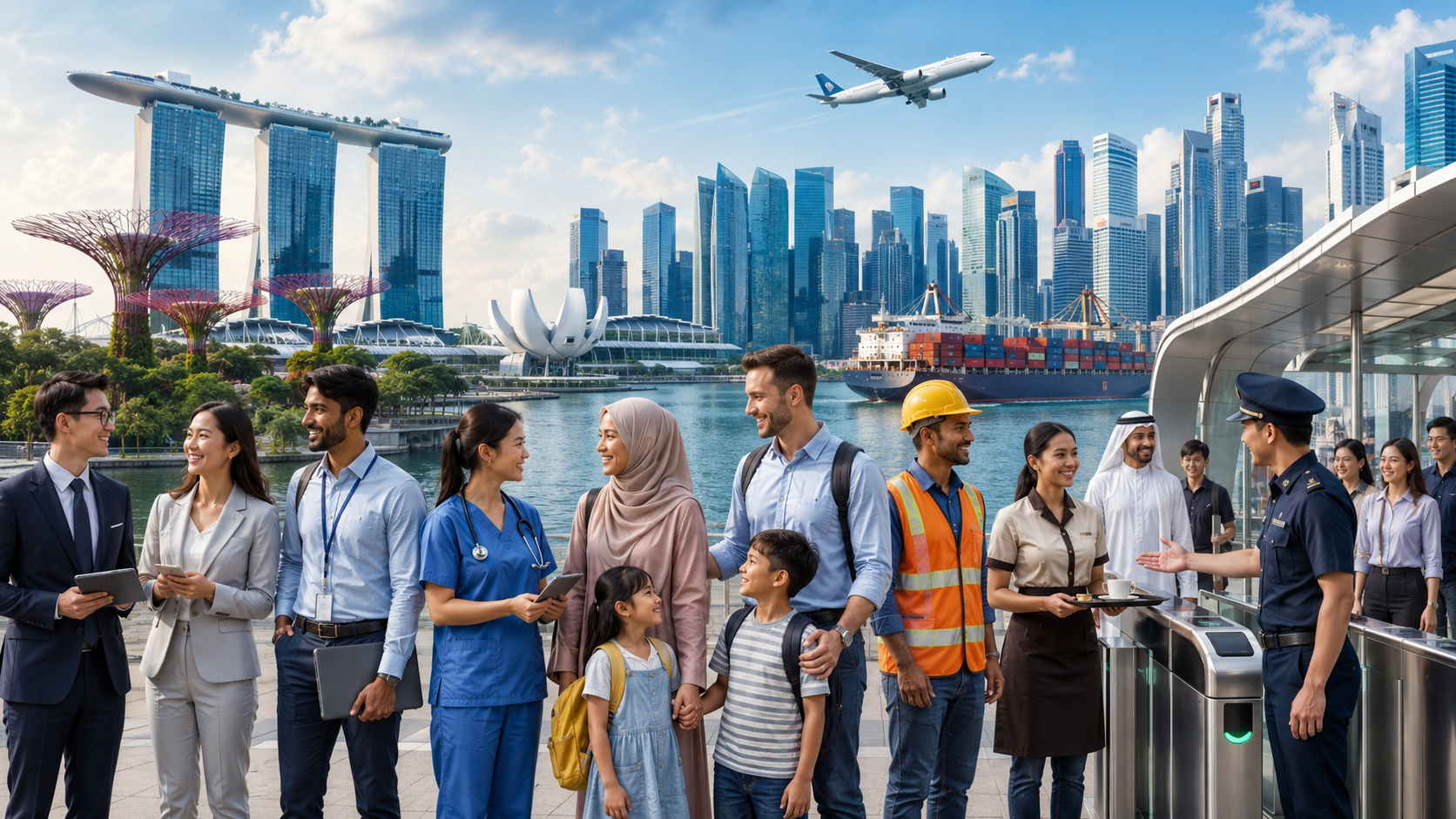

Singapore’s position as a global economic hub is closely linked to its ability to attract and manage international talent. Immigration policy serves as a strategic tool that allows the country to remain competitive in a rapidly changing global economy. By welcoming skilled individuals while maintaining strict regulatory controls, Singapore ensures that its workforce remains dynamic and future-oriented.
One of the main drivers of immigration policy is the need to support high-value industries. Singapore hosts regional headquarters of multinational corporations and is a leading center for banking, trade, logistics, and advanced manufacturing. These industries require highly specialized professionals, including financial analysts, software engineers, data scientists, biomedical researchers, and legal experts. Immigration allows Singapore to access global talent that complements its local workforce.
To regulate this inflow, Singapore uses a merit-based system. Work passes are granted based on qualifications, experience, salary levels, and economic contribution. This ensures that foreign workers entering the country meet specific standards that align with national development goals. At the same time, the system is flexible enough to adapt to changing economic needs, such as emerging industries in artificial intelligence or green technology.
Beyond high-skilled labor, Singapore also relies on foreign workers in essential support sectors. These roles, while often less visible, are crucial for urban functioning. Construction workers build infrastructure, domestic helpers support households, and service workers maintain cleanliness and hospitality standards. The government manages these sectors through quotas, levies, and strict employer accountability to prevent overdependence and ensure fair labor practices.
Integration is a key consideration in immigration policy. Singapore’s multicultural identity requires that diversity be managed in a way that promotes unity rather than fragmentation. Immigrants are encouraged to participate in community life and understand local customs and values. Public housing policies, education systems, and shared public spaces all contribute to fostering interaction between locals and newcomers.
The pathway to permanent residency and citizenship is deliberately selective to ensure long-term alignment with national interests. Factors such as economic contribution, length of stay, family stability, and social integration are carefully evaluated. Citizenship is viewed as a long-term commitment rather than a transactional status.
Strict enforcement of immigration laws reinforces the credibility of the system. Illegal employment, overstaying, and document fraud are actively monitored and penalized. This helps maintain trust among citizens and ensures fairness for legal migrants.
Singapore’s immigration strategy illustrates how a small nation can leverage global talent to enhance competitiveness while maintaining control over population dynamics and social cohesion.