




Singapore is home to a wide range of cultural festivals that reflect the country’s rich multicultural heritage. These celebrations, spread throughout the year, bring together people from various backgrounds, providing an opportunity to learn about one another’s traditions and strengthen the sense of unity within the society. In Singapore, festivals are not just about revelry – they are about cultural exchange, shared values, and deep-rooted traditions that showcase the richness of its communities.
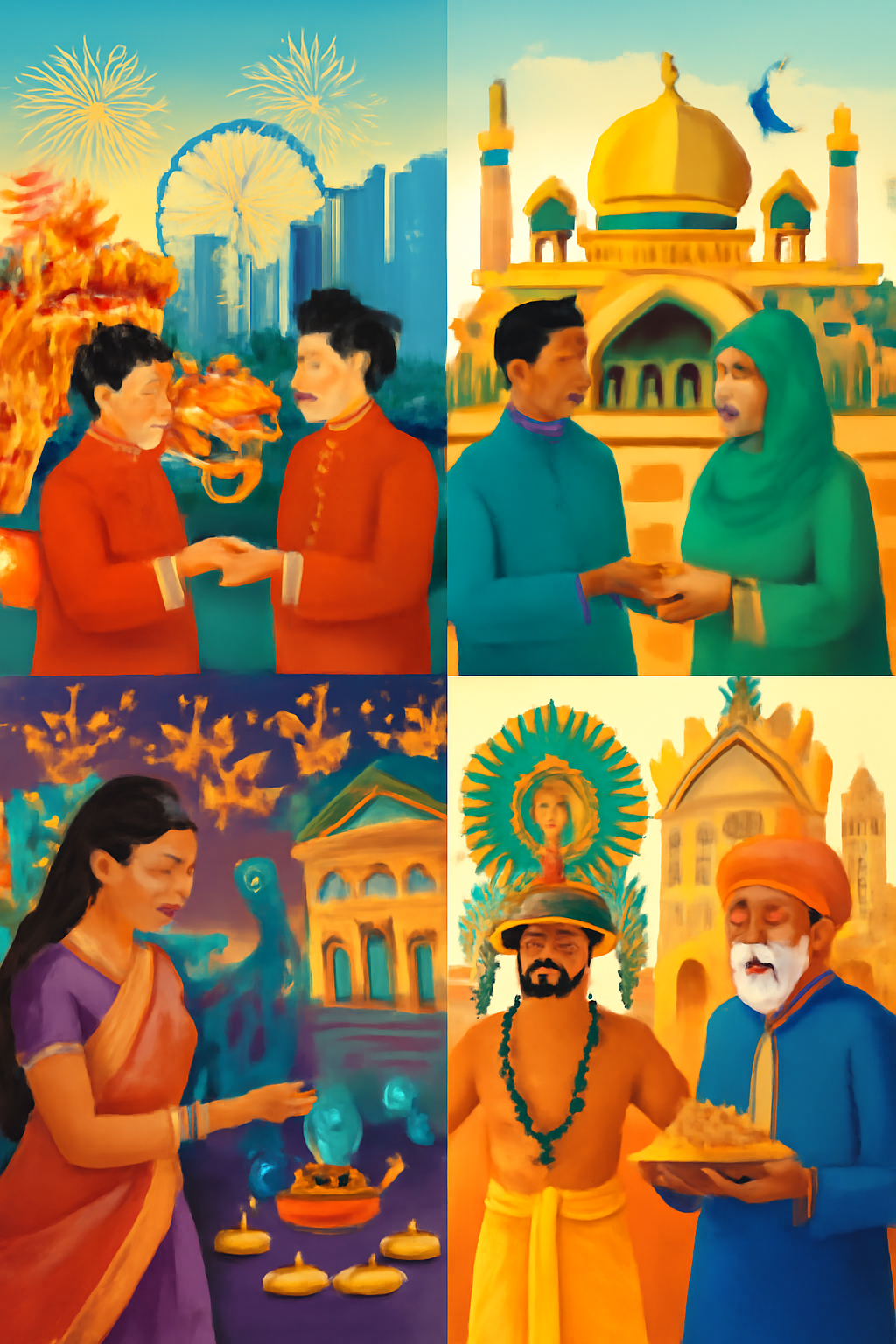
The Chinese New Year festival is one of the biggest and most anticipated celebrations in Singapore. The city is adorned with red lanterns, and traditional performances like lion dances and dragon dances are held in many parts of Singapore, including Chinatown, where street markets sell everything from festive goods to traditional food items. People gather with family and friends, preparing meals that symbolize prosperity, like fish (for abundance) and dumplings (for wealth). One of the festival’s highlights is the Chingay Parade, a stunning display of multicultural performances, music, and dance that draws crowds from all over the world.
For Muslims in Singapore, Hari Raya Puasa marks the end of the holy month of Ramadan. After a month of fasting and prayers, this festival is a time to celebrate with family, friends, and neighbors. In the Geylang Serai district, the atmosphere is electric, with vibrant lights, markets, and traditional Malay foods like ketupat (rice cakes) and rendang (spicy beef stew). Hari Raya embodies the spirit of renewal, forgiveness, and generosity.
The Deepavali festival is an important occasion for Singapore’s Hindu community, symbolizing the victory of light over darkness. During Deepavali, families clean their homes, light diyas (oil lamps), and decorate their homes with vibrant colors. The streets of Little India come alive with spectacular light displays, while people indulge in sweets and savory snacks. Traditional foods like barfi, laddu, and gulab jamun are enjoyed, and the festival serves as a time for spiritual reflection and family gatherings.
For Sikhs, Vaisakhi holds both cultural and religious significance. This festival marks the harvest season and the founding of the Khalsa in 1699. In Singapore, Sikhs celebrate Vaisakhi by attending Gurdwaras, offering prayers, and sharing langar (a community meal) with everyone, regardless of their background. Vaisakhi promotes the principles of equality, selfless service, and community welfare, and it is a time for Sikhs to reflect on the teachings of Guru Nanak and Guru Gobind Singh.
The Thaipusam festival is an intense, spiritual celebration that is observed by Hindus in honor of Lord Murugan. During Thaipusam, devotees undertake a pilgrimage from the Sri Srinivasa Perumal Temple to the Sri Thendayuthapani Temple, many carrying elaborate kavadis as acts of penance and devotion. This colorful and physically demanding procession symbolizes sacrifice, devotion, and the power of faith.
Singapore’s festivals are not just an opportunity to celebrate the distinct traditions of each community; they also encourage cultural exchange and mutual understanding. The participation of people from all walks of life in these events is a testament to the harmonious coexistence of diverse ethnicities, religions, and traditions within Singapore. Through these festivals, Singaporeans celebrate not only their own cultural identities but also the collective identity of a unified and harmonious nation.