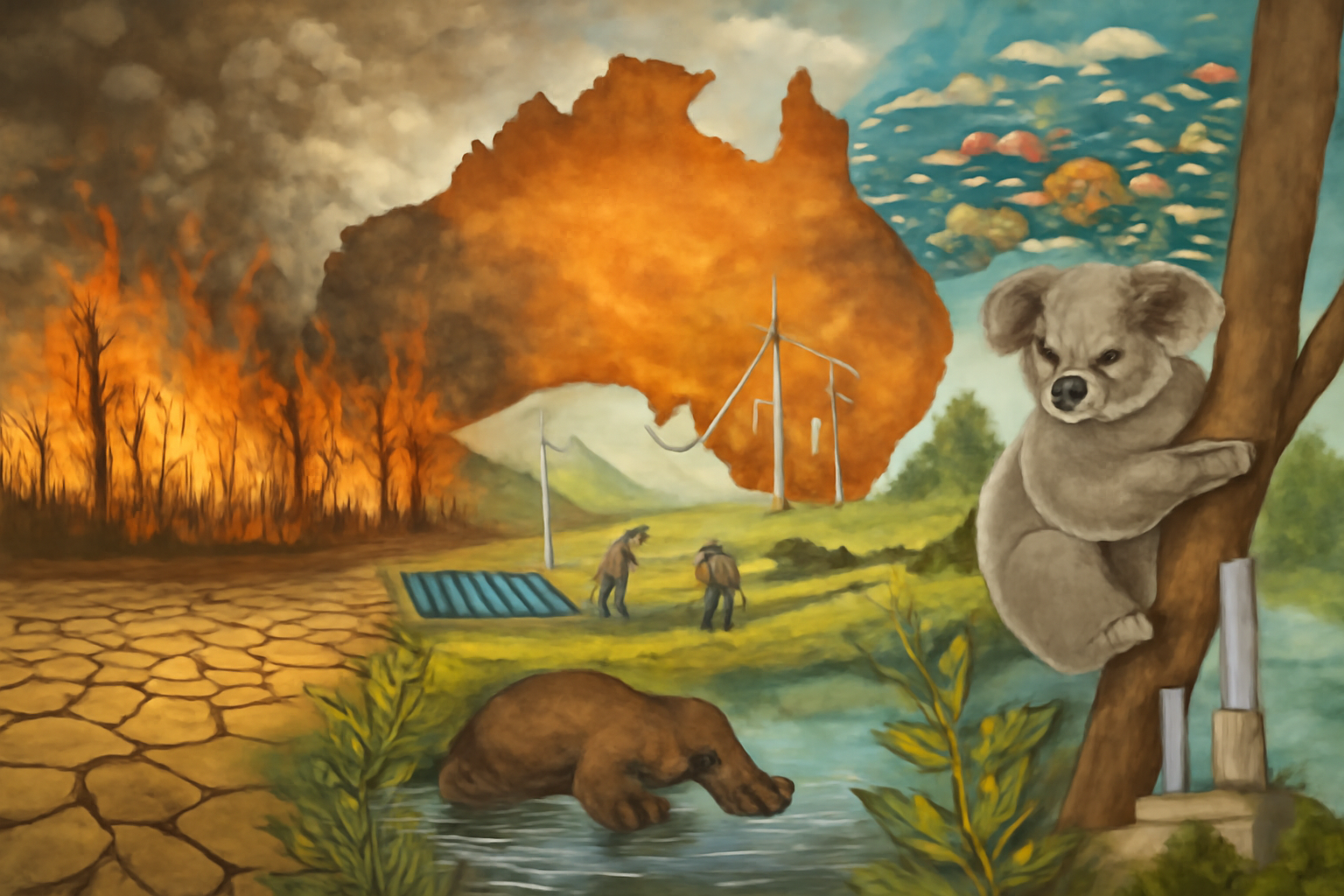

Australia’s environment is facing a range of critical challenges, many of which are directly related to the impacts of climate change. From increasing bushfire activity to droughts and the decline of the Great Barrier Reef, climate change is reshaping the country’s ecosystems and endangering its unique wildlife. These challenges underscore the importance of both climate action and conservation efforts to protect Australia’s environmental future.
Bushfires have become more intense and widespread in recent years, a trend exacerbated by climate change. The 2019-2020 bushfire season, one of the worst in Australian history, caused widespread devastation, destroying forests, homes, and countless species of wildlife. Rising temperatures and prolonged droughts are creating the ideal conditions for wildfires to spread quickly and uncontrollably. The destruction caused by these fires highlights the urgent need for climate adaptation and mitigation strategies.
Droughts are another major issue in Australia, with many regions experiencing reduced rainfall due to changing weather patterns. Water scarcity is a growing concern, particularly in the agricultural sector, where irrigation is essential for crop and livestock production. The impact of drought on farming communities is profound, leading to reduced yields, economic hardship, and uncertainty about the future.
The Great Barrier Reef, a national treasure and biodiversity hotspot, is also under threat due to climate change. Warmer ocean temperatures are causing coral bleaching, which weakens coral reefs and leads to the loss of vital marine ecosystems. The degradation of the reef not only threatens marine life but also has significant economic consequences for industries dependent on the reef, such as tourism and fishing.
In response to these environmental crises, Australia is focusing on a range of strategies aimed at mitigating climate change and promoting conservation. The country has made commitments under the Paris Agreement to reduce its greenhouse gas emissions and limit global warming. Efforts to transition to renewable energy sources, such as solar and wind, are key to reducing Australia’s reliance on fossil fuels and decreasing its carbon footprint.
Conservation efforts are also critical in ensuring the protection of Australia’s unique wildlife and ecosystems. National parks and protected areas are being expanded to safeguard endangered species and preserve natural habitats. Australia is also making use of Indigenous knowledge in land management, with controlled burns and fire-stick alliances being integrated into modern conservation practices to reduce the risk of destructive bushfires.
As Australia continues to confront the environmental challenges posed by climate change, the need for continued action and innovation remains paramount. Protecting the nation’s environment requires a collaborative approach from governments, industries, and communities to secure a sustainable and resilient future.