





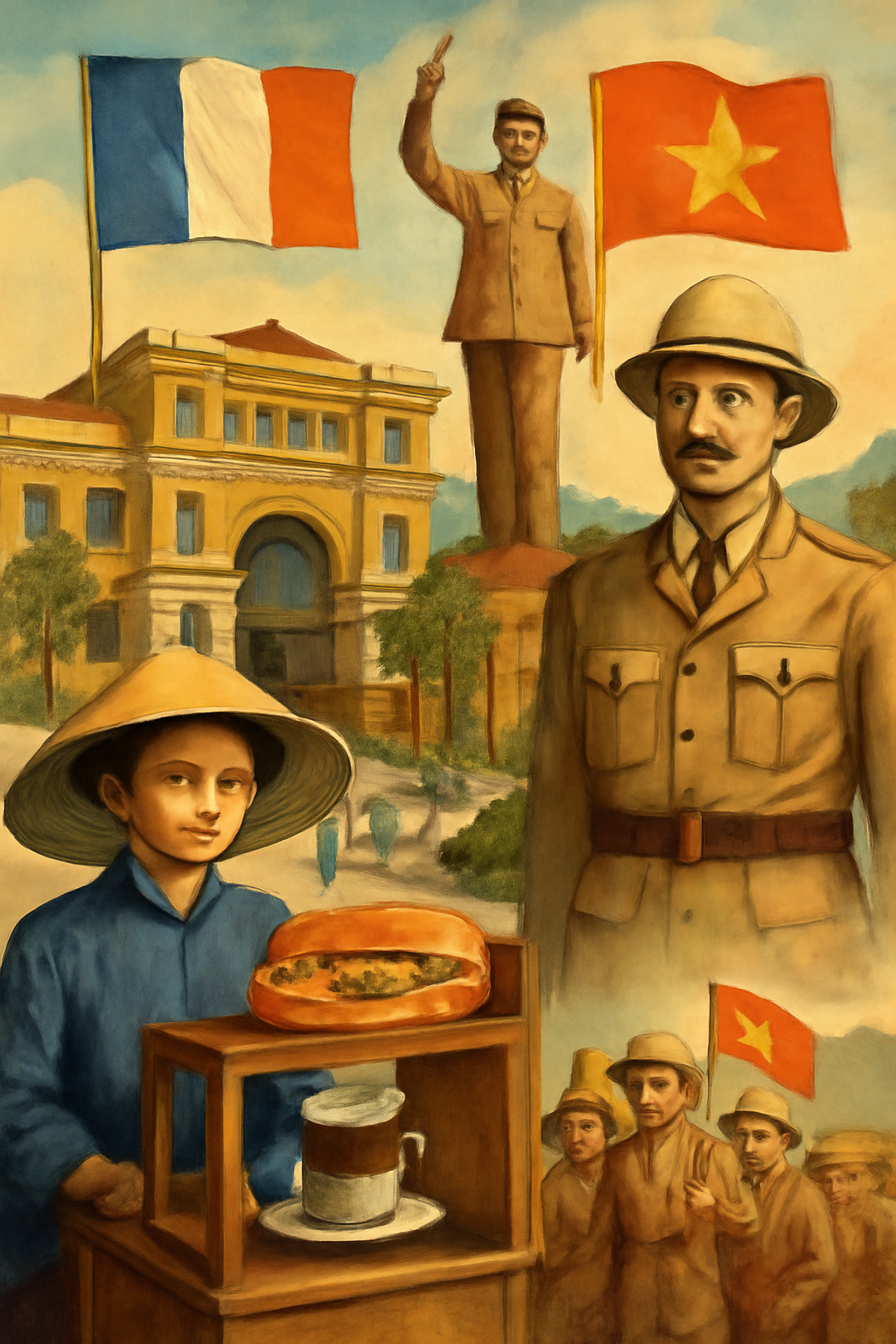
The French colonization of Vietnam from the mid-1800s to the mid-20th century left a significant legacy on the nation. The period of French colonial rule brought profound changes to Vietnam’s political structure, economic systems, and cultural identity, many of which continue to influence the country today. While the era was marked by exploitation and oppression, it also saw the introduction of new ideas, infrastructure, and cultural exchanges that shaped modern Vietnam.
Politically, the French colonial government introduced a system of direct rule, sidelining traditional Vietnamese leadership and imposing French governance. The French administration extracted resources from Vietnam, focusing on rubber, rice, and minerals, to support the French economy. The exploitation of local labor, particularly in the agricultural and mining sectors, was a hallmark of French colonial rule, leading to significant social and economic inequalities.
Culturally, the French left a lasting imprint on Vietnamese architecture, language, and cuisine. French-style buildings, with their wide boulevards and grand facades, can still be seen in the major cities of Hanoi and Ho Chi Minh City. Structures like the Hanoi Opera House and the Saigon Central Post Office serve as enduring symbols of French architectural influence.
The French language became the language of the educated elite, and its usage spread throughout the administration and higher education. Even though French is no longer as widely spoken in Vietnam today, it has left its mark on the Vietnamese language, particularly in areas like law, governance, and food. Many French words are embedded in everyday Vietnamese, especially in culinary terms.
The introduction of French cuisine also transformed Vietnamese food culture. The most famous example of this fusion is the “banh mi,” a sandwich made with a French baguette and local Vietnamese fillings, creating a delicious blend of French and Vietnamese flavors. French coffee culture, particularly the practice of brewing coffee with condensed milk, led to the creation of the iconic Vietnamese iced coffee, “cà phê sữa đá.”
Despite the cultural exchanges, French colonial rule was not without its struggles. The exploitation and oppression of the Vietnamese people led to resistance movements, culminating in the First Indochina War. The defeat of the French at Dien Bien Phu in 1954 ended their colonial rule and marked the beginning of a new era for Vietnam.
The French legacy in Vietnam is complex, shaped by both positive and negative aspects. While the exploitation of resources and people cannot be ignored, the cultural exchange between France and Vietnam enriched the nation’s identity, and the influences of French colonialism are still seen in the country’s architecture, language, and food today.