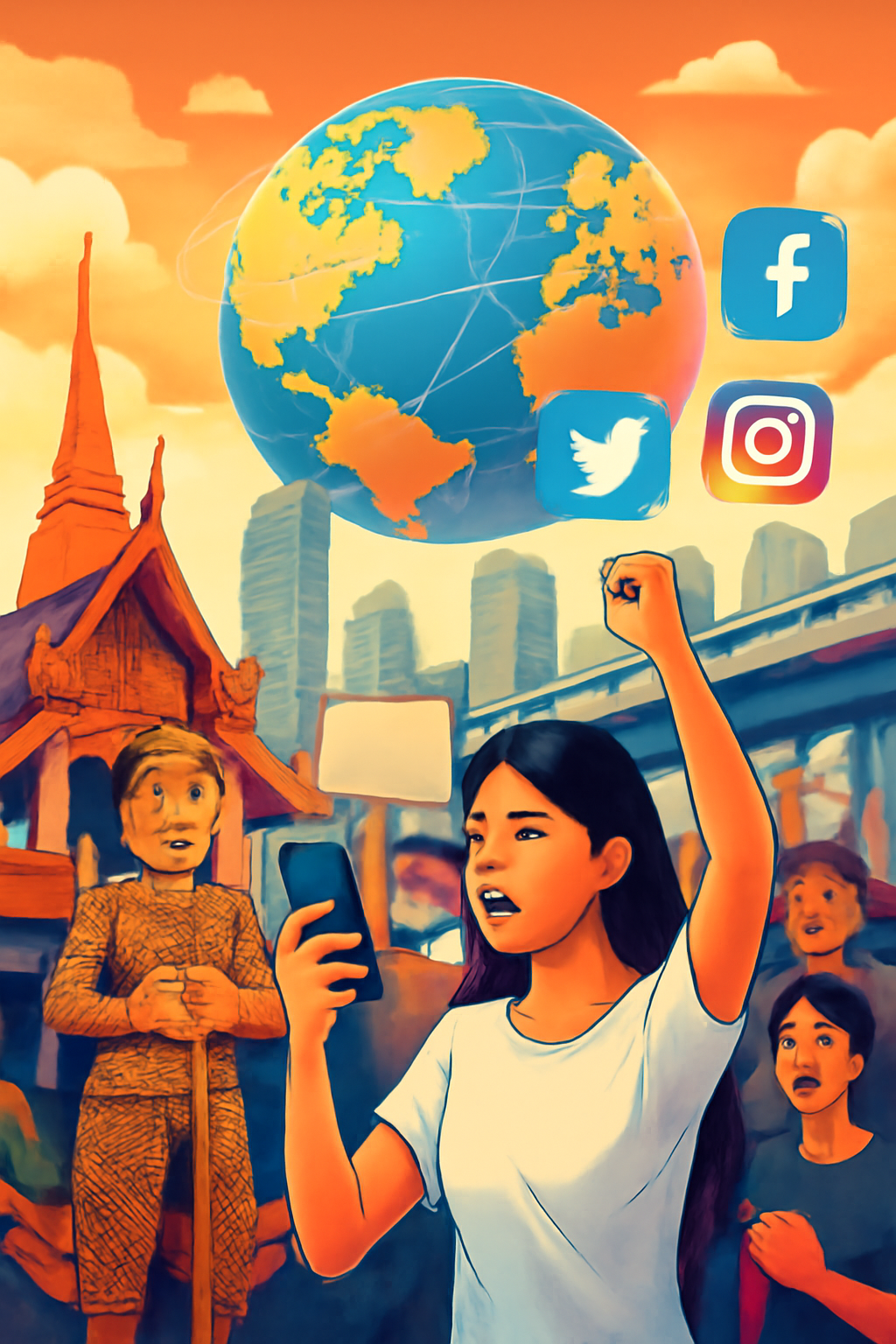

Thailand, a country with deep cultural traditions and a vibrant society, is undergoing significant transformations in response to the forces of globalization and the proliferation of social media. These changes have reshaped the way people live, work, and interact with one another, influencing every aspect of Thai society from economics to politics to culture. As Thailand becomes more connected to the global community, its citizens are experiencing new opportunities as well as confronting complex challenges.
Globalization has played a key role in Thailand’s economic growth over the past few decades. The expansion of international trade, tourism, and foreign investment has contributed to the country’s rapid urbanization and modernization. Large multinational companies have established operations in Thailand, creating new jobs and increasing the standard of living for many. At the same time, however, this economic expansion has been accompanied by growing income inequality, with rural areas often being left behind in terms of access to resources and opportunities.
Culturally, globalization has introduced a wide range of influences, especially from the West. These global influences have been embraced by Thailand’s younger generations, particularly in urban centers. Young Thais are increasingly adopting global styles of fashion, entertainment, and communication, often prioritizing individualism over collective tradition. This cultural shift has led to a growing generational divide between younger Thais and older generations, who may feel that these new influences threaten the country’s traditional values and social structures.
Social media has also played an integral role in Thailand’s social evolution. Platforms like Facebook, Instagram, and Twitter have provided individuals with a way to share their experiences, express their views, and interact with others both locally and globally. Social media has been especially important in allowing people to access information and become more politically engaged. During recent political protests, social media was used as a powerful tool for organizing demonstrations, sharing messages, and mobilizing people across the country.
The increased political engagement facilitated by social media has empowered young people in Thailand, particularly those who feel excluded from the political process. Social media has allowed them to voice their concerns, advocate for democratic reform, and challenge established power structures. The youth-led protests of 2020, which called for a reduction in the monarchy’s influence and increased democratic freedoms, were largely organized and promoted through social media channels.
However, the rise of social media has also created new challenges. The spread of misinformation and fake news has become a serious issue, with false information often spreading more quickly than the truth. During times of political unrest, this misinformation can fuel political tensions and create confusion among the public. The Thai government has responded by attempting to regulate online content, but this has raised concerns about censorship and the potential suppression of free expression.
In conclusion, globalization and social media have had a profound impact on Thai society, driving economic growth, cultural change, and political participation. However, these forces have also raised important questions about cultural identity, information integrity, and political stability. The way Thailand navigates these challenges will determine its path forward in the 21st century.