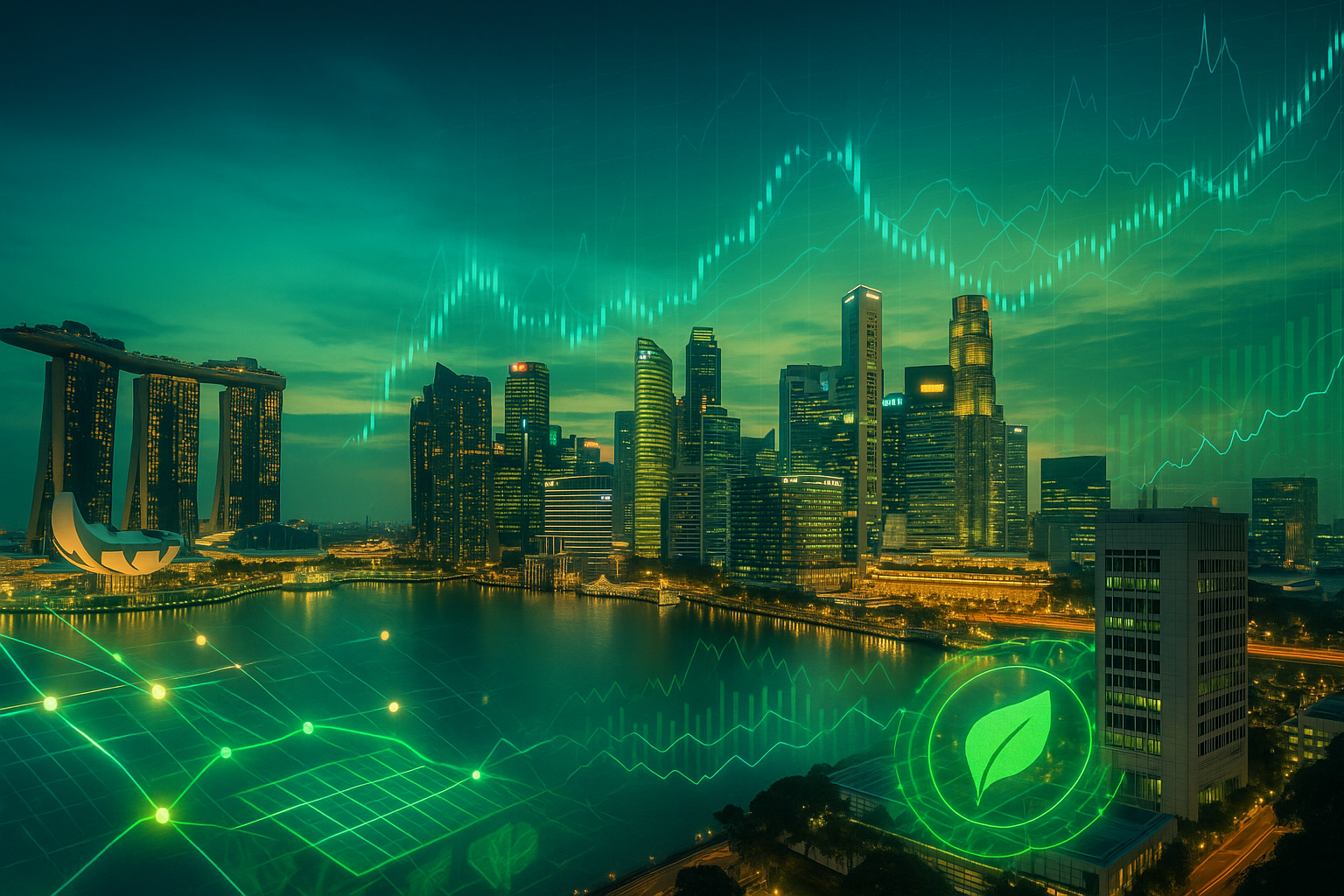

Finance is not only about moving capital; it is about pricing and transferring risk. Singapore’s hub status rests partly on its breadth in risk markets—from foreign exchange and insurance to sustainability-linked financing—allowing corporates and investors to manage exposures comprehensively.
Foreign exchange is a cornerstone. With deep liquidity across Asian and G10 currencies, banks run regional trading and risk desks from Singapore. Electronic platforms operate with low latency thanks to robust data centers and connectivity. The follow-the-sun model works smoothly here, with books handed from New York to London to Singapore, keeping markets continuous and spreads tight.
Insurance and reinsurance capabilities broaden the toolkit. Singapore hosts specialty underwriting in marine, energy, aviation, and infrastructure, reflecting the region’s trade routes and development pipeline. Reinsurers provide capacity for catastrophe risk, while alternative risk transfer—such as insurance-linked securities—adds diversification. This stack enables corporates to secure financing on better terms, as lenders take comfort in well-hedged operational exposures.
Capital markets connect risk to investors. The Singapore Exchange (SGX) offers derivatives for equity indices and commodities linked to regional demand. Clearinghouses and custodians ensure that margining, collateral, and settlement processes are robust. Together, these institutions reduce counterparty risk and enable sophisticated hedging strategies for funds and corporates.
Governance and regulation keep the risk engine credible. MAS’s prudential standards, stress testing, and transparent enforcement maintain system resilience. Technology risk and cyber guidelines recognize the operational interdependence of trading venues, brokers, and custodians. Strong AML/CFT frameworks protect market integrity, supporting participation by global institutions with stringent compliance requirements.
Sustainability has introduced new dimensions of risk and opportunity. Singapore promotes green and transition finance through grant schemes, disclosure initiatives, and taxonomies that help standardize what qualifies as environmentally credible. Banks structure sustainability-linked loans with performance targets; issuers bring green bonds to market; data providers and verifiers co-locate to support credible measurement. As Asian economies decarbonize, the city acts as a coordination point for pricing climate risk and mobilizing capital.
The ecosystem is completed by talent and professional services. Risk actuaries, quants, compliance specialists, and technology engineers form multidisciplinary teams that can model exposures, structure instruments, and execute with precision. Law firms and arbitration centers provide the legal scaffolding for complex, cross-border documentation and dispute resolution.
Singapore’s differentiation is not a single product or policy; it is an integrated risk platform. By combining deep FX markets, advanced insurance and reinsurance capacity, reliable clearing and custody, and a growing sustainability toolkit, the city enables participants to convert uncertainty into bankable transactions—at scale and with confidence.