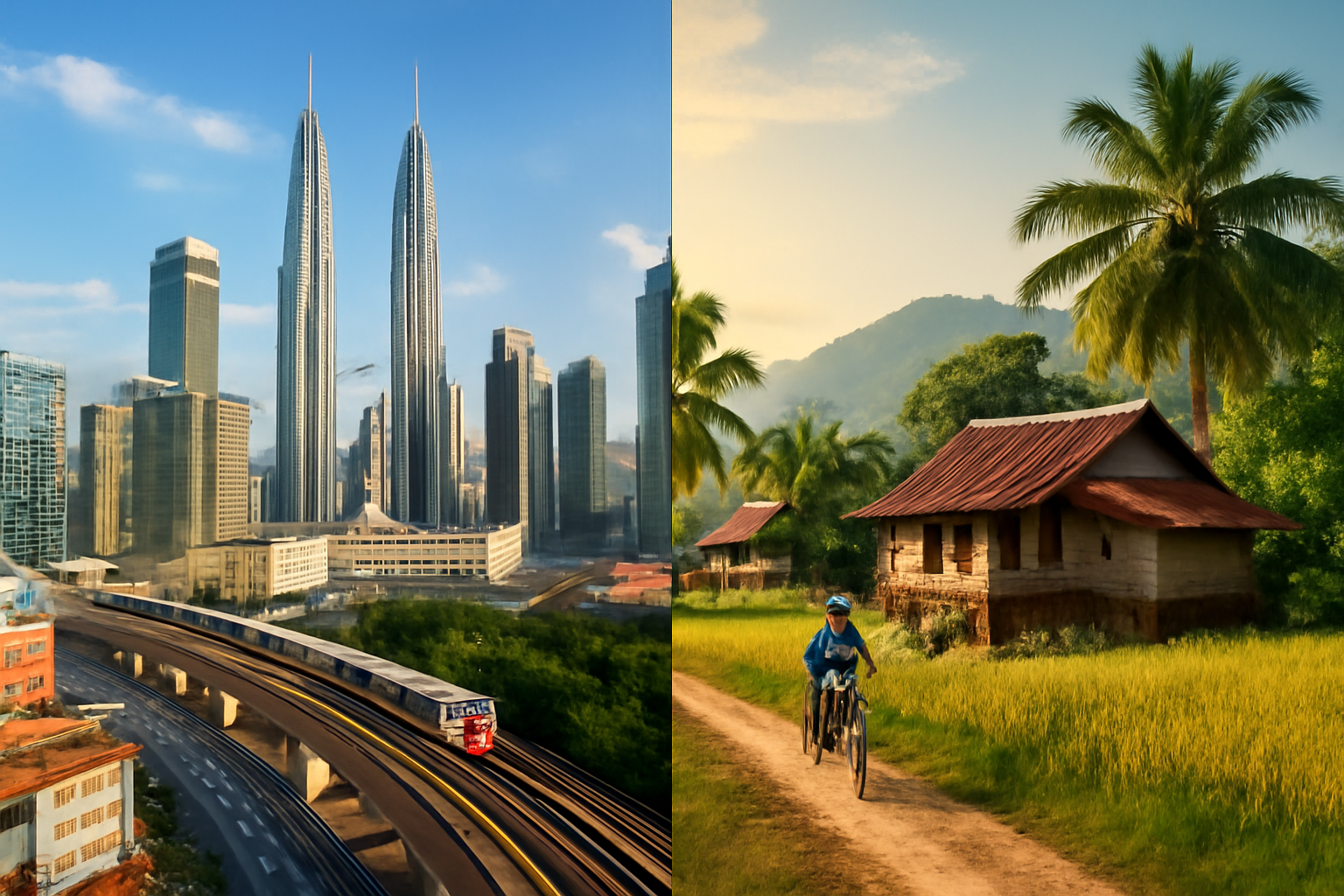

In Malaysia, the choice between urban and rural living is an important one, with each offering distinct benefits and challenges. From the vibrant, modern atmosphere of the cities to the tranquil, nature-focused existence in rural areas, this article explores the key differences between the two lifestyles, while also highlighting the opportunities and struggles that come with each.
The Appeal of Urban Living in Malaysia
Urban areas in Malaysia, particularly Kuala Lumpur, Johor Bahru, and Penang, offer residents a dynamic and fast-paced lifestyle. Cities are home to a wide range of industries, offering ample career opportunities in fields such as finance, technology, healthcare, and services. The infrastructure in cities is well-developed, with excellent public transportation, modern healthcare facilities, and easy access to education. Urban living also provides a vibrant cultural and social scene, with numerous dining, shopping, and entertainment options.
However, city living comes with significant drawbacks. The high cost of living is one of the most prominent challenges. Property prices, particularly in Kuala Lumpur, have surged, making it difficult for many people to afford homes. The fast-paced lifestyle and high levels of stress in urban areas can also take a toll on physical and mental well-being. Additionally, cities often suffer from traffic congestion, noise, and air pollution, all of which contribute to a lower quality of life for some residents.
Rural Living: Simplicity, Nature, and Lower Costs
Rural areas in Malaysia, such as in Sabah, Terengganu, and Kedah, offer a quieter and more peaceful lifestyle. Life in the countryside is closely connected to nature, with many residents working in agriculture, fishing, and local crafts. The slower pace of life and the sense of community provide a strong sense of belonging and security. Additionally, the cost of living in rural areas is much lower compared to the cities, making it an attractive option for those seeking a simpler, more affordable life.
Despite its appeal, rural living comes with its own set of challenges. While living costs are lower, rural residents often lack access to basic services such as healthcare, education, and high-quality infrastructure. Many rural areas face issues with unreliable electricity, poor roads, and limited access to the internet, making life more difficult. Employment opportunities are also limited, and most rural residents rely on agriculture or small businesses to make a living.
Challenges in Urban and Rural Settings
In urban settings, the major challenges are related to the high cost of living, overcrowding, and pollution. The rising cost of property in cities has made homeownership increasingly difficult for many, while traffic congestion and pollution have degraded the quality of life for urban residents. The competitive nature of city life can also lead to higher stress levels, affecting physical and mental health.
Rural areas face their own difficulties, particularly in terms of infrastructure and access to services. While the cost of living is lower, rural residents often lack access to modern amenities such as reliable internet, healthcare, and education. This can limit their ability to pursue career opportunities or improve their quality of life. Additionally, the limited job market in rural areas makes it challenging for young people to find fulfilling careers without migrating to urban centers.
Opportunities for Development in Both Environments
Urban areas offer significant opportunities for career advancement, particularly in industries such as technology, finance, and healthcare. The urban environment also fosters innovation, with access to venture capital, a diverse talent pool, and a thriving entrepreneurial ecosystem. Additionally, cities provide excellent networking opportunities and a wide range of professional connections that can help individuals grow in their careers.
Rural areas, however, present opportunities in agriculture, eco-tourism, and local businesses. With the rise in demand for organic food, sustainable agriculture, and nature-based tourism, rural areas are well-positioned to capitalize on these trends. Government initiatives aimed at improving rural infrastructure and creating jobs in rural areas are also helping to stimulate economic growth in these regions.
The choice between urban and rural life in Malaysia ultimately depends on personal preferences and lifestyle goals. Each environment offers unique opportunities and challenges that can shape an individual’s experience in the country. By understanding the key differences, individuals can make informed decisions about where to live and how to thrive in either setting.