





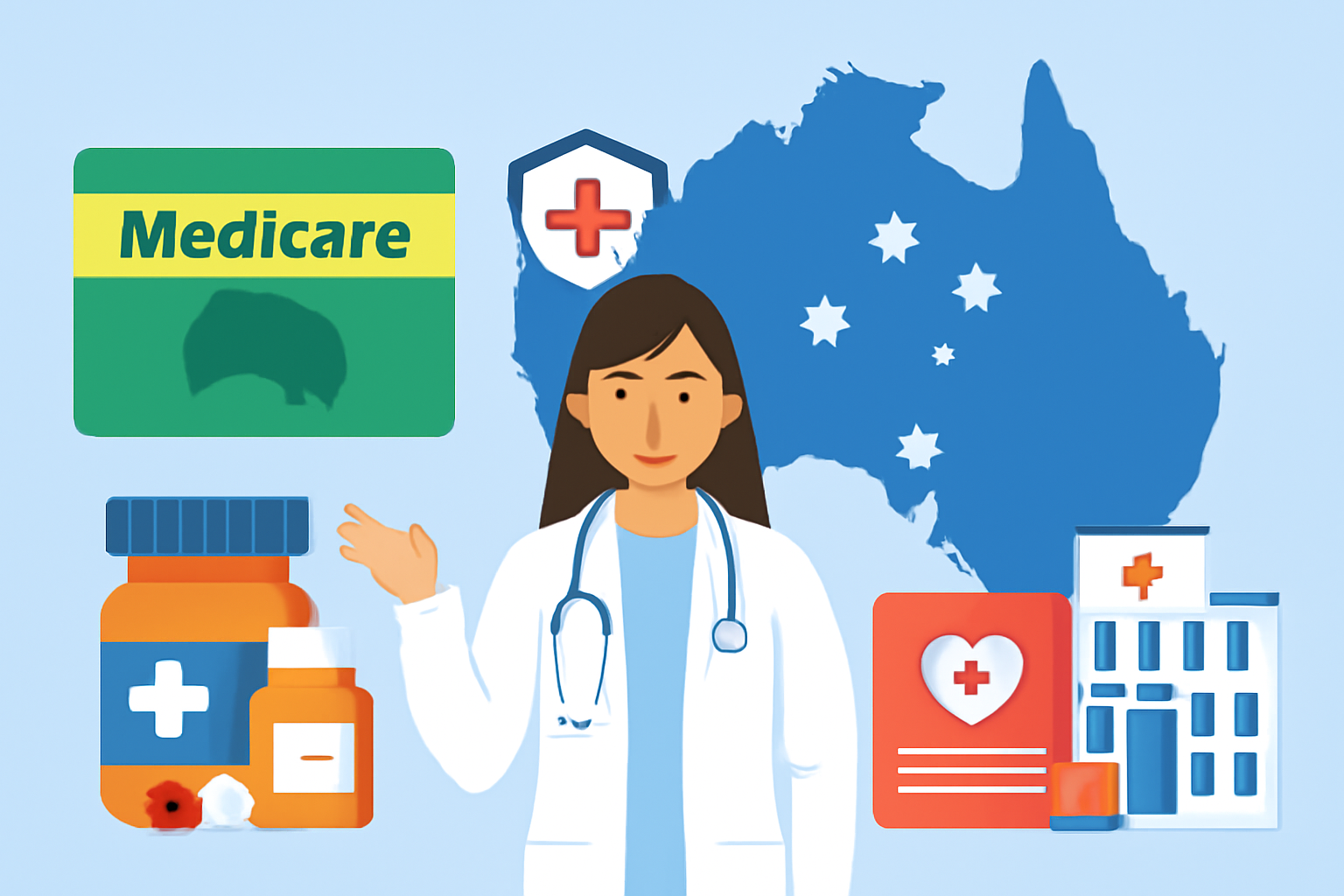
Australia’s healthcare system is celebrated for its accessibility and commitment to providing affordable medical services to all citizens and permanent residents. This is made possible through the country’s Medicare program, a public health insurance system that ensures everyone has access to essential medical services.
Introduced in 1984, Medicare covers a broad range of healthcare needs, including visits to doctors, treatment in public hospitals, and many other medical services. The system is funded through general taxation and a Medicare levy, a small tax paid based on income, which helps ensure that funding for healthcare is sustainable and equitable. This approach helps make healthcare affordable for all Australians, regardless of their economic status.
To complement Medicare, Australians can choose private health insurance, which offers coverage for services not included under Medicare, such as dental, optical, and elective procedures. Private health insurance also allows individuals to bypass long waiting times for treatment, providing faster access to care. The government offers rebates to help offset the cost of private insurance premiums, making it more affordable for people to access private healthcare services.
Another vital part of the system is the Pharmaceutical Benefits Scheme (PBS), which makes prescription medications more affordable. The PBS subsidizes the cost of a wide range of essential medications, ensuring that Australians with chronic conditions or ongoing medical needs can access their required treatments at reduced prices.
Australia’s public hospitals provide essential services at no direct cost to patients. These hospitals offer everything from emergency care to complex surgeries, ensuring that all Australians, regardless of their income or location, can access the care they need. Public hospitals are especially crucial in rural and remote areas, where private healthcare providers may be scarce.
In addition to these key elements, primary healthcare is a cornerstone of the Australian healthcare model. General practitioners (GPs) are the first point of contact for patients and play a significant role in managing overall health. GPs provide routine check-ups, manage chronic conditions, and refer patients to specialists when necessary. By offering preventative care, GPs help identify potential health issues early, reducing the need for more costly treatments later.
Australia’s focus on preventive healthcare through public health campaigns helps to reduce the incidence of preventable diseases. The government supports initiatives aimed at promoting healthy lifestyles and reducing smoking, which in turn lowers the long-term burden on the healthcare system.
Despite some challenges, including an aging population and the rising costs of healthcare, Australia’s healthcare system remains an effective and affordable model that ensures all citizens have access to essential medical care. By combining universal Medicare coverage with private insurance options, subsidized medications, and a strong focus on preventive care, Australia continues to deliver a healthcare system that prioritizes the well-being of all its residents.