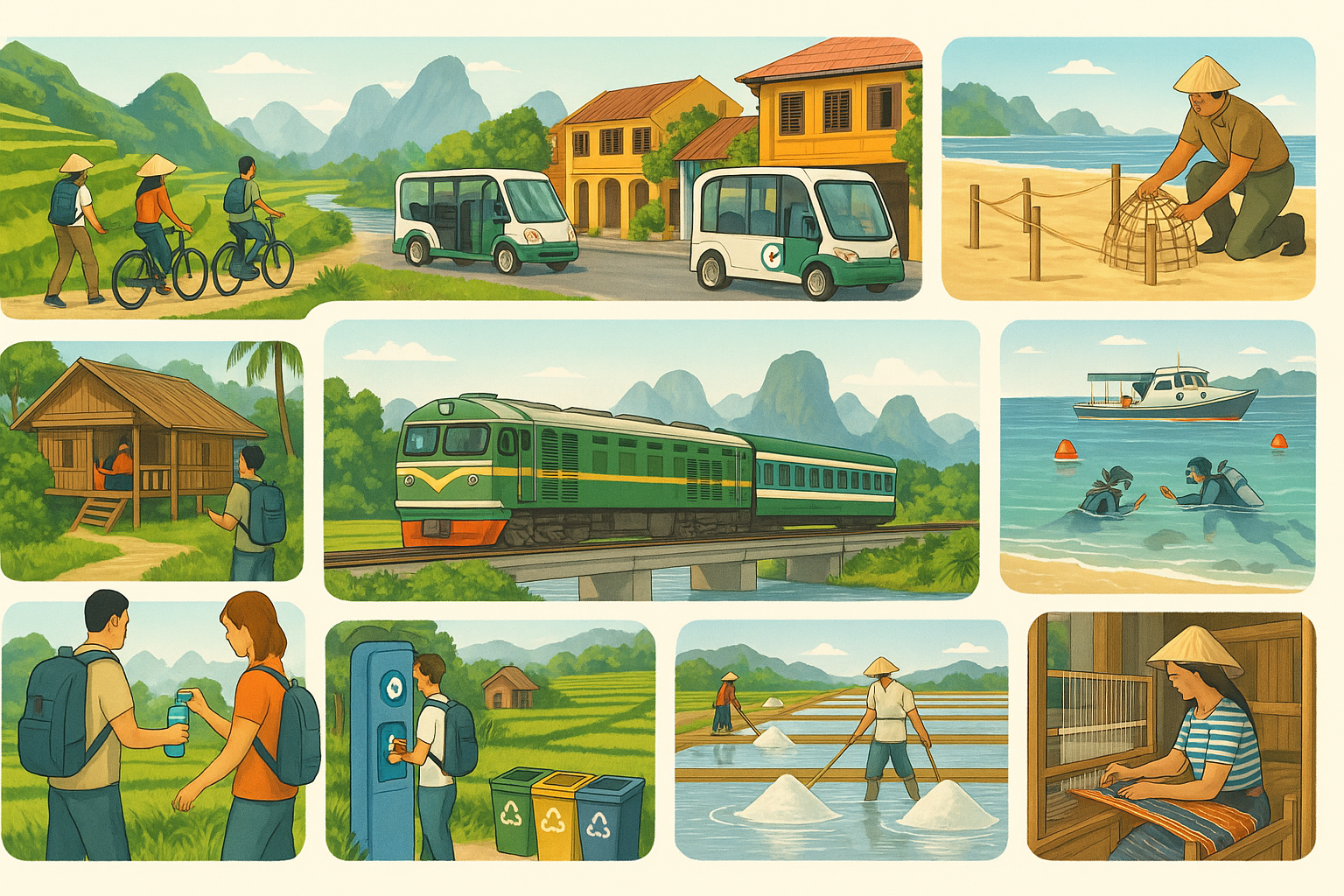

Designing an itinerary around trains, clustered regions, and community experiences creates a lighter footprint and a richer trip. Here’s a two‑week outline that favors conservation‑minded choices while covering a sweep of Vietnam’s landscapes.
Days 1–3: Hanoi → Ninh Binh. Land in Hanoi, then take a short train or bus to Ninh Binh’s Trang An or Tam Coc. Stay at a small lodge with refill stations and shaded courtyards. Paddle guided routes that rotate through wetlands to avoid crowding, and cycle to limestone temples on backroads. Eat plant‑forward meals heavy on herbs, tofu, and seasonal greens.
Days 4–5: Lan Ha Bay. Transfer to Cat Ba for quieter bays. Choose a small‑boat cruise with wastewater treatment and mooring buoy use. Kayak responsibly, keeping paddles shallow over seagrass, and skip single‑use cups by bringing your own.
Days 6–7: Phong Nha–Ke Bang via Dong Hoi. Take the overnight train south. Book cave tours with licensed operators that cap group size and use low‑impact lighting. Consider a day in the surrounding karst forest with a local guide who can interpret flora and conservation challenges.
Days 8–9: Hue. Move by train. Explore the Citadel by bicycle, glide along the Perfume River in quiet boats, and sample vegetarian royal dishes. Look for hotels that publish energy and water metrics and hire from nearby communities.
Days 10–11: Hoi An & Cham Islands. Ride the scenic pass to Danang by train or bus, then onward to Hoi An. Join a community‑run snorkeling trip on the Cham Islands that caps numbers and teaches reef etiquette. In Cam Thanh’s nipa palm waterways, choose paddles over loud engines.
Days 12–14: Ho Chi Minh City base with nature escapes. Fly once if necessary, then stay put. Spend a day in Can Gio’s mangroves with guides who explain crab traps, bird rookeries, and restoration. Alternatively, head to the Mekong for quiet canals with electric boats and homestays that rotate guests and fund scholarships.
Throughout: Carry a filter bottle and utensil kit, dress modestly in villages and temples, and keep drones grounded unless invited. Buy crafts directly from cooperatives, take cooking classes instead of bargaining down rates, and favor seasonal produce and responsible seafood.
Swap‑ins: If you prefer mountains over coasts, replace Lan Ha and Cham with Pu Luong or Ha Giang community treks, spacing hikes after heavy rains. For wildlife, add Cat Tien near Dalat for birding and night drives on designated tracks.
Measured this way—fewer flights, transparent lodgings, community guides, careful time in reefs and caves—the trip trades haste for meaning and leaves the landscapes you crossed a little better prepared for the next visitor.