



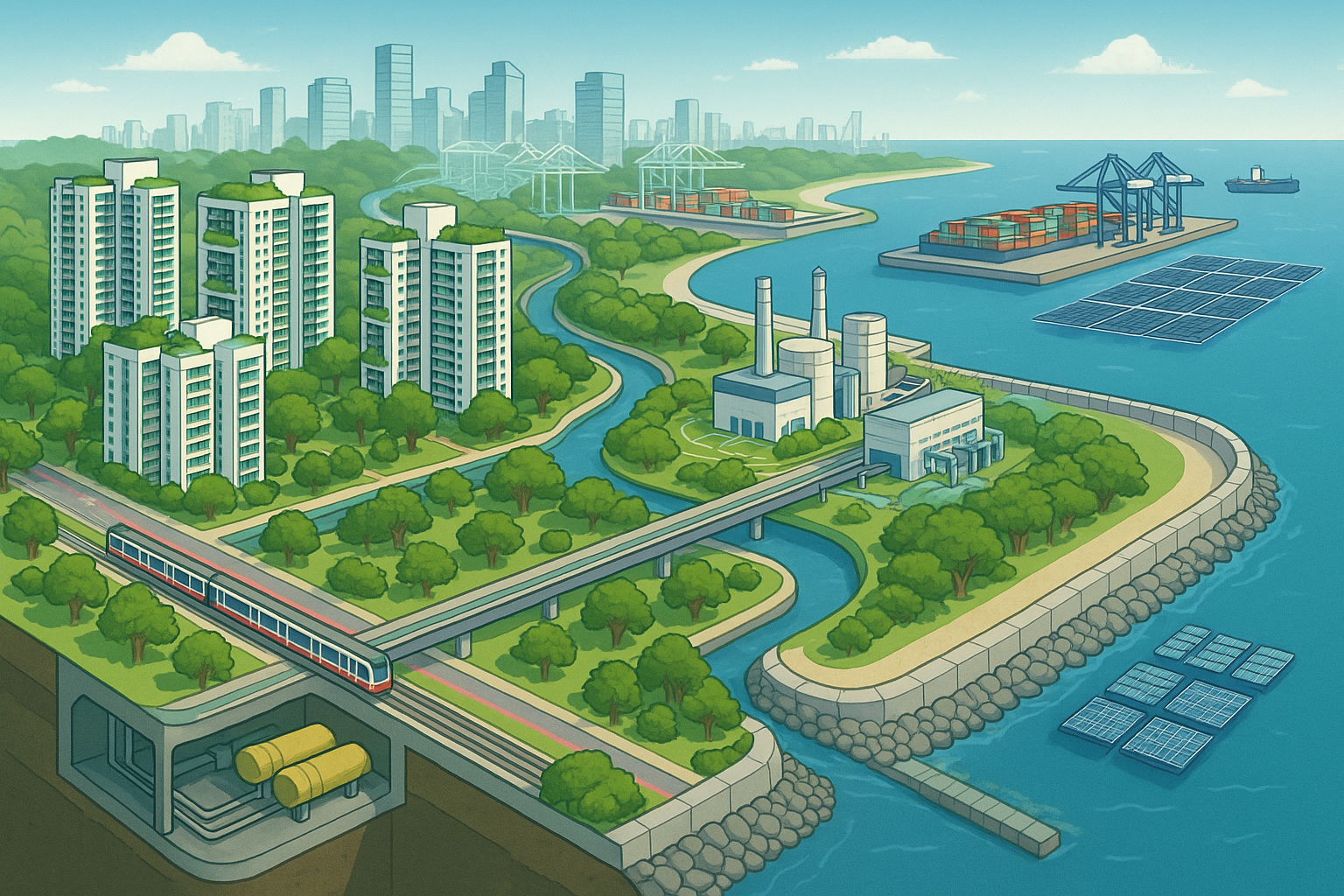
Density is sustainable only when it feels humane. Singapore’s compact form works because everyday life is choreographed around proximity, access, and comfort. Public housing provides a range of options near transit, and neighborhoods are planned as complete precincts with schools, clinics, markets, and community facilities within easy reach. As estates mature, upgrades add shade trees, barrier-free routes, and social spaces to match evolving demographics.
Mobility policy reflects the arithmetic of a small island. Road capacity is capped; congestion and parking are priced to reflect scarcity; and rail is extended to put more households within walking distance of stations. Bus priority lanes, sheltered walkways, and cycling paths turn non-car trips into the default. Streets are redesigned to tame speeds and expand sidewalks, acknowledging that safe, comfortable walking is the bedrock of a livable megadensity.
Green and blue spaces are not luxuries; they are essential services. Park connectors stitch neighborhoods together, reservoirs double as recreation grounds, and nature buffers cool adjacent districts. Vertical greenery and skyrise gardens reclaim biophilic value in a city of towers. Microclimate design—shade, ventilation, water features—reduces heat stress and improves outdoor comfort, encouraging active lifestyles without expanding land use.
Governance completes the picture. Transparent planning, public exhibitions of major projects, and environmental impact assessments build trust in a context where trade-offs are unavoidable. Community groups contribute biodiversity sightings and maintain neighborhood gardens; schools and youth programs cultivate stewardship from an early age. Heritage districts are curated rather than frozen, allowing new infrastructure to weave through old fabric without erasing identity.
The next frontier is deeper layering. More networks will migrate underground; waterfronts will serve simultaneously as flood protection, habitat, and public realm; and buildings will increasingly act like mini-infrastructures—generating energy, harvesting water, providing shade, and hosting community services. In a small, resource-limited island, livability is not a byproduct of growth; it is the central craft, refined with each plan, each project, and each block at a time.