




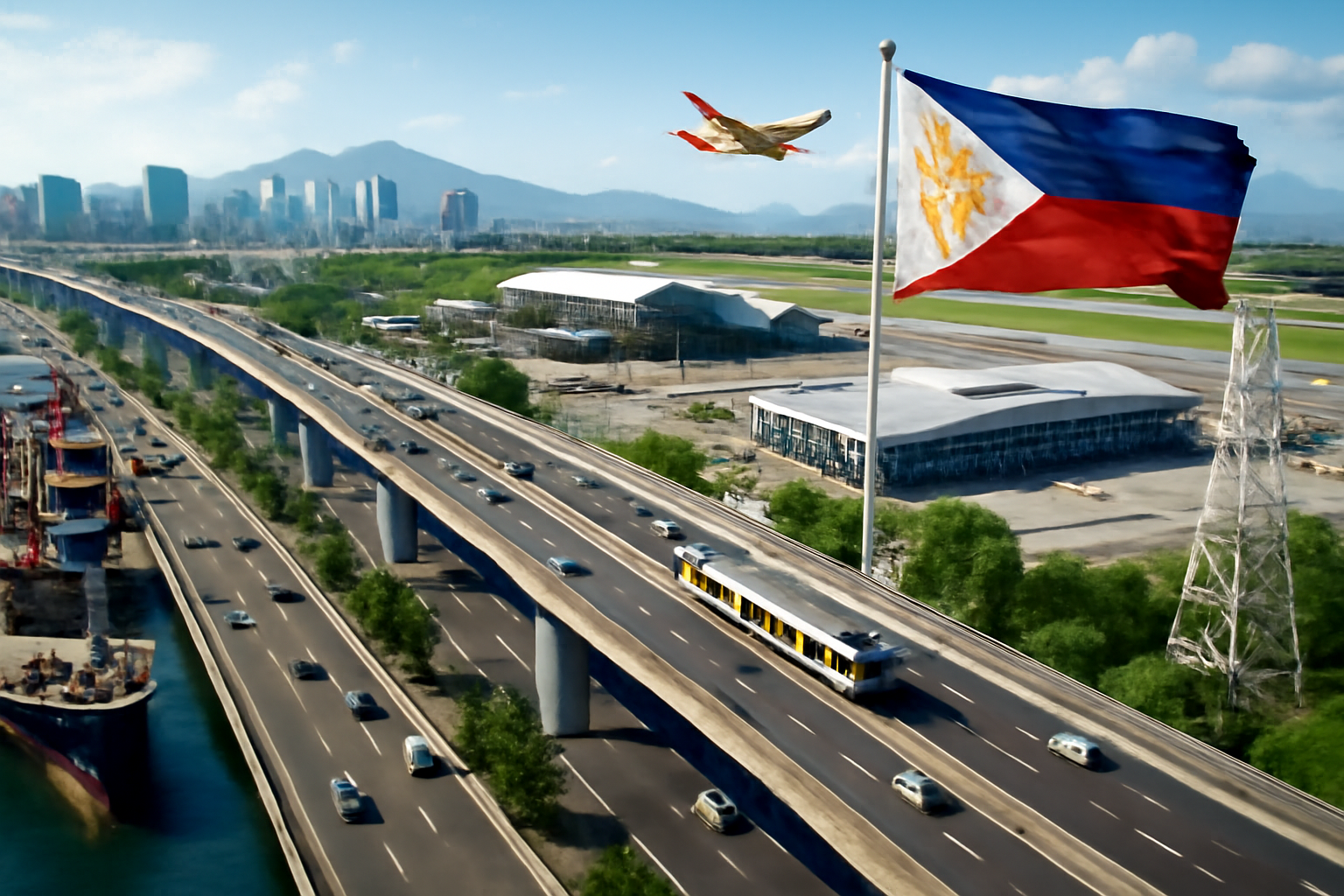
The Philippines, with its archipelagic nature and more than 7,000 islands, faces significant challenges in building effective transportation and communication networks. To tackle these challenges and promote national development, the Philippine government has launched an ambitious infrastructure agenda, with a strong focus on improving connectivity and mobility across the nation. Through various projects under the Build, Build, Build program, the government is investing in roads, railways, airports, and seaports to create a more integrated and efficient transportation system.
A major focus of the infrastructure initiative is road development. Traffic congestion, particularly in Metro Manila, has been one of the country’s most significant obstacles to efficient mobility. In response, the government has been constructing and upgrading expressways, bridges, and highways to provide better routes for travelers. The expansion of the Skyway, for example, allows for faster travel across Metro Manila, offering relief for those commuting between provinces.
In addition to road projects, airport and seaport infrastructure are also being upgraded. The modernization of Ninoy Aquino International Airport (NAIA) is one of the government’s key initiatives, aiming to accommodate the growing number of international travelers. Regional airports like those in Davao and Cebu are being expanded as well, boosting connectivity across the islands and enhancing the country’s tourism and business prospects. On the maritime front, the Philippines is investing in the development of key seaports, including those in Batangas and Davao, to increase cargo capacity and streamline trade.
Another essential component of the government’s infrastructure plan is the expansion of rail systems. The Metro Manila Subway, currently under construction, will provide an efficient and rapid transit system, reducing congestion and promoting environmentally friendly transport options. The North-South Commuter Railway will also improve connectivity between Metro Manila and neighboring provinces, making it easier for workers and businesses to move between the capital and surrounding regions.
Beyond transportation, energy and digital infrastructure are critical to the country’s development. A reliable energy supply is necessary to support the transportation networks, while digital infrastructure improvements will help connect remote areas and provide better access to services such as healthcare and education. Expanding internet access, especially in rural areas, will bridge the digital divide and help foster inclusive economic growth.
While significant challenges remain, such as traffic congestion and vulnerability to natural disasters, the government’s ongoing investment in infrastructure is laying the foundation for a more connected and mobile Philippines. These projects will not only improve the movement of people and goods but also boost economic growth, creating new opportunities for businesses and enhancing the overall quality of life for Filipinos.