




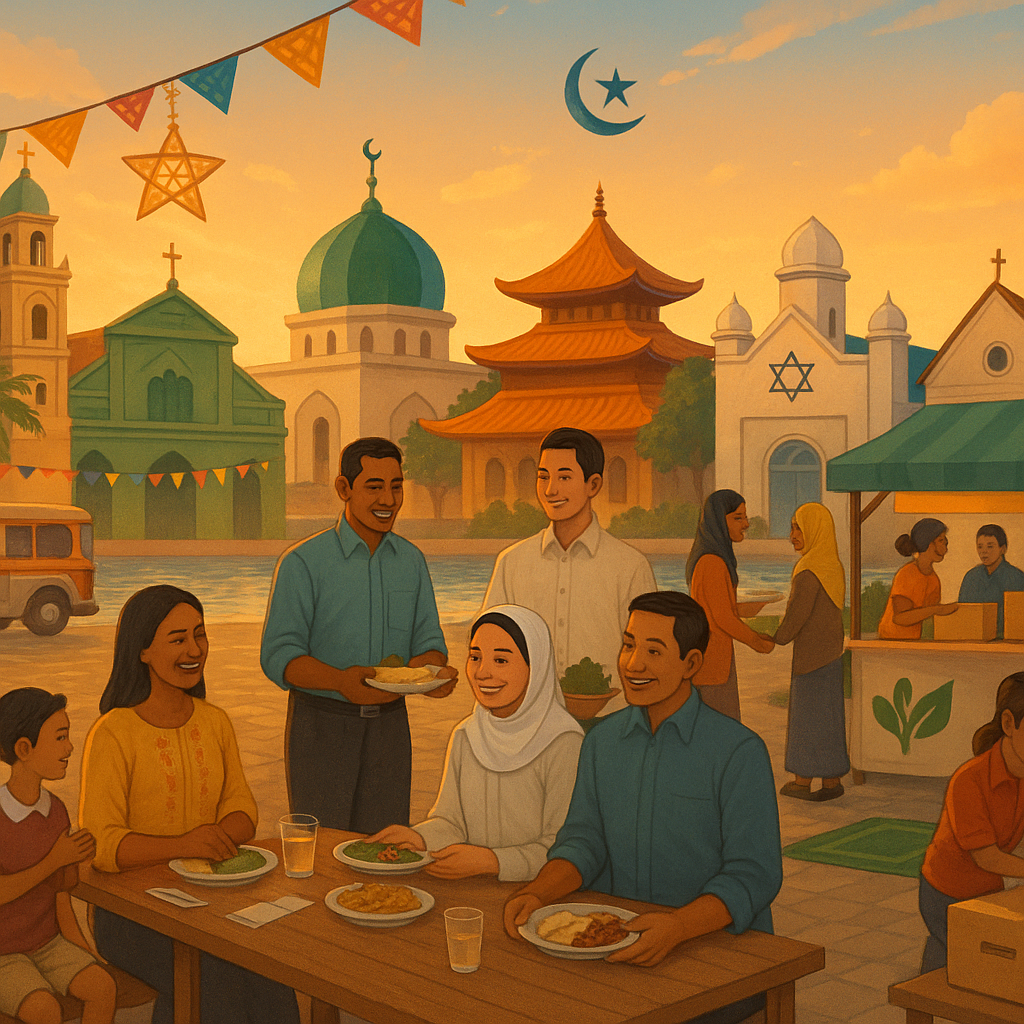
The religious map of the Philippines tilts heavily toward Catholicism, yet it is anything but uniform. Islam forms a dense crescent across parts of Mindanao and the Sulu archipelago, with migrant communities in major cities. Protestant denominations dot urban and rural areas, from hillside chapels to downtown auditoriums. Indigenous Christian movements assert Filipino identity in worship and governance. Smaller communities—Buddhist, Hindu, Sikh, Jewish, and Bahá’í—maintain temples, gurdwaras, synagogues, and study circles, adding languages, cuisines, and aesthetics to the public sphere.
Demographics intersect with mobility and media. Internal migration brings Mindanao families to Manila and Cebu, while overseas work circulates religious practices back home—devotions learned in the Gulf, Southeast Asia, or Europe find expression in neighborhood chapels and home prayer corners. Livestreamed services, Qur’an recitation apps, and group chats keep dispersed believers connected. Youth culture blends praise music, spoken‑word poetry, and indigenous rhythms, producing worship styles that feel at once global and local.
Opportunities abound where inclusion meets policy. Halal tourism and heritage trails can channel investment into historically neglected areas if guided by community consent. Universities are expanding programs in Islamic studies, peace education, and ethics, training graduates to lead in government, media, and business with cultural literacy. Employers refine accommodation policies around schedules, attire, and prayer space, recognizing that respect improves retention and teamwork. City planning that anticipates worship traffic—routes for processions, parking near mosques—reduces friction and signals belonging.
Pressure points should not be minimized. Stereotypes about Moros, legal asymmetries in family life, and the chilling effects of old statutes on religious offense require steady attention. Digital platforms amplify provocations, and election cycles can tempt leaders to instrumentalize faith identities. The remedy lies in transparent institutions and trustworthy mediators: courts that reason carefully, councils that consult widely, and media that seek context rather than clicks. Education—especially in civics, critical thinking, and the humanities—remains a long‑term hedge against panic and prejudice.
What emerges is a picture of resilient pluralism. Filipino hospitality, honed by centuries of trade, colonization, and migration, adapts rituals to shared spaces and shared spaces to rituals. The work ahead is patient: investing in equitable services, guaranteeing representation in decision‑making, and nurturing leaders who can translate conviction into solidarity. In doing so, religious diversity becomes not merely a fact to be managed but a resource for imagination—shaping cities, schools, and communities that are confident enough to make room for one another.