





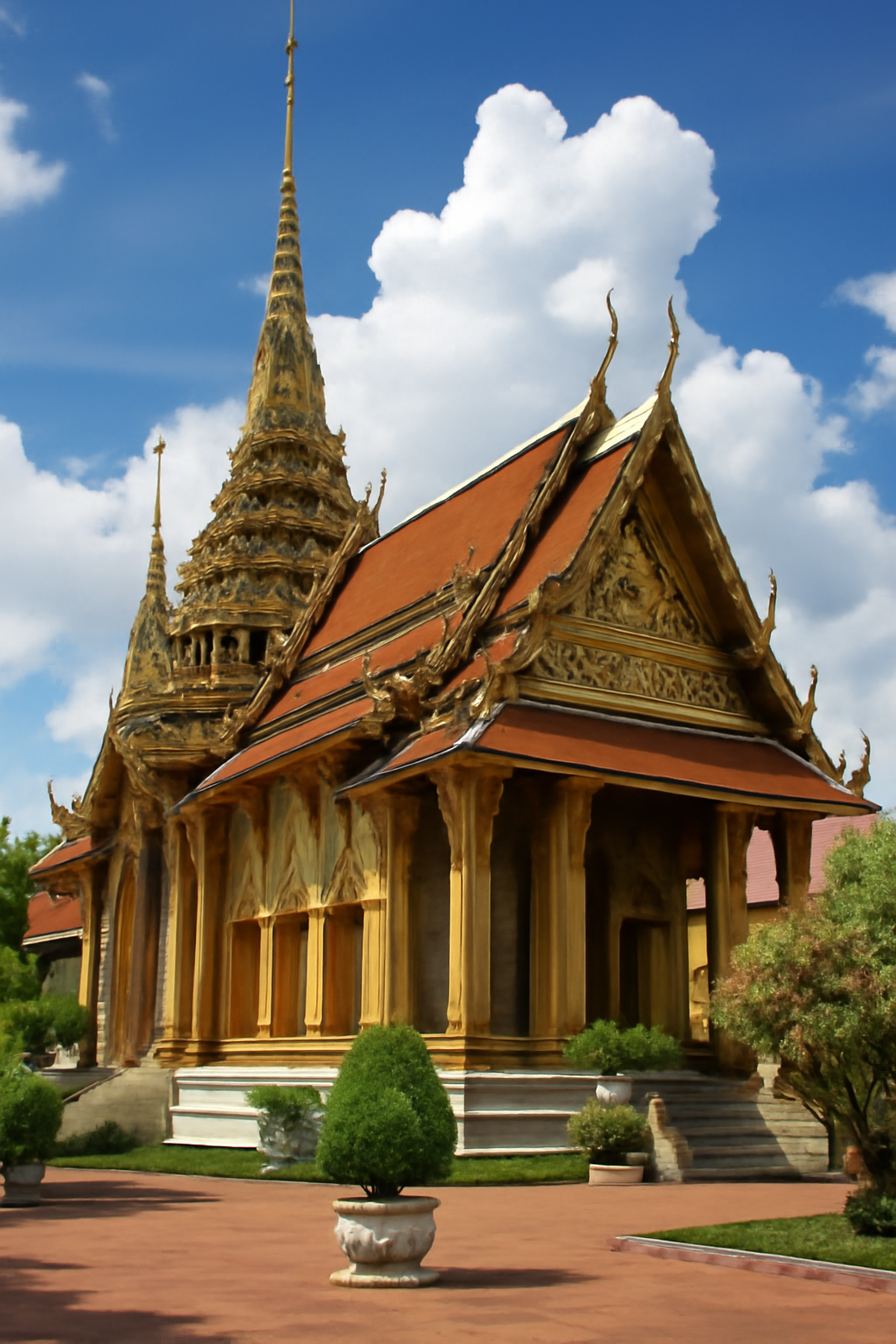
The architecture of Thai temples, or wats, is a profound expression of Buddhist philosophy and artistic tradition. These structures are designed not only to serve as places of worship but also as visual representations of Buddhist teachings, embodying ideals of spiritual growth, harmony, and enlightenment. The grandeur and beauty of Thai temples make them integral to the cultural and religious identity of Thailand.
At the heart of most Thai temples is the prang, a towering spire that symbolizes Mount Meru, the center of the Buddhist universe. The prang is typically decorated with gold leaf, intricate carvings, and colorful mosaics, reflecting the sacred nature of the temple. Its height represents the ascent toward enlightenment, encouraging worshippers to reflect on their spiritual journey. The prang is both a physical and symbolic centerpiece, drawing the worshipper’s gaze upward, toward the divine.
The vihara, or main hall, is where daily prayers and ceremonies are conducted. Inside the vihara, worshippers often find statues of the Buddha in various poses, each representing different moments of his life and teachings. The walls are typically adorned with murals that depict key events in the Buddha’s life, such as his birth, enlightenment, and teachings on the Four Noble Truths. These murals serve as both artistic representations and visual lessons, providing a deeper understanding of Buddhist philosophy.
One of the most striking aspects of Thai temple architecture is the roof design. The roofs of Thai temples are usually multi-tiered and curve upward, resembling the petals of the lotus flower. This design symbolizes spiritual purity and the unfolding of wisdom. The roofs are also practical, helping to channel rainwater away from the temple’s foundation. Gilded details and intricate carvings on the roof add to the temple’s visual impact, highlighting the connection between the earthly and divine realms.
Gold is an important material used in the decoration of Thai temples. Gold symbolizes the purity of the Buddha’s teachings and the divine light of enlightenment. Buddha statues are often covered in gold leaf, and the walls, murals, and other architectural elements are sometimes gilded, creating a glowing atmosphere that enhances the sacred space. Visitors and worshippers often make offerings of gold leaf, symbolizing their devotion and respect.
The temple grounds are carefully landscaped to create a peaceful and meditative environment. Many temples feature gardens, lotus ponds, and tranquil spaces for reflection. These elements are designed to reinforce the Buddhist belief in the interconnectedness of nature and the divine, offering a serene space for contemplation and spiritual practice.
Thai temple architecture is a reflection of the deep spirituality and artistic mastery of the Thai people. Through their grand designs and intricate details, these temples continue to inspire awe and reverence, providing spaces for worship, reflection, and connection to the divine.