



The Philippines is rich in natural resources, which have long played a pivotal role in its economic development. From its mineral wealth and agricultural capacity to its marine biodiversity, the country is blessed with a range of resources that support a diverse economy. While these resources have helped drive growth, the Philippines must address challenges related to resource depletion, environmental degradation, and climate change to ensure sustainable and inclusive economic progress.
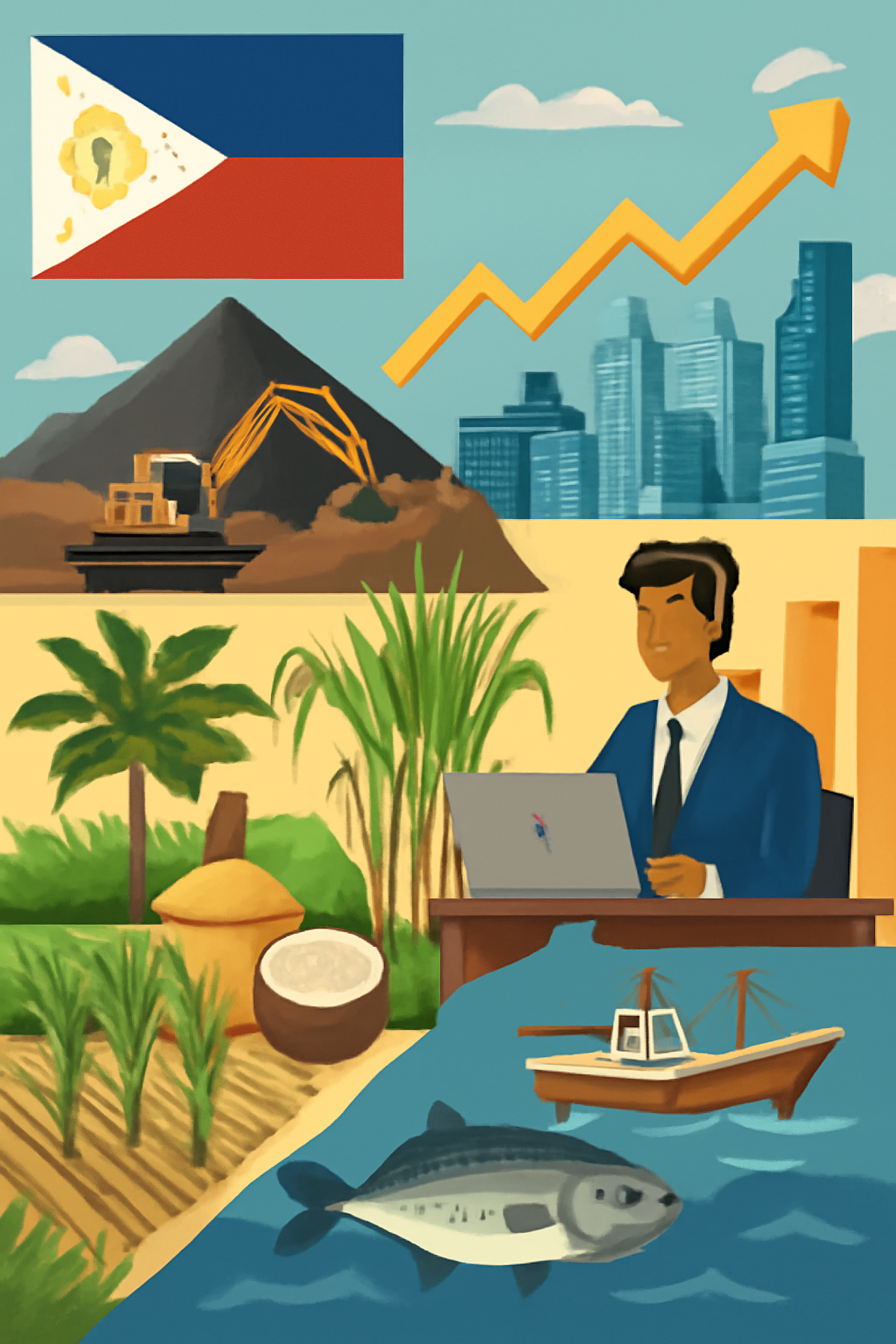
Mineral resources are integral to the Philippine economy. The country is home to vast deposits of gold, copper, and nickel, which are essential for global manufacturing and technological production. The mining sector has long been a driver of economic activity, with the Philippines being one of the world’s top producers of nickel. This metal has gained increased importance in recent years due to the global shift toward electric vehicles and renewable energy systems. However, the mining industry faces ongoing challenges related to environmental sustainability. Deforestation, soil erosion, and water contamination are just a few of the issues that have led to public outcry and calls for stricter regulation of mining activities.
The agricultural sector is another vital component of the Philippine economy. The country’s fertile lands support the cultivation of a wide variety of crops, including rice, corn, coconuts, and tropical fruits. Coconut oil is one of the Philippines’ primary agricultural exports, and the agricultural industry supports millions of jobs, particularly in rural areas. Despite this, the sector faces challenges such as poor infrastructure, limited access to technology, and vulnerability to climate-related disruptions like typhoons and droughts. Building resilience through modern agricultural practices is essential to maintaining the sector’s contribution to the national economy.
The Philippines’ fisheries sector is another important source of food and income. With its extensive coastline and rich marine biodiversity, the country is one of the largest fishing nations in the world. Fish and seafood contribute not only to domestic food supply but also to export revenues. However, overfishing and environmental degradation are threatening the sustainability of the fishing industry. Sustainable management of marine resources is key to preserving fish stocks and ensuring the long-term viability of this industry.
To achieve long-term economic growth, the Philippines must focus on sustainable development practices that balance resource extraction with environmental conservation. By implementing stronger regulations, investing in green technologies, and diversifying its economy, the country can continue to build on its natural resource wealth while ensuring a sustainable future for its people.