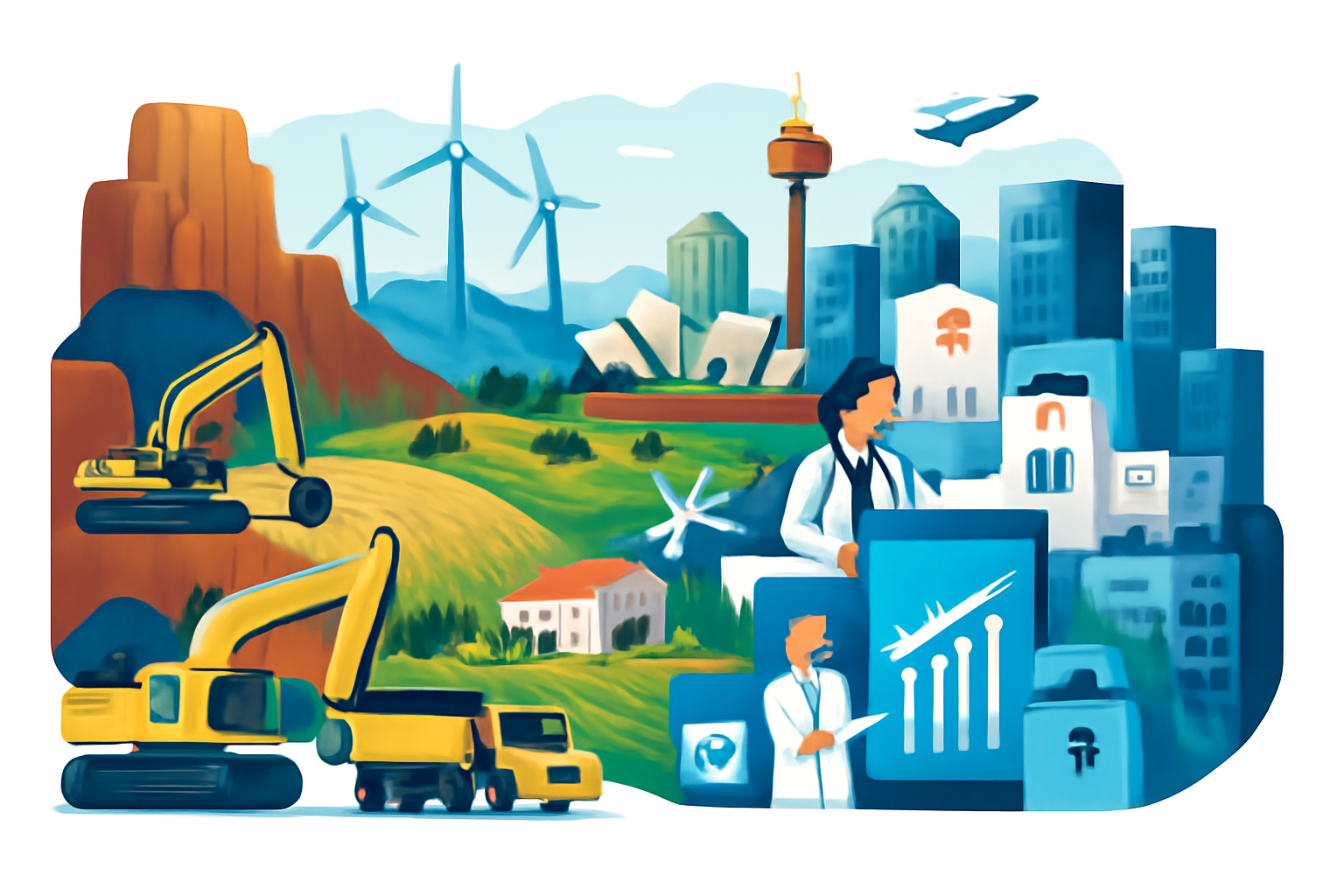

Australia’s economic landscape is shaped by its natural resource wealth, diversified industries, and rapid adoption of digital technologies. These interconnected sectors provide a strong foundation for Australia’s future economic growth and competitiveness on the global stage.
Leveraging Natural Resources for Economic Growth
Australia’s natural resources have long been a cornerstone of its economic success. As one of the world’s largest exporters of minerals like coal, iron ore, and natural gas, Australia plays a critical role in meeting global demand for essential materials used in construction, energy production, and manufacturing.
Mining remains a vital sector in Australia, driving exports and contributing significantly to GDP. Australia is also at the forefront of mining technology, utilizing automation and artificial intelligence to improve efficiency and reduce environmental impact, ensuring the long-term sustainability of its mining operations.
The country’s agricultural sector is equally significant, with Australia being a major exporter of beef, wool, wheat, and wine. Advanced farming techniques and sustainable practices allow Australian farmers to maintain high productivity and meet global demand for agricultural products.
Renewable energy resources are an emerging focus for Australia, with solar and wind energy offering significant opportunities for growth. As the world moves toward clean energy solutions, Australia’s natural resources in this sector position it as a leader in the global transition to sustainable energy.
Industry Diversity: Expanding Economic Horizons
While natural resources remain crucial, Australia’s industrial base has diversified over the years. The service sector, particularly industries such as finance, healthcare, and tourism, now makes up the largest portion of Australia’s GDP.
Australia has become a major financial hub in the Asia-Pacific region, with cities like Sydney and Melbourne hosting a range of international banks, investment firms, and financial institutions. The financial services sector is vital for driving economic growth, fostering innovation, and attracting global investment.
Tourism is another key sector in Australia’s economy. The country’s natural beauty, unique wildlife, and vibrant cities make it a top destination for international tourists. The tourism industry generates significant revenue and supports numerous jobs in hospitality, transportation, and entertainment.
Australia’s manufacturing sector is also evolving, with a growing emphasis on advanced industries such as biotechnology, medical devices, and aerospace. This shift reflects the country’s commitment to technological innovation and the development of high-value products.
Healthcare is an essential part of Australia’s economy. The country’s world-class healthcare system, which includes both public and private providers, is positioned to meet the needs of a growing and aging population. As demand for healthcare services increases, the sector will continue to play a central role in the economy.
Embracing the Digital Economy
Australia is undergoing a digital transformation that is reshaping its economy. With advancements in e-commerce, fintech, and digital services, technology is becoming a major driver of economic growth.
Fintech is one of the fastest-growing sectors in Australia. The country is recognized as a global leader in digital payments, online banking, and blockchain technology. Australia’s regulatory framework supports innovation in the fintech sector, ensuring that new technologies are introduced while maintaining financial stability and consumer protection.
Cybersecurity is another growing concern as Australia’s reliance on digital technologies increases. Both the government and private sector are investing in measures to enhance Australia’s cybersecurity infrastructure and protect data from cyber threats.
The digital transformation extends to public services, healthcare, and education. E-government initiatives are making it easier for Australians to access government services online, while telemedicine and online education are improving access to healthcare and learning opportunities across the country.
As Australia embraces digital innovation alongside its traditional sectors, it is well-positioned to ensure long-term economic success and global competitiveness.