





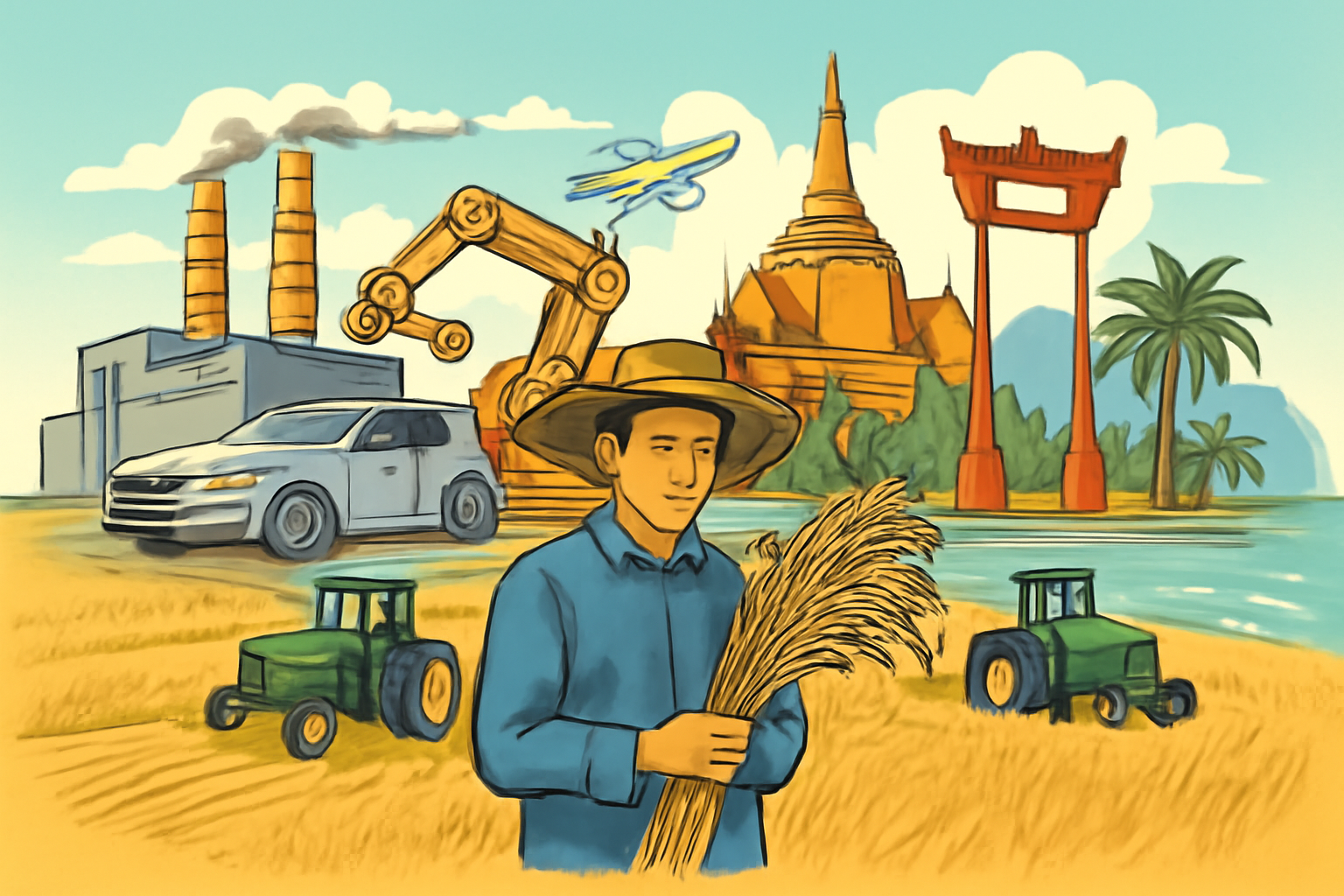
Thailand’s economy is a complex yet well-balanced structure driven by the combined strength of agriculture, industry, and tourism. Each of these sectors plays a distinct yet complementary role in driving economic development, creating jobs, and contributing to national growth. Understanding the contributions of these sectors offers insight into Thailand’s economic success and future potential.
Agriculture: A Historical Economic Pillar
Agriculture remains one of Thailand’s most important sectors, providing employment to millions of people, especially in rural areas. Thailand is a top global producer of rice, rubber, and seafood, with rice being the country’s most significant agricultural export. The fertile land and favorable climate support the cultivation of a wide range of crops that contribute both to domestic consumption and international trade.
Despite the decline in agriculture’s share of GDP over time, the sector continues to be vital for food security, rural income, and export revenue. The Thai government has invested in programs to improve agricultural efficiency, boost production, and address challenges such as climate change, water management, and market price fluctuations.
The Role of Industry in Economic Growth
Thailand’s industrial sector has expanded rapidly, turning the country into one of Southeast Asia’s key manufacturing hubs. The automotive, electronics, and petrochemical industries are the main drivers of this growth. Thailand’s automobile sector, in particular, is one of the largest in the region, with the country often referred to as the “Detroit of Asia.”
The electronics industry, including the production of semiconductors and mobile devices, has also positioned Thailand as a critical player in global supply chains. The government’s “Thailand 4.0” initiative is helping to drive the country’s industrial shift toward more advanced, high-tech industries such as robotics, biotechnology, and artificial intelligence, which will diversify and modernize the economy.
Tourism: A Crucial Economic Sector
Tourism plays a crucial role in Thailand’s economy, contributing significantly to both income generation and job creation. The country’s natural beauty, rich history, and vibrant culture make it a top tourist destination. In 2019, Thailand welcomed nearly 40 million visitors, with tourism generating billions of dollars in revenue.
The tourism industry supports a wide array of businesses, including hotels, resorts, restaurants, tour companies, and transportation services. Thailand’s government continues to promote the country as a top destination through various campaigns aimed at attracting tourists interested in cultural, luxury, adventure, and eco-tourism experiences. The rise of digital platforms has further boosted Thailand’s appeal to a global audience.
Conclusion
In conclusion, Thailand’s economy thrives on the strength of its agricultural, industrial, and tourism sectors. Agriculture provides raw materials and sustains rural livelihoods, industry drives technological progress and global trade, while tourism generates revenue and creates jobs. Together, these sectors offer a diversified and sustainable economic foundation for Thailand’s future growth.