




Singapore’s approach to urban transportation is widely admired for its efficiency, innovation, and commitment to sustainability. As one of the most advanced cities in the world, Singapore has developed a transportation system that is designed not only to meet the demands of its growing population but also to reduce its environmental footprint. Through the integration of modern technologies, effective policy implementation, and sustainable practices, Singapore continues to set the standard for urban mobility.
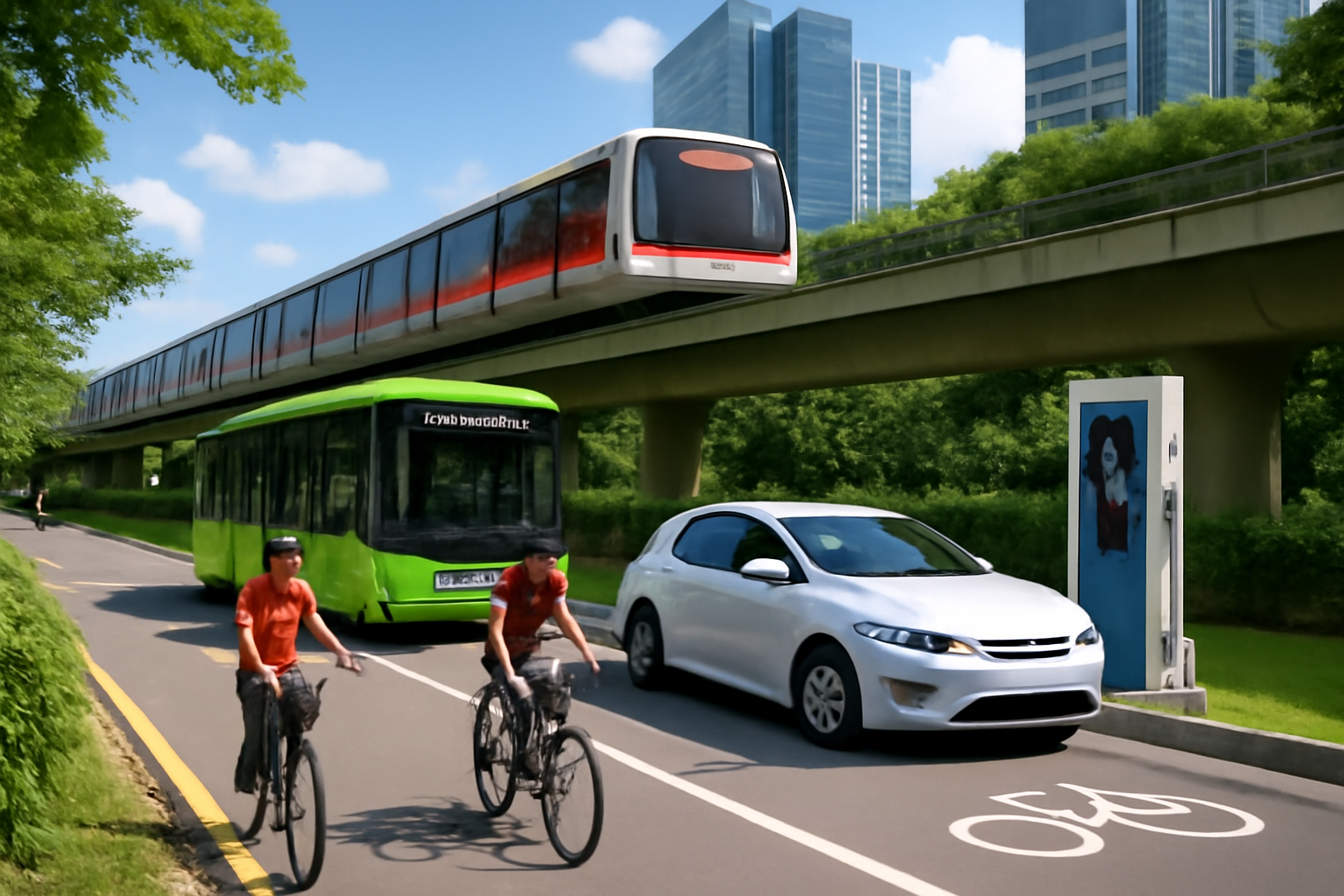
The heart of Singapore’s public transport system is the Mass Rapid Transit (MRT), which serves as the primary mode of transportation for many Singaporeans. The MRT network covers the entire island, providing fast, frequent, and reliable service. In addition to the MRT, the bus system complements the train network, providing accessibility to areas that are not directly served by trains. This integration of multiple transport modes ensures that Singaporeans can travel easily and affordably across the city.
Sustainability is a key focus of Singapore’s transportation policies. The government is actively working to phase out fossil fuel-powered vehicles, with plans to replace them with electric vehicles (EVs) by 2040. This transition is supported by a comprehensive EV charging infrastructure and various incentives for residents to adopt EVs, including rebates and tax breaks. These efforts are part of Singapore’s broader goal of reducing its carbon emissions and promoting cleaner air.
Electric buses are another important development in Singapore’s commitment to sustainability. The government has already begun replacing traditional diesel-powered buses with electric ones. These buses are more energy-efficient, reduce emissions, and contribute to a quieter urban environment. By 2040, Singapore’s entire public bus fleet will be fully electric, further reducing the city’s carbon footprint.
To manage traffic and reduce congestion, Singapore utilizes the Electronic Road Pricing (ERP) system. This system charges vehicles based on their usage of specific roads during peak traffic periods. The dynamic pricing mechanism helps optimize traffic flow, reducing congestion, and encouraging commuters to use public transport. The ERP system has proven highly effective in maintaining smooth traffic flow, especially in high-density areas.
Finally, the city-state encourages sustainable transportation choices by investing in cycling and walking infrastructure. Dedicated cycling lanes and pedestrian paths make it safer and easier for residents to use alternative transport methods, contributing to a more eco-friendly and healthy urban environment.
In conclusion, Singapore’s transportation system is a shining example of how urban areas can integrate efficiency with sustainability. By continuing to invest in green technologies, innovative transport policies, and comprehensive infrastructure, Singapore is building a transportation network that will serve future generations well.