





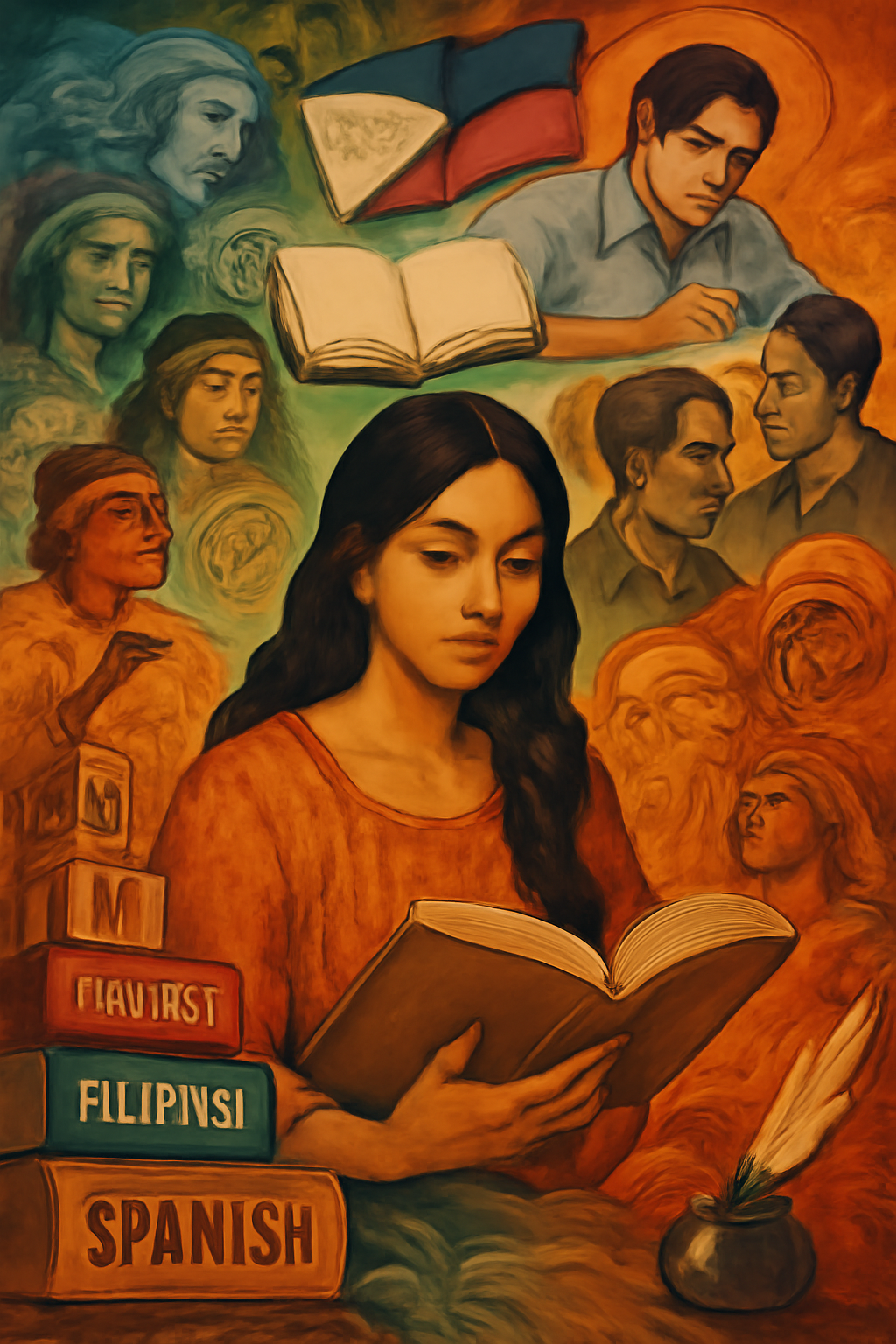
Philippine literature, intertwined with the nation’s languages, is a crucial tool for understanding the complex identity of the Filipino people. From the early oral traditions to the diverse literary forms written in both Filipino and English, literature has been integral in shaping the country’s cultural and national consciousness. The evolution of language and literature in the Philippines reflects not only the history of colonialism but also the enduring struggle for identity, unity, and social justice.
With over 170 languages spoken across the Philippines, the nation’s linguistic diversity plays a crucial role in the development of its literature. Filipino, based on Tagalog, was designated as the national language, aiming to unite the diverse linguistic communities. However, regional languages such as Cebuano, Ilocano, and Hiligaynon continue to thrive, enriching the literary landscape of the country. Filipino literature draws on these languages, creating a complex tapestry of voices that reflect the cultural richness of the Philippines.
Before colonization, Filipino literature was passed down orally. Folktales, myths, proverbs, and epic narratives formed the foundation of early literature. These stories were a means of passing on cultural knowledge, values, and history. Epics like Biag ni Lam-ang and Hinilawod provide insight into the spiritual and societal life of pre-colonial Filipinos, showcasing the centrality of community and heroism in their worldview.
The Spanish colonization of the Philippines in the 16th century introduced the Spanish language, Catholicism, and Western literary forms. Many Filipino writers adopted Spanish and began to write in the new language. However, the most significant literary contributions of this era came in the form of resistance literature. José Rizal’s works, particularly Noli Me Tangere and El Filibusterismo, were pivotal in inspiring the Philippine revolution against Spanish rule. These novels critique the oppressive colonial system and call for reform and independence.
During the American period, English became the dominant language of instruction and governance, creating an opportunity for Filipino writers to explore new literary forms. Writers such as Nick Joaquin, F. Sionil José, and Carlos Bulosan explored the complexities of identity and cultural change, tackling issues such as colonial influence, migration, and the tension between tradition and modernization. Their works remain foundational in understanding the development of Filipino identity in the 20th century.
Today, Philippine literature continues to evolve, reflecting the changing realities of Filipino society. Contemporary writers, like Lourd de Veyra, Gina Apostol, and Samantha Padilla, address issues such as globalization, social inequality, and the search for personal and national identity. Their works tackle the challenges of living in a globalized world while staying connected to Filipino roots.
In conclusion, the interplay between language and literature has played a pivotal role in shaping Filipino national identity. Through literature, Filipinos have preserved their history, confronted their colonial past, and expressed their vision for the future. Philippine literature remains an essential part of the nation’s cultural and social discourse, continuing to shape and redefine the Filipino identity for generations to come.