





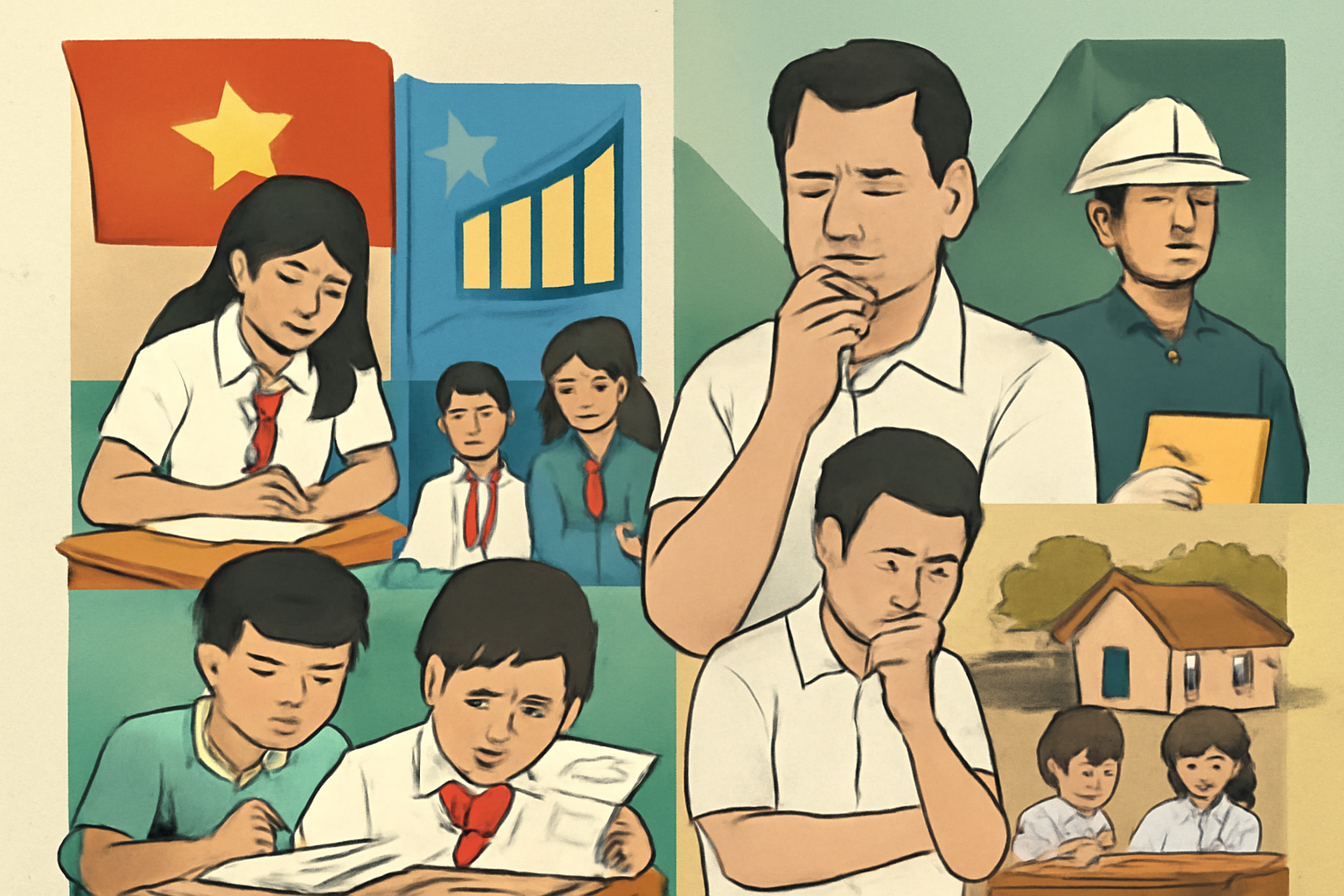
Vietnam’s educational journey has seen impressive milestones in recent years, marked by significant improvements in literacy rates, academic outcomes, and vocational education. Yet, several hurdles remain in its path that must be addressed to unlock the full potential of its education system.
Achievements
Vietnam has achieved a remarkable level of educational success, particularly in terms of literacy. With a literacy rate of over 94%, the country stands as a model in Southeast Asia for educational accessibility. The government’s commitment to free and compulsory education for children has played a crucial role in ensuring that nearly all children are able to attend school.
Internationally, Vietnam’s students have excelled in the PISA assessments, demonstrating outstanding performance in mathematics, science, and reading. This is particularly impressive given the country’s limited budget for education, which further highlights the efficiency of its educational model. The focus on academic rigor has contributed to the high performance of Vietnamese students on a global scale.
Additionally, the country has invested heavily in vocational education and training, ensuring that students acquire the skills necessary for the workforce. Vocational programs have become increasingly important in Vietnam, where the demand for skilled labor is high. These programs help reduce youth unemployment and contribute to the growth of industries crucial to the economy.
Setbacks
Despite these successes, there are several challenges that persist in Vietnam’s education system. One of the most pressing is the dominance of rote learning in schools. While this method has helped students perform well on exams, it has been criticized for discouraging independent thought and creativity. Shifting the focus to more critical thinking and problem-solving skills is an ongoing challenge for educators.
There is also a significant divide between urban and rural education. While urban schools benefit from better resources, teachers, and facilities, students in rural areas often have to contend with outdated materials, overcrowded classrooms, and a shortage of qualified teachers. This disparity results in uneven educational outcomes across the country.
Another significant challenge is the lack of effective teacher training. While the number of teachers has increased, many are not adequately prepared to teach using modern pedagogical approaches. There is a growing need for professional development programs to equip teachers with the skills needed to handle diverse classrooms and teach effectively.
Conclusion
Vietnam has made remarkable progress in improving its education system, particularly in terms of literacy rates, academic performance, and vocational training. However, issues such as rote learning, regional disparities, and inadequate teacher training remain. Addressing these challenges is essential for continuing the country’s educational evolution and ensuring that future generations are equipped with the skills needed for success in an increasingly complex world.