





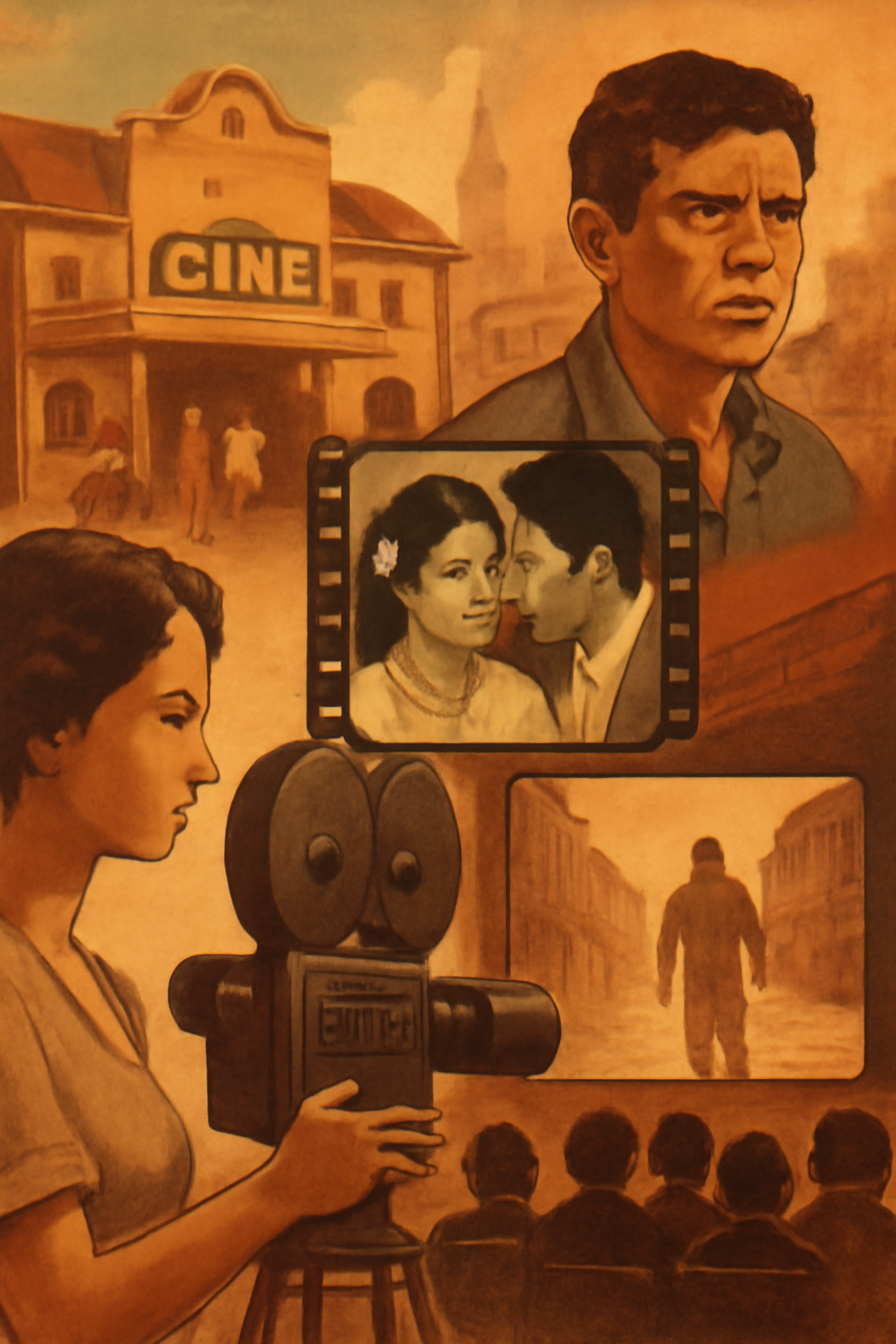
The Philippine film industry has a rich history that spans more than a century, reflecting the country’s cultural and political changes. Cinema was introduced to the Philippines in 1897, with the screening of the Lumière brothers’ Workers Leaving the Lumière Factory. However, the first Filipino-produced feature film, Dalagang Bukid, did not come until 1919. Directed by José Nepomuceno, Dalagang Bukid helped lay the foundation for Filipino cinema, incorporating local themes and narratives that would later define the industry.
The 1930s saw the rise of major film studios like LVN Pictures, which were instrumental in shaping the early years of Philippine cinema. These studios produced films that blended popular Western genres with Filipino stories and cultural elements. During this period, the Filipino film industry began to establish its own identity, with a focus on melodrama, romance, and the portrayal of Filipino family values.
The onset of World War II in the 1940s brought disruption to the Philippine film industry. The Japanese occupation led to the destruction of many studios, and production slowed considerably. However, following the end of the war, the film industry began to recover in the 1950s and 1960s, entering its “Golden Age.” This period saw the emergence of iconic film stars like Fernando Poe Jr., and the production of high-budget films that were both artistically and commercially successful.
The 1970s brought about a new era for Philippine cinema. Under the authoritarian rule of President Ferdinand Marcos, martial law brought censorship and control over the arts. However, this period also saw the rise of socially conscious filmmakers like Lino Brocka, who used their films as a platform for social critique. Brocka’s Maynila sa mga Kuko ng Liwanag (Manila in the Claws of Light) became a landmark film, shedding light on the country’s social injustices and poverty.
By the late 1980s and early 1990s, the Philippine film industry was undergoing a transformation. While commercial cinema struggled, independent filmmakers gained prominence. Directors like Brillante Mendoza, Lav Diaz, and Raya Martin began producing films that addressed complex social issues, often focusing on the struggles of ordinary Filipinos. Their works gained international recognition and helped raise the profile of Filipino cinema on the world stage.
Today, the Philippine film industry is a dynamic blend of both mainstream and independent cinema. While commercial films continue to thrive, the rise of independent cinema has added diversity to the industry, with filmmakers tackling a wide range of subjects. The advent of digital filmmaking has also made filmmaking more accessible, allowing new voices to emerge and experiment with fresh narratives. As the industry continues to evolve, Filipino filmmakers are poised to make an even greater impact both locally and globally.