



Malaysia’s tropical climate and multicultural pantry produce a dessert-and-drinks culture that is both refreshing and deeply nostalgic. Textures skew soft, bouncy, and icy; flavors favor coconut, palm sugar, and pandan, with fruits and beans adding nutrition and chew.
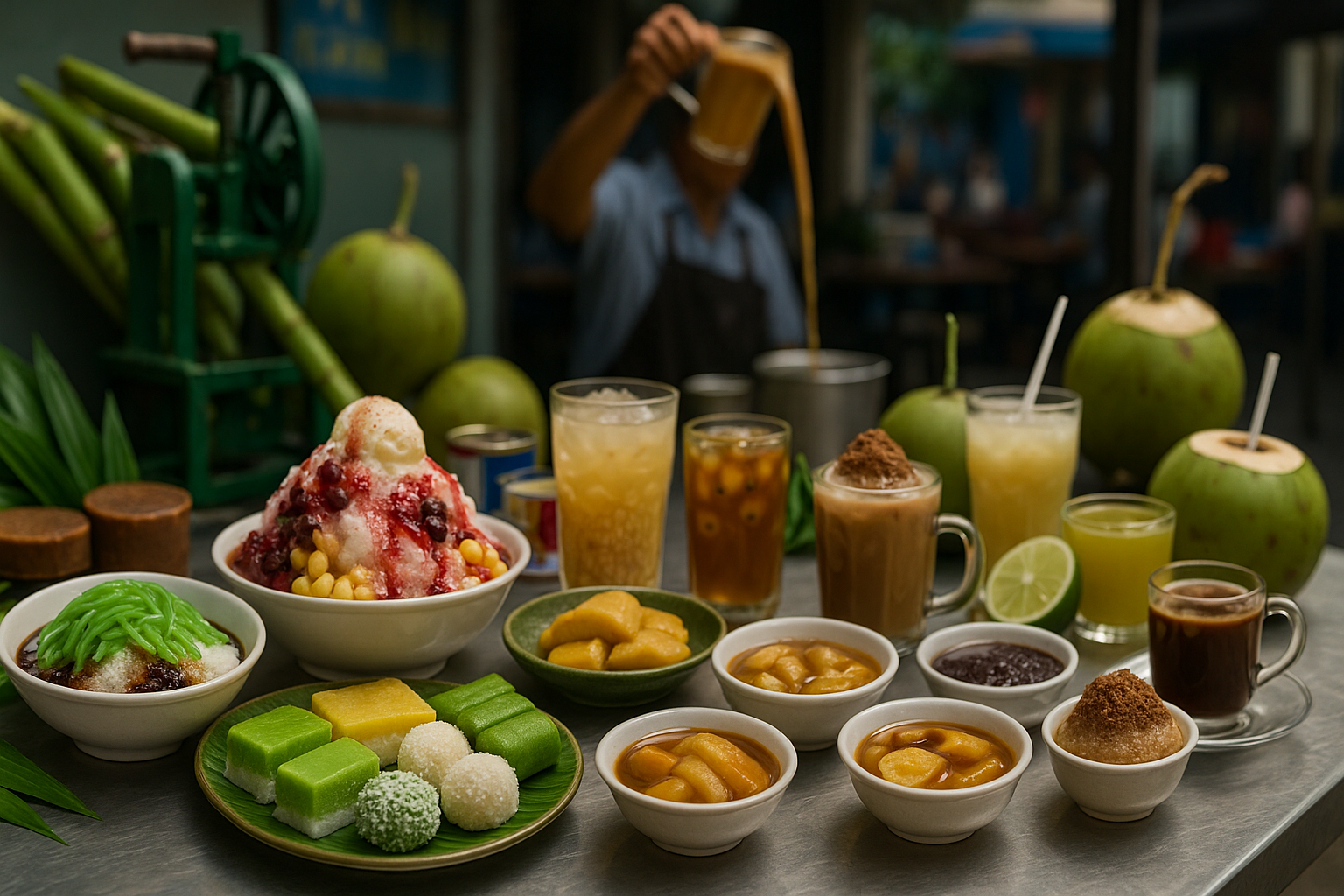
Start with cendol: pandan-green jelly threads over shaved ice, bathed in coconut milk and dark gula Melaka syrup. It’s simple yet sophisticated—the palm sugar’s smoky depth balancing coconut’s creaminess. Ais kacang (ABC) is maximalist: a mountain of ice hiding red beans, sweet corn, grass jelly, attap seeds, and sometimes ice cream, drizzled with rose syrup and evaporated milk. Sago gula Melaka distills the theme—pearls of sago in cold coconut with palm sugar—minimal but irresistible.
Kuih—bite-sized treats rooted in rice and coconut—showcase color and technique. Seri muka pairs pandan custard over glutinous rice; kuih talam layers coconut and pandan with precise firmness; ondeh-ondeh bursts gula Melaka inside a pandan glutinous shell rolled in coconut; kuih ketayap wraps coconut-palm sugar filling in a green crêpe. Putu piring steams rice flour discs filled with palm sugar, which melt into a lava core. Apam balik, a folded peanut-crunch pancake, perfumes night markets with butter and sugar.
Warm desserts comfort on rainy afternoons: bubur cha cha (coconut soup with yam, sweet potato, and sago), pengat pisang (sweet banana in coconut sauce), and black glutinous rice porridge (pulut hitam) topped with coconut cream. Regional specialties abound—Sarawak layer cake (kek lapis) wows with geometry and spice, while Melaka’s sweets lean heavily into gula Melaka richness.
The drinks repertoire is equally expressive. Teh tarik is both beverage and performance: the “pulling” cools the tea and creates a creamy foam. Kopitiam coffee uses robust roasting—sometimes with butter or margarine—to yield a toasty brew; variants include kopi O (black), kopi C (with evaporated milk), and “kurang manis” (less sweet). Ipoh white coffee, roasted without caramel or margarine, tastes smoother and paler, with a signature aroma.
Cooling options rule the day: air bandung (rose syrup milk), barley ais, longan “mata kucing” drink, sugarcane juice crushed to order, coconut water straight from the nut, and calamansi-lime with asam boi (salted plum) for a sweet-sour-salty kick. Milo, a chocolate malt import embraced wholeheartedly, fuels “Milo ais” and the indulgent “Milo dinosaur” crowned with extra powder.
Halal awareness shapes choices—most sweets and drinks are easily compliant—while street vendors tailor sweetness on request. Pro tip: watch syrup quality and ice hygiene; busy stalls with fast turnover are your friends. Ultimately, Malaysian desserts and drinks are not afterthoughts—they are climatic adaptations and cultural signatures, designed to refresh the body and extend the conversation after the plates are cleared.