




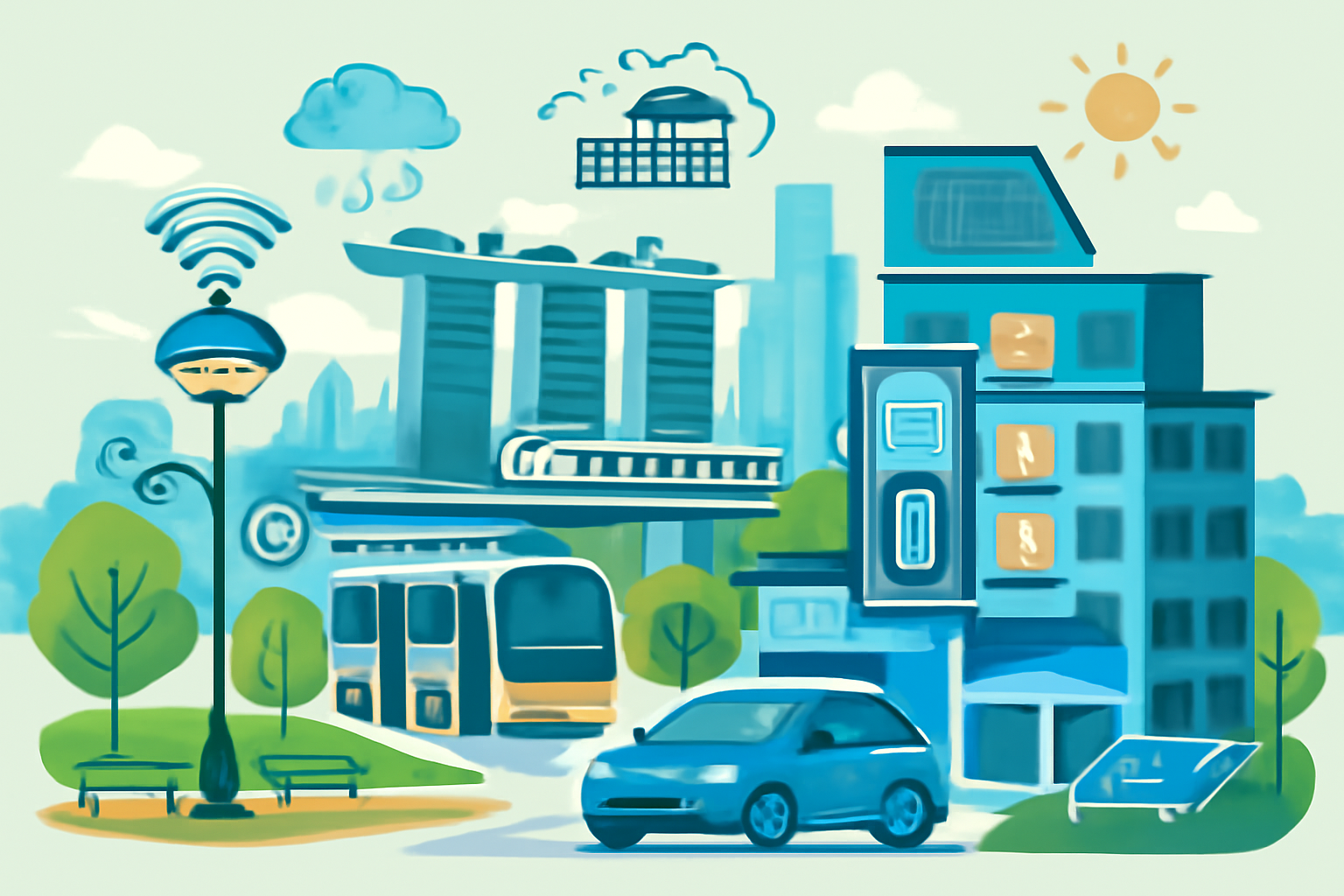
Singapore’s reputation as a global leader in smart city innovation is the result of years of focused effort to integrate technology into every aspect of urban living. The city-state’s comprehensive approach to smart city development encompasses transportation, energy management, public spaces, and residential living, all aimed at improving efficiency, sustainability, and the overall quality of life for its residents.
At the core of Singapore’s smart city transformation is the use of data and smart technologies to optimize urban management. The city’s vast network of sensors collects data on a wide range of variables, such as traffic patterns, environmental conditions, and even waste levels. This real-time data helps the government make informed decisions about urban planning, infrastructure development, and public services.
Transportation in Singapore has been revolutionized with the introduction of smart technologies. Public transport services such as the MRT and buses benefit from real-time tracking systems that provide commuters with accurate information about schedules and delays. Intelligent traffic management systems also adjust traffic light timings to minimize congestion, reducing travel times and improving air quality.
Smart homes are an integral part of Singapore’s vision for a connected future. Through the use of IoT devices, residents can control various aspects of their homes, such as lighting, temperature, and security, remotely from their smartphones. These technologies not only enhance convenience but also help conserve energy by allowing users to monitor and adjust their energy consumption.
Sustainability is a major focus of Singapore’s smart city initiatives. The city has invested heavily in renewable energy, with solar panels installed on the rooftops of residential and commercial buildings to harness the power of the sun. Furthermore, smart grids are used to ensure that energy distribution is optimized, helping to reduce energy waste and carbon emissions.
Public spaces have also been enhanced through technology. Sensors are deployed in parks and green spaces to monitor environmental factors like air quality, humidity, and temperature. This real-time information helps citizens make informed decisions about outdoor activities, contributing to healthier lifestyles and a stronger connection to nature.
To summarize, Singapore’s transformation into a smart city highlights the significant role technology can play in improving urban living. By integrating data-driven solutions, promoting sustainability, and enhancing public services, Singapore offers an inspiring model for cities around the world looking to embrace the future of urban living.