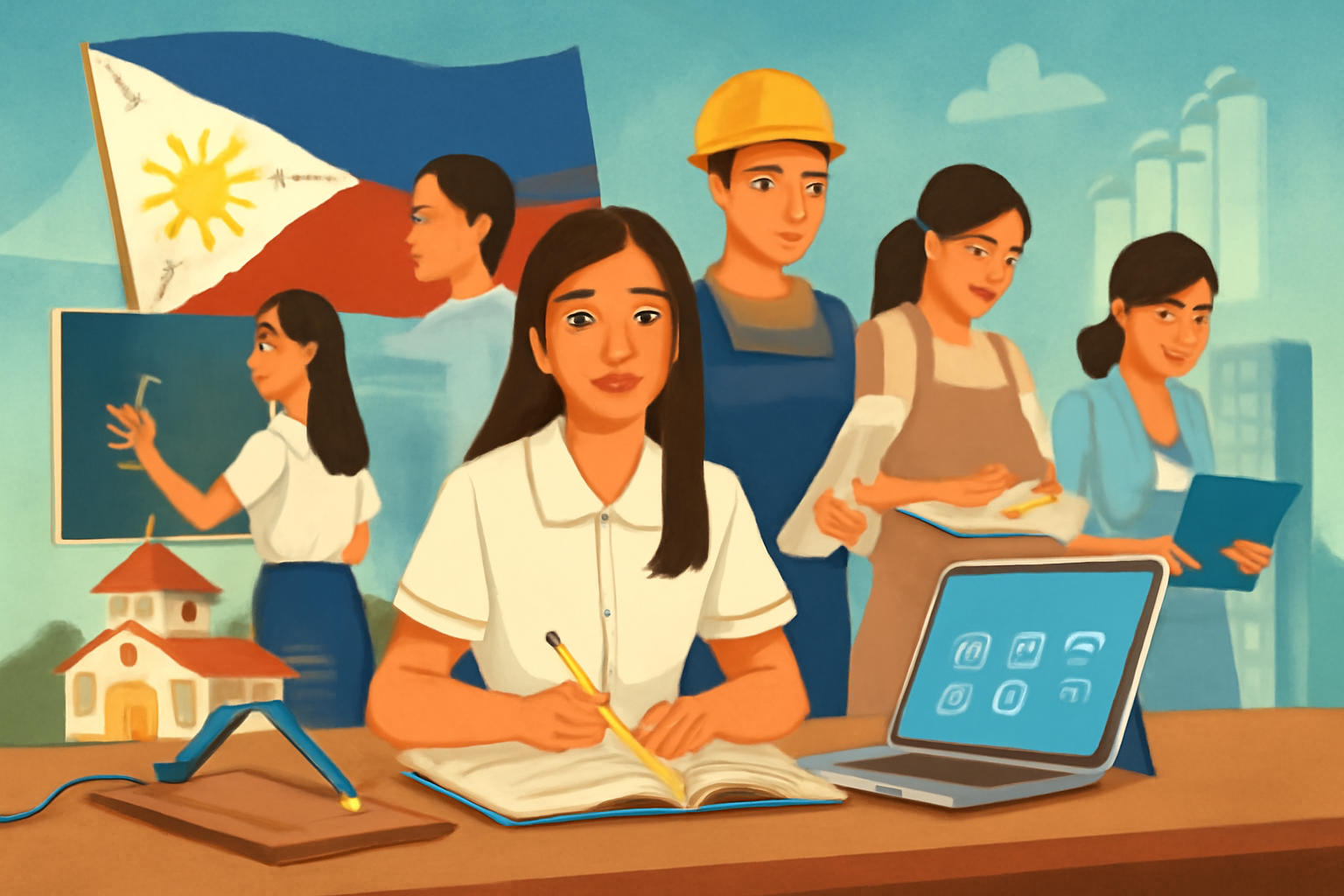

The Philippines’ education system has made significant strides in recent years, with reforms aimed at equipping the next generation with the skills needed to compete on the global stage. With an increasing demand for skilled workers in various industries, the country has focused on reshaping its education system to meet the evolving needs of the labor market and provide students with the knowledge and expertise necessary to thrive in the modern economy.
The K-12 education program, which was implemented in 2013, is at the heart of these reforms. The extension of basic education to 12 years allows Filipino students to complete a more comprehensive education, with additional time to specialize in either academic or technical subjects. Senior high school, in particular, offers students the option to pursue specialized tracks that align with their career aspirations, whether in academics or vocational training.
The vocational track plays a critical role in preparing students for immediate employment after graduation. By offering hands-on training in fields like information technology, hospitality, and healthcare, the program equips students with practical skills that are highly sought after by employers. This focus on vocational education helps address the skills gap in the Philippine labor market, ensuring that graduates are job-ready and able to contribute to the country’s economy right away.
In addition to curriculum reforms, the integration of technology in education has had a significant impact on learning in the Philippines. Schools are increasingly incorporating digital tools to enhance the learning experience, helping students develop essential 21st-century skills such as digital literacy, problem-solving, and critical thinking. As industries continue to digitize, these skills are becoming increasingly important to success in the workplace.
While progress has been made, challenges persist, particularly in terms of ensuring equitable access to quality education. Students in rural areas often face difficulties in accessing the same resources and opportunities as those in urban centers. Addressing these disparities remains a key priority for the Philippine government, as it works to provide all students with a fair chance at success.
Through continuous investment in education, the Philippines is laying the foundation for a competitive and skilled workforce that will drive the country’s growth in the years to come. By offering diverse educational pathways and incorporating modern technology into the learning process, the nation is preparing its youth for the challenges of the future.