





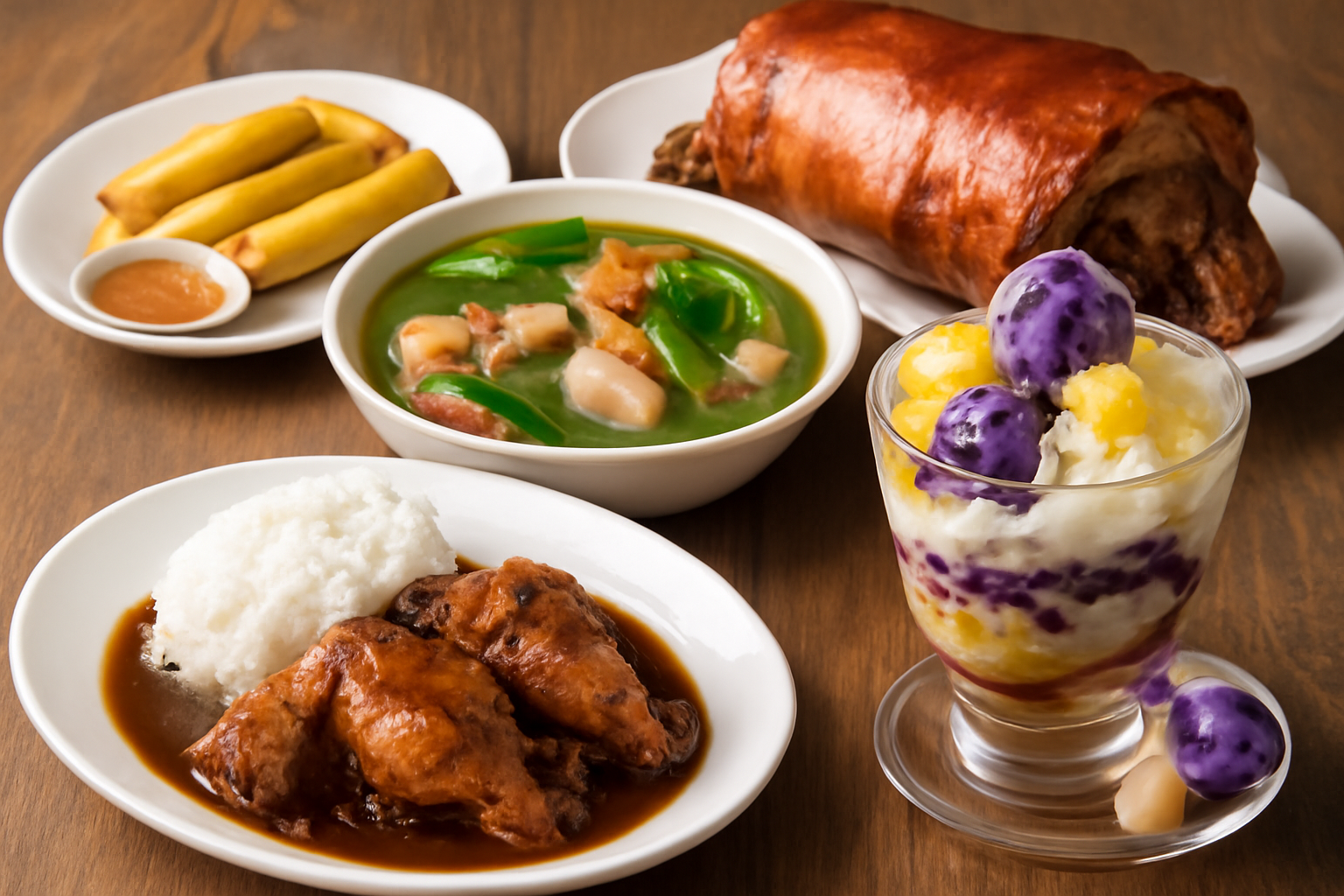
The Philippines is known for its diverse and rich food culture. From everyday meals to more elaborate ones, each dish tells a story and reflects deep traditions. Filipino food is the result of a combination of influences brought by countries that have interacted with the Philippines, creating flavors that are rich and unique.
Adobo is one of the most iconic dishes in the Philippines. Made with chicken or pork, this dish is cooked in a mixture of soy sauce, vinegar, and garlic, resulting in a rich and flavorful meal. Every family has its own version of Adobo, which provides many variations of this beloved dish. It symbolizes the richness of Filipino culinary heritage, which is both simple and full of flavor.
Sinigang is a great option for those who love tangy flavors. Sinigang is a sour soup made with tamarind as the main ingredient, and it’s typically made with pork, shrimp, or fish. With the addition of vegetables like water spinach, eggplant, and radish, Sinigang is a dish that perfectly balances lightness and comfort.
For snacks, Lumpia is an ideal choice. Lumpia is made from thin wrappers filled with vegetables, meat, or shrimp, which are deep-fried until crispy. It is typically served with a sweet or sour dipping sauce, enhancing the dish’s flavors.
When it comes to special meals, Lechon is the dish that cannot be missed. Lechon is a whole pig roasted slowly over an open flame, resulting in crispy skin and tender meat. It is typically served at large celebrations, such as weddings or family parties.
For dessert, Halo-Halo is a perfect sweet treat. This dessert is made from shaved ice mixed with fruits, beans, agar-agar, and coconut milk, topped with a scoop of ice cream. Halo-Halo is a fun and refreshing dessert, perfect for cooling down after a meal.
With its diverse range of flavors and special dishes, Filipino cuisine truly captivates and enriches the culinary experience of anyone who tastes it.