





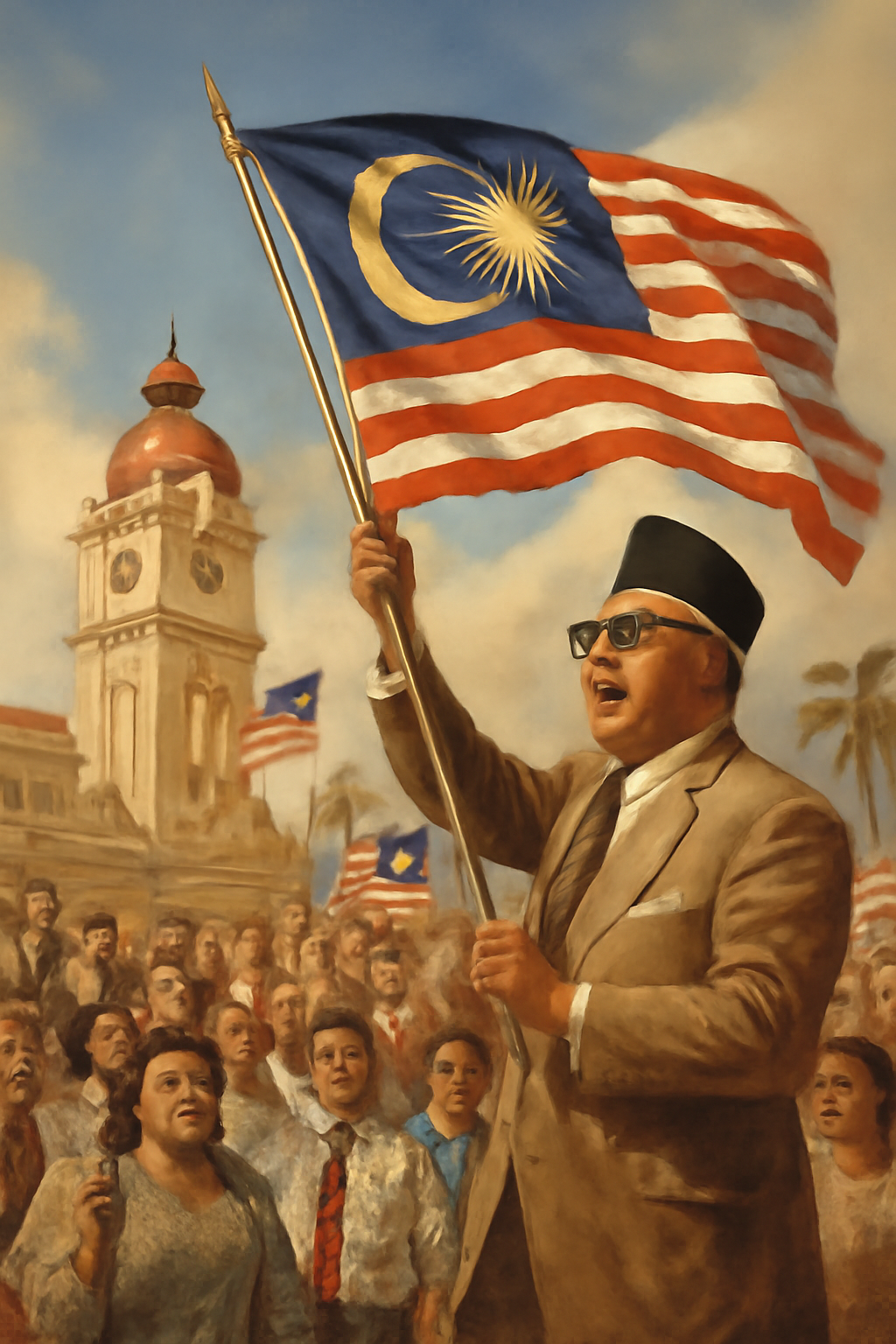
Malaysia has an extraordinarily long history, beginning with the Malay kingdoms that ruled the region and culminating in its independence in 1957. This historical journey is full of events that reshaped the nation and its people.
The Malay Kingdoms and the Center of Civilization
In its early centuries, Malay kingdoms like Srivijaya and Malacca became centers of civilization and trade in Southeast Asia. Srivijaya, which stood in the 7th century in Sumatra, played an important role in the trade between India and China. Meanwhile, the Malacca Sultanate, founded in the 15th century, became the main commercial hub of Southeast Asia, as well as a center for the spread of Islam in the region.
Colonialism and Its Influence
In the 16th century, the Portuguese took control of Malacca, followed by the Dutch, and finally the British. British colonization brought many changes to Malaysia’s social, economic, and political structure. The colonial economy relied on plantations and natural resources, while the large-scale migration of Chinese and Indian people brought significant changes to the social composition of the country.
The Struggle for Independence
After World War II, the independence movement in Malaysia began to gain momentum. Tunku Abdul Rahman and other leaders led the fight against British colonial rule. Through long negotiations, Malaysia finally gained independence on August 31, 1957.
Conclusion
The history of Malaysia is a story of the strength of the Malay kingdoms, the struggle against colonization, and the fight for independence. Each phase of this history played a crucial role in shaping the Malaysia we know today.